
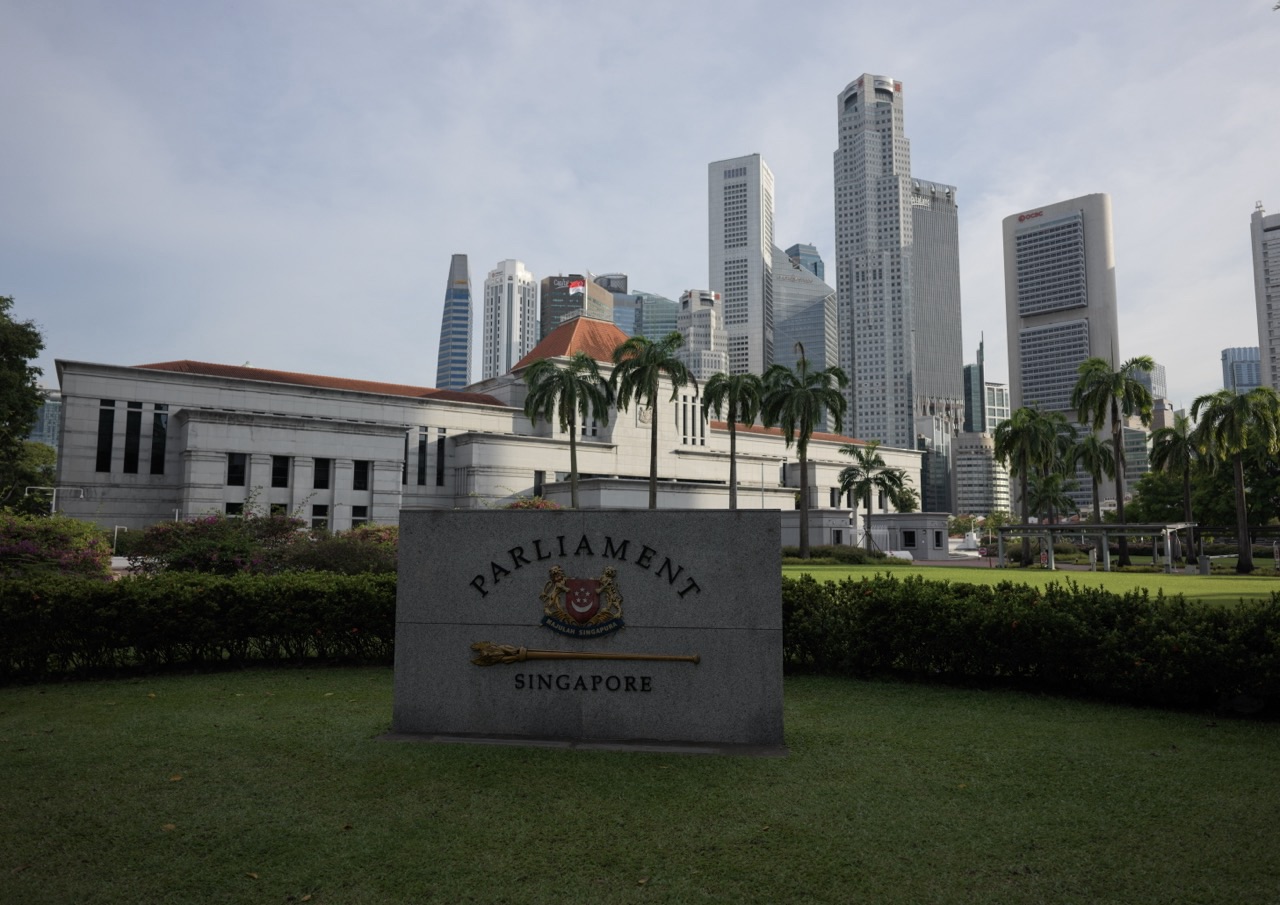
How does Singapore’s national Budget work? The Government estimates the money it can receive, proposes where public money should go, seeks Parliament’s approval and then accounts for what was actually spent. Taxes are important, but they are not the only resource: the Net Investment Returns Contribution (NIRC) also helps fund services. The protected reserves system adds a separate constitutional safeguard, so a Budget announcement is not simply permission to empty the nation’s savings.
If you want to know where Singapore’s tax money goes, how Budget 2026 is funded, what NIRC means, who approves government spending or why Singapore keeps reserves, this guide puts the answers together. We’ll follow one dollar of public revenue into education, transport, healthcare and other services—then look at the controls that prevent budgets from becoming unchecked promises.
The key is to separate five stages: revenue, proposed allocation, legal authorisation, actual delivery and audited accountability. Once they are separated, a long Budget speech becomes much easier to understand—and you can tell the difference between a target, a funded programme and a service that has actually reached a household.
Quick answer: Singapore’s public finance route
- Collect and estimate revenue: taxes and other receipts help finance the Budget.
- Calculate the NIRC: a rule-governed contribution from expected investment returns on relevant reserves supplements revenue.
- Propose expenditure: ministries put forward operating and development spending for public priorities.
- Debate and authorise: Parliament examines the Budget and the Supply Bill provides spending authority after the necessary constitutional steps.
- Protect Past Reserves: the President has a constitutional safeguarding role when a proposal could draw on reserves accumulated in earlier terms.
- Implement programmes: agencies, statutory boards, contractors and community partners turn authorised allocations into services.
- Report and audit: public financial statements, parliamentary scrutiny and the Auditor-General’s work assess what happened.
The Ministry of Finance publishes the FY2026 Revenue and Expenditure tables and explains reserves in What Are the Reserves Used For?. For FY2026, MOF estimates NIRC at S$28.48 billion. The figure should not be confused with the total reserves or with cash withdrawn from the reserves’ principal.
1. Start with the family, not the Budget speech
A child attends a public school. A grandparent visits a subsidised clinic. A worker rides a train, and an emergency crew responds to an accident. The family encounters services, not a spreadsheet of parliamentary appropriations.
Yet each service needs teachers, clinicians, equipment, buildings, power, maintenance and operating procedures. Someone must fund the work, decide its priority and check that the spending stays within an authorised purpose. A public budget is the bridge between collective resources and those real activities.
It is tempting to think that every tax dollar is stamped with the exact school or hospital it will support. Public finances generally operate through collective revenue and approved spending plans instead. The relationship is real without being a one-to-one tracing of one receipt.
Singapore’s Fiscal Engine examines that national mechanism. This article translates it into the steps a reader can recognise.
2. What is a government Budget?
A Budget is an organised plan for public income and expenditure during a financial year. It identifies what resources are expected and the purposes for which spending is sought. The speech is the visible announcement; the legal estimates and supporting documents contain the numbers that allow scrutiny.
That distinction matters. A speech may discuss a programme that will expand over several years. The amount provided in the current year may differ from a headline future investment. A cost described as total project spending is not automatically this year’s cash outlay.
The annual plan also includes different spending categories: operations that keep services running and development investments that create or upgrade infrastructure. Both require money, but their costs and benefits occur on different timelines.
The authoritative detailed tables are at MOF Revenue and Expenditure. They are more useful for serious comparison than an isolated screenshot of an announcement.
3. Where does Singapore’s government revenue come from?
Major tax categories include individual and corporate income tax, GST, property-related taxes and duties. The Government also receives certain non-tax revenues, while the Net Investment Returns Contribution supplements the annual fiscal resources according to an established framework.
A household may experience GST every time it purchases a standard-rated item, yet GST alone does not explain the whole Budget. A company pays taxes under another regime; property owners may face separate assessments. These sources respond to different economic activities and rules.
Revenue estimates also depend on economic conditions. Corporate profits and transactions can fluctuate, and the final amount collected may not match an earlier forecast. That is one reason financial-year figures must be read with their labels and dates.
For taxes themselves, open How Does Singapore’s Tax System Work?. That guide owns the taxpayer calculation; this one owns the route from government resources into public spending.
4. Why fiscal revenue is not the same as GDP
Gross domestic product measures economic production. Government revenue measures public receipts. A larger economy can affect how much tax is collected, but GDP does not become government cash simply because the economy produced value.
Imagine a factory manufacturing goods for export. Much of the value goes to suppliers, employees, investors and business costs. The Government may receive taxes under relevant rules, but it does not automatically collect the factory’s entire sales value.
Similarly, borrowing, reserves and ordinary tax revenue are different categories. A financial statement that mixes them casually can exaggerate the capacity to spend without future obligations.
The wider productive economy is explained in How Singapore’s Economy Works?. Learn the difference between national production and public finance before comparing fiscal numbers.
5. What is the Net Investment Returns Contribution?
Singapore invests financial resources through institutions including GIC, MAS and Temasek under their respective arrangements. The NIRC allows a portion of the expected long-term investment returns on relevant assets, as defined by the applicable framework, to support the annual Budget.
The emphasis is on a disciplined contribution rule, not a claim that an agency transfers a random amount whenever a new programme is popular. The NIRC framework allows up to 50% of expected long-term real returns on the relevant assets to be taken into annual spending calculations.
For FY2026, MOF estimates NIRC at S$28.48 billion. That makes it a major source of fiscal support. But the figure represents the Budget contribution, not the total size of the investment portfolios and not unrestricted permission to spend all their assets.
MOF’s reserves-use explanation distinguishes the contribution from the protected reserves themselves. Read the original Fiscal Engine for the larger structural concept.
6. Why not spend every dollar of investment return?
A country needs to consider both people living today and people who will depend on future public resources. Spending all the possible returns now may make an immediate programme easier to fund, but it can weaken the pool that supports future budgets.
The current NIRC rule deliberately balances present needs and future capacity. MOF explains the trade-off: increasing today’s share above the current rule could reduce resources available later, potentially increasing future fiscal pressure.
This does not mean every proposed spending programme is bad. It means an attractive proposal should be tested against recurring costs, other commitments and the people who will fund and use the system over its life.
The long view connects to Singapore’s Planning Horizon. Fiscal discipline is also an infrastructure decision across generations.
7. What are Singapore’s Past Reserves?
Singapore’s Past Reserves are reserves accumulated before the current term of Government, with constitutional safeguards. They can include a range of financial and other assets within the relevant legal framework; they are not simply one bank account ready to be spent whenever a politician requests.
The amount of Past Reserves should not be confused with an annual surplus, a bank deposit held for one citizen or CPF balances. Those belong to different institutional relationships and reporting systems.
The key governing distinction is between current-term resources and protected Past Reserves. Under the constitutional framework, a proposed use of Past Reserves can trigger a separate check involving the President.
MOF explains the definitions in What Are Singapore’s Reserves?.
8. Why the elected President has a second key
Singapore’s constitutional framework gives the President safeguarding powers over Past Reserves. This is often explained as a two-key arrangement: the Government controls ordinary fiscal policy and proposals, while a constitutional check applies to certain uses of protected reserves.
The President is not the author of every ministry programme, nor does this role replace Parliament’s debate and approval of annual spending. These institutions carry different responsibilities designed to work together.
MOF notes that the President can withhold assent to budgets that are likely to draw on Past Reserves and has access to relevant information and advice through the constitutional framework.
The source is MOF — How Past Reserves Are Protected. This issue also belongs beside How Singapore’s Government Works?.
9. What happened to reserves during COVID-19?
An unusual national crisis can create spending needs far outside ordinary assumptions. During the COVID-19 pandemic, Singapore used the constitutional process to draw on Past Reserves for emergency measures supporting lives, livelihoods and economic continuity.
MOF says about S$40 billion was drawn from Past Reserves across FY2020 to FY2022 for COVID-19-related measures. That experience shows why buffers are valuable: a country can respond to an extraordinary shock without treating the ordinary annual budget as its only source of capacity.
At the same time, emergency access does not make the reserves costless or eliminate the need for accountability. The debate should examine why the draw was necessary, what was authorised and what outcomes the measures produced.
MOF’s reserves-use account documents the experience. The resilience perspective is developed in Resilience and Future-Upgrade Engine.
10. What is the difference between operating and development expenditure?
Operating expenditure helps sustain services such as staffing, daily operations and recurring support programmes. Development expenditure is associated with building or improving long-lived capabilities and infrastructure, subject to the official budgeting definitions.
A new hospital creates construction costs, but it also creates a long-term requirement for doctors, nurses, equipment, power and maintenance. Funding the construction alone would not guarantee that a hospital can function at the desired level after opening.
The same issue appears with an MRT extension, school campus or water treatment facility. A capital project should be judged alongside the recurring costs it will create and the demand it is intended to serve.
The infrastructure reading routes are Singapore’s Transport System and Healthcare System.
11. Why a five-year project does not equal five years of spending at once
Public works often span planning, design, procurement, construction, testing and operations. A quoted total project cost should not be confused with the amount being spent during any particular financial year.
Consider a hypothetical S$500 million project over several years. The approved schedule may make payments according to completed stages rather than handing over the full total on announcement day. Changes in contracts, timing and scope also matter.
This is why readers should look for current-year allocation, multi-year commitments and expected outcomes separately. Otherwise, headlines about a large project can make annual spending appear very different from the actual Budget.
See FY2026 expenditure estimates for how current-year plans are documented.
12. How are schools funded through the Budget?
Public education depends on teachers, facilities, curriculum development, student support and the broader institutional system. An annual allocation supports different parts of this work; its value is not measured only by the number of newly built classrooms.
Some improvements concern buildings or technology. Others concern professional development, financial assistance, specialised support or maintaining operations across the school network.
An individual parent may see an Edusave-related benefit or support for a student, while many other costs remain largely invisible. The outcome must be checked at the child level: can the student access effective learning?
Read Schools and Education and Workforce Regeneration. Budget resources meet years of future capability.
13. How healthcare spending becomes actual care
An allocation for healthcare must be translated into hospitals, clinics, workforce capacity, equipment, subsidies and continuing services. A resident experiences that investment through appointments, treatment options and the financial help available under applicable schemes.
Different programmes serve different roles: primary care, specialist treatment, preventive services, insurance structures and long-term care. A larger total healthcare budget does not tell an individual patient exactly what their next bill will be.
The relevant measures are whether care reaches people appropriately and whether the system can maintain safe services as the population ages.
Read How Singapore’s Healthcare System Works? and Supporting Older Residents.
14. Why transport investments need a long budget horizon
New rail lines, stations and major transport infrastructure require land, planning, tunnelling, construction, systems integration and testing. They may take many years before passengers can use them.
Public finance has to support that process while also maintaining the network already serving today’s commuters. Future investment does not make present repair and reliability needs disappear.
The best result is not merely a new station on a map. It is a safe, affordable and convenient journey that connects residents to work, schools, healthcare and community life.
The specialist transport route is How Singapore’s Transport System Works?.
15. How climate resilience changes public spending
Flood-control works, coastal adaptation, energy systems and water resilience may require spending before the associated hazard becomes a daily emergency. That makes the immediate benefit less visible than a completed playground or new bus stop.
Delaying an essential protective investment may create much greater costs later. But early spending still needs competent design, measured risk reduction and a sustainable maintenance plan.
The decision is therefore not simply whether to spend now or save. It is how to compare the expected long-term consequences of different choices under uncertainty.
Read Floods and Rising Seas and Water, Electricity and Food.
16. What is a Budget surplus or deficit?
A fiscal surplus generally means that relevant government revenues exceeded spending under the stated accounting framework during the period; a deficit means the reverse. But the precise result depends on which items and definitions are included.
Estimated, revised and actual positions can differ. An economy that performs differently from forecasts can change revenue, while projects and programme delivery may shift expenditures across financial years.
A headline surplus is not automatically an envelope of unrestricted money available for any purpose. Existing commitments, fiscal safeguards and the long-term outlook still matter.
For current-year figures use MOF’s published fiscal position rather than an undated social-media calculation.
17. Why approved allocations and actual payments can differ
A ministry might receive authority for an expenditure yet spend less than estimated because a project is delayed or procurement proceeds differently. A separate programme might face higher demand than expected and need resources within the applicable legal controls.
This difference does not by itself prove waste or efficiency. The analyst has to identify the reason, impact on users and whether legal and performance requirements were followed.
A genuine audit asks if funds were spent for authorised purposes, records were accurate, controls worked and people received the intended services.
The administrative framework connects Governance Engine with Trust and Anti-Corruption Engine.
18. Can the Government change spending during the year?
Plans sometimes need adjustment after the Budget has passed. An economic shock, natural disaster or sudden service requirement may call for reallocations or additional spending.
MOF explained in May 2026 that the Government can reallocate resources within the sums authorised by the Supply Act. If needs exceed those provisions, an advance from the Contingencies Funds or a Supplementary Supply Bill may be relevant under the applicable process.
These options are not the same as automatically drawing on Past Reserves. The legal and constitutional steps depend on the proposed funding and its circumstances.
Read MOF — 6 May 2026 Parliamentary Reply.
19. Who checks public accounts and spending?
Accountability is not completed when Parliament approves a Budget. Public officers, agencies, the Accountant-General, the Auditor-General and parliamentary committees have distinct functions in producing accounts, operating financial controls and reviewing public spending.
The Auditor-General’s independent audits can identify weaknesses in financial controls, procurement, records or governance. An audit finding should then lead to an examination of causes and corrective action, not simply a ceremonial announcement.
Good oversight distinguishes fraud, non-compliance, administrative error and policy disagreement. Those are not interchangeable accusations, and evidence matters.
MOF’s reserves accountability overview explains the roles of the Accountant-General and Auditor-General in the constitutional framework.
20. Why a balanced Budget is not the same as a perfect society
A fiscal position measures resources, but not every dimension of wellbeing. A government can report a prudent Budget while some people still struggle to access healthcare, education or housing.
Likewise, a large new expenditure can be justified without guaranteeing that its implementation will be equitable or efficient. Outcomes must be checked where the service meets the person, especially people whom standard administrative processes miss.
The national challenge is to balance long-term financial capacity with present human needs. That is both an economic and an ethical question, requiring genuine evidence and public scrutiny.
Read The Shared Table and The Nobody, The Name and The Somebody.
21. Worked example: how a new clinic changes the system
Imagine a growing neighbourhood needs a new clinic. Planning begins with population, access and demand evidence. Land and building design are considered. Capital resources may then be proposed for construction and necessary equipment.
Once the clinic opens, the Budget still matters. Staff salaries, utilities, clinical systems, medicines and maintenance create ongoing obligations. Patient subsidies and appointment policies operate through their own arrangements.
If construction finishes but the staff cannot be recruited, residents still may not receive the intended care. If transport to the facility is poor, a supposedly nearby clinic may remain difficult to use.
That is the strongest test of public spending: does authorised investment become practical capacity at the point of need? The clinic example joins housing, labour, infrastructure and healthcare in one simple route.
22. How families can read a Budget announcement
Begin by identifying whether a measure is an immediate cash transfer, a recurring benefit, a tax change, an investment in infrastructure or an eligibility-based programme. Each affects households differently.
Then check who qualifies, when the measure takes effect and whether an application is necessary. A household benefit may be automatic for eligible recipients, while a business grant or subsidy may require verification and a separate assessment.
Finally, distinguish a press release from the operative guidance. Budget speeches describe policy intent; responsible agencies publish the eligibility, payment and administrative detail needed for actual decisions.
Use Singapore Budget’s official portal and the relevant agency’s current rules rather than assuming every line in a summary applies equally to every person.
23. What should students learn from a national Budget?
A Budget is a practical exercise in priorities under constraint. No country can give every project unlimited land, people and money. Choices today change what remains available for tomorrow.
Ask students to trace a proposed investment backwards from the person receiving it: who needs the service, which ministry owns the policy, where does funding come from and what evidence will show the service was delivered?
Then test trade-offs. What happens if the economy slows or the project runs over budget? Which commitments must still be honoured? How should the next decision be explained to the public?
This is the same reasoning taught by The Whole Machine. The national ledger becomes understandable when each abstract figure connects to a real consequence.
Guided directory: fiscal system and public spending
These published specialist pages remain the topic owners. This article is a reading map across funding, budgeting, infrastructure and accountability.
Fiscal architecture, government and tax
- The Fiscal Engine — the deeper national public-finance framework
- The Monetary Engine — why monetary policy is different from fiscal policy
- Tax System: Income Tax, GST and IRAS — how tax liabilities are calculated
- GST Singapore — the consumption-tax mechanism
- IRAS, Tax Filing and Digital Payments — how tax obligations reach taxpayers
- The Governance Engine — authorised government decisions
- The Trust and Anti-Corruption Engine — controls and integrity
Why government budgets touch everything
- Schools — public education
- Healthcare System — care financing and delivery
- Transport System — MRT, buses and road infrastructure
- HDB Town Planning — land, housing and amenities
- Singapore’s Electricity Supply — reliable critical infrastructure
- Flood and Coastal Protection — long-term resilience investment
- CPF and Retirement Savings — member savings, not general tax receipts
- The Planning Horizon — building capacity before demand arrives
Frequently asked questions: Singapore’s Budget
Who prepares Singapore’s Budget?
The Government, led through the Ministry of Finance and relevant ministries, prepares the annual fiscal proposals. Parliament considers and authorises spending through the legal Budget process.
Where does Singapore’s Budget money come from?
Major resources include tax and non-tax revenues and the NIRC under the applicable fiscal framework. The total mix changes by year.
What is the NIRC for FY2026?
MOF estimates S$28.48 billion. It is a contribution based on the established investment-returns framework, not the full amount of Singapore’s reserves.
Does the Government spend all investment returns?
No. The NIRC framework permits up to 50% of expected long-term real returns on relevant assets, preserving a balance between present and future needs.
What does a Budget surplus mean?
Under the specified accounting framework, revenue exceeds expenditure for the period. Check whether figures are estimated, revised or actual and what is included.
Does the President decide all government spending?
No. The elected President has a constitutional safeguarding role for Past Reserves; the Government and Parliament have their own budgeting functions.
Can Singapore use reserves during a crisis?
Under the constitutional process, the Government may seek approval for a draw on Past Reserves. COVID-19 measures were a significant historical example.
What is the difference between operating and development spending?
Operating expenditure sustains current services, while development spending creates or upgrades longer-term capacity under the official classification.
Does Parliament approving a project mean it opens this year?
No. Funding, construction, testing and operations can occur across different years and remain subject to actual implementation.
What happens when spending needs change during the year?
Reallocations within approved limits or further legal provisions, such as a Supplementary Supply Bill, may be required depending on the circumstances.
Who audits government spending?
Auditing and public-accountability responsibilities include the Auditor-General and relevant parliamentary oversight mechanisms.
Where can readers verify current Budget amounts?
Read MOF’s FY2026 Analysis of Revenue and Expenditure and the latest official fiscal-position documents rather than an undated headline.
Further reading in How Singapore Works
- How Does Singapore’s Economy Work?
- How Does Singapore’s Government Work?
- How Does Singapore’s Tax System Work?
- How Does Singapore’s Social Safety Net Work?
The permanent collection home is How Singapore Works: Civilisation Atlas. This question-led guide is a sibling entry point to its specialist chapters, not a replacement.
Primary official sources
- MOF — FY2026 Revenue and Expenditure
- MOF — Fiscal Policy Overview
- MOF — How Reserves Support Spending
- MOF — What Are Singapore’s Reserves?
- MOF — Constitutional Safeguards
- MOF — In-Year Budget Flexibility, 6 May 2026
Reader note: This is an educational public-finance guide, not an eligibility determination or a forecast of next year’s spending. Budget figures, programme conditions and fiscal estimates change; read the official current documents for a specific decision. Editorial review: 20 October 2026.