
Space is the new luxury because modern life keeps compressing it. Cities grow denser. Homes become more efficient. Work, entertainment, storage and family life increasingly share the same rooms. In that environment, luxury space means more than square metres. It means distance, openness, storage, privacy, ceiling height, daylight, circulation, views and the feeling that a room is not asking every corner to perform three jobs at once.
Did you know? Some of the world’s most expensive spaces are not luxurious because they are filled with more objects. They are luxurious because they can afford emptiness. A wider hallway. A larger landing. A dining table with generous clearance. A bedroom that does not double as an office. A garden that exists simply to be looked at. Luxury architecture often turns unused-looking space into comfort, calm and freedom of movement. The extravagance is not always what fills the room. Sometimes it is what the designer deliberately leaves out.
This is the space chapter of The Art of Luxury | What Is Luxury?, following The Art of Luxury | Privacy Is the New Luxury.
Time gives luxury room to happen.
Privacy decides who gets access.
Space gives the body somewhere to breathe.
Did You Know? Empty Space Can Be Expensive
Most ordinary design tries to use space efficiently.
Luxury often does something different.
It allows space to remain unoccupied.
A large foyer may hold almost nothing.
A gallery wall may remain blank.
A terrace may be wider than function strictly requires.
A garden may protect a view rather than produce food.
This can look inefficient from a purely economic point of view.
That inefficiency is precisely the signal.
Luxury space says: we do not need to squeeze maximum function from every metre.
The Space Equation
A useful way to think about spatial luxury is:
Spatial Luxury = Area + Volume + Light + Distance + Privacy + Flexibility + View
Floor area matters.
But so does ceiling height.
So does daylight.
So does whether people can move without colliding.
So does the view beyond the window.
A smaller room with beautiful proportions can feel more luxurious than a larger room organised badly.
Floor Area Is Only the Beginning
Square metres are easy to compare.
Spatial quality is harder.
Two rooms can have identical floor area and feel completely different.
One may have a low ceiling, poor circulation and little daylight.
The other may have height, long views, good furniture spacing and natural light from two directions.
Luxury begins when area becomes experience.
Volume Can Matter More Than Area
A room is three-dimensional.
Ceiling height changes how it feels.
A tall ceiling can make a modest footprint feel grand.
Double-height spaces can create drama and visual connection.
Vaults can create intimacy or ceremony depending on scale.
Luxury architecture therefore thinks in cubic metres, not only square metres.
A Long View Makes Space Feel Larger
Humans do not experience space only through walls.
We experience it through sightlines.
A small room can feel generous if the eye travels through glass toward a garden, harbour or skyline.
A large room can feel cramped if every view ends immediately at another wall.
This is why luxury properties often spend heavily on orientation.
The view is not decoration.
It is borrowed space.
The Terrace Is an Extra Room Without a Roof
A terrace can extend interior life outdoors.
Breakfast moves outside.
Conversation moves outside.
Sunset becomes part of the room.
The luxury is not simply outdoor area.
It is the ability to choose between enclosure and openness without leaving home.
Gardens Create Spatial Luxury by Adding Distance
A garden does more than add greenery.
It creates setback.
It separates windows from streets.
It softens noise.
It frames views.
It changes air and shade.
In dense cities, private landscape is a spatial buffer.
That buffer can be more luxurious than another decorated room.
Wide Circulation Feels Calm
Luxury corridors, staircases and passages often feel generous because people can move without negotiation.
No squeezing past furniture.
No turning sideways.
No awkward doors fighting one another.
Circulation is invisible until it fails.
When it succeeds, the building feels naturally easy.
Ease is one of space’s great luxury signals.
Storage Is Hidden Spatial Wealth
Clutter makes space feel smaller.
Storage allows objects to disappear when not needed.
A well-designed wardrobe.
A pantry.
A luggage room.
A concealed service cupboard.
A garage with actual working space.
Luxury interiors often look calm because they have somewhere for life to go.
The Dressing Room Is a Spatial Luxury Because It Separates Functions
When one room performs fewer jobs, each job can be performed better.
A dedicated dressing room separates clothing storage and preparation from sleeping.
A library separates concentration from entertainment.
A dining room separates ceremony from kitchen work.
A study separates thinking from domestic noise.
Spatial luxury often means functional separation.
The Guest Room Is the Luxury of Spare Capacity
A guest room may remain empty much of the year.
That makes it economically inefficient.
But socially generous.
It allows another person to stay without displacing everyday life.
Luxury space often contains spare capacity.
That spare capacity creates resilience.
The Empty Wall Can Be a Luxury Decision
Not every wall needs art.
Not every shelf needs objects.
Not every corner needs furniture.
Restraint gives important objects room to breathe.
Visual emptiness reduces competition for attention.
Luxury can therefore be spatial editing.
The designer chooses what not to add.
Large Rooms Need Proportion, Not Just Size
A very large room can feel cold if furniture, ceiling height and lighting do not match its scale.
Luxury does not mean maximising dimension.
It means balancing dimension.
The sofa needs enough visual weight.
The light fitting needs enough presence.
The rug needs enough area.
Human bodies still need intimacy inside grandeur.
Small Spaces Can Still Be Luxurious
This matters enormously in dense cities.
Luxury is not reserved for giant houses.
A small space can feel exceptional if it is beautifully proportioned, carefully lit, acoustically calm, easy to use and free from clutter.
Built-in storage can recover floor area.
Sliding panels can change function.
Continuous flooring can visually enlarge rooms.
Long sightlines can increase perceived depth.
Luxury is not always more space.
Sometimes it is better space.
Light Is Spatial Material
Light changes how dimensions are perceived.
A bright edge makes a wall recede.
A dark ceiling can feel lower.
Indirect light softens corners.
Sunlight tracks time across a room.
Luxury architecture does not only occupy space.
It composes light inside it.
Windows Can Borrow an Entire Landscape
A window can add mountains, sea, skyline, garden or sky to a room without adding floor area.
This is one of architecture’s greatest tricks.
The property boundary remains the same.
The perceived world becomes larger.
That is why view corridors are protected so carefully in premium real estate.
A view is spatial wealth without ownership of everything visible.
Luxury Space Is Also Acoustic Space
A room can be physically large and psychologically cramped by noise.
Echo.
Traffic.
Mechanical hum.
Neighbouring conversation.
Acoustic treatment can make a room feel more spacious because the mind no longer has to defend itself from unwanted sound.
Read The Art of Luxury | Privacy Is the New Luxury.
Luxury Space Gives People Choice About Distance
Sometimes people want to gather closely.
Sometimes they want to separate.
A generous home lets both happen.
A family can share one living room while another person reads elsewhere.
Guests can talk without occupying the whole house.
Children can play without every adult hearing every sound.
Space becomes social flexibility.
The Dining Table Reveals Spatial Wealth
A dining table needs more than the dimensions of the tabletop.
Chairs need room to move.
Servers need circulation.
People need comfortable distance from walls.
Luxury dining space is generous around the table, not only on it.
This is another recurring principle.
Luxury often exists in the margin.
Space Is One Reason Villas Feel Different from Suites
A suite can be large.
A villa adds separation.
Separate entrance.
Separate outdoor area.
Separate pool.
Separate service rhythm.
The key difference is not merely size.
It is spatial autonomy.
Luxury Hotels Sell Temporary Spatial Abundance
Most travellers do not own the hotel room.
They rent spatial privilege for a night.
A larger bathroom.
A higher floor.
A private terrace.
A living room.
A panoramic view.
Hospitality shows that spatial luxury does not require permanent ownership.
Access can be enough.
Luxury Retail Uses Space to Change Behaviour
Dense retail tries to show more products per square metre.
Luxury retail often slows down.
Fewer objects.
Wider spacing.
Longer sightlines.
More seating.
Private rooms.
The architecture tells the visitor: there is time to look.
Space changes pace.
Monaco: When Every Square Metre Becomes Strategic
Monaco is one of the clearest places to understand spatial scarcity.
Land is exceptionally limited.
Demand is intense.
Views matter.
Elevation matters.
Terraces matter.
Parking matters.
Storage matters.
When space is scarce, design has to extract more value from each metre without making the result feel compressed.
Read Crazy Rich Monaco | Monaco Real Estate, Property Prices and the Scarcity Economy.
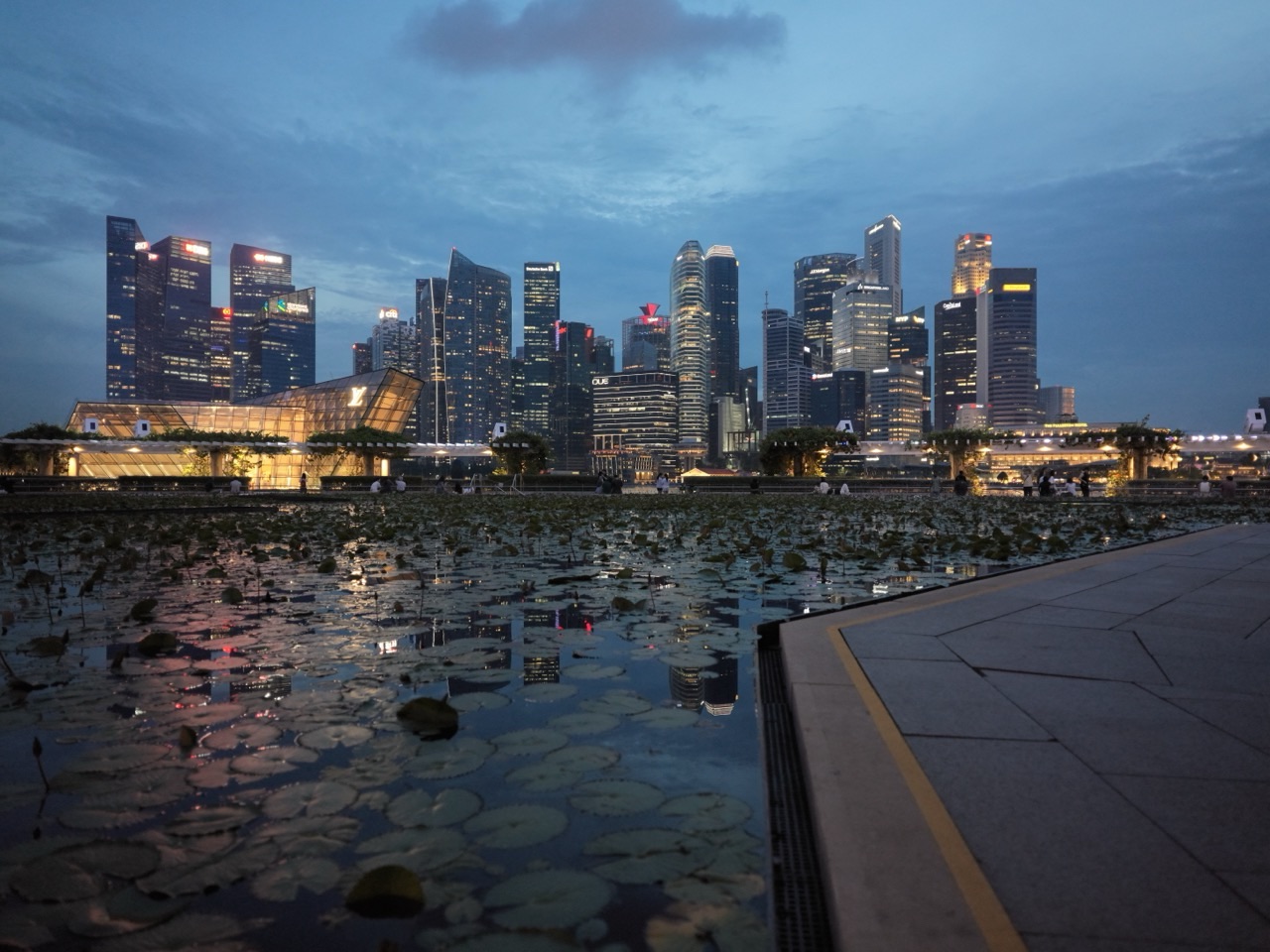
Singapore: Space Luxury in a High-Density City
Singapore makes spatial quality easy to understand because land is valuable and urban life is dense.
A larger apartment matters.
But so does proximity to parks.
So does access to waterfront.
So does ceiling height.
So does a balcony that can actually fit furniture.
So does landscape between buildings.
In a compact city, luxury space is often a combination of private area and borrowed public landscape.
China: Courtyards Show How Space Can Be Layered
Traditional courtyard architecture offers a useful lesson for English–Chinese readers.
Generosity does not have to mean one giant room.
Space can be distributed as sequences.
Gate.
Threshold.
Courtyard.
Hall.
Garden.
Inner room.
The luxury comes from transition and depth.
You do not see everything at once.
Space unfolds.
The Luxury of Landscape Is Spatial Luxury Beyond the Building
Space does not end at the wall.
A mountain view can make a room feel larger.
A coastline can create psychological openness.
A forest buffer can create quiet.
A garden can create privacy.
Landscape is one of the oldest forms of luxury because it gives people more world around them.
The Luxury of Distance Can Also Be Emotional
Sometimes spatial luxury is simply being far enough from a problem.
Far from traffic.
Far from noise.
Far from crowds.
Far from work.
Far from the city.
Retreats feel luxurious because distance changes attention.
The mind stops scanning the same familiar environment.
Spatial Luxury Requires Maintenance
More space creates more responsibility.
More surfaces to clean.
More systems to maintain.
More landscape to care for.
More energy to condition.
More security perimeter to manage.
This is an important reminder.
Luxury space is never only geometry.
It is an operating system.
Sustainable Luxury Questions How Much Space Is Enough
Spatial luxury raises difficult environmental questions.
Large buildings require more material.
They may require more energy.
They occupy more land.
The better question is not simply, “How large can we make it?”
It is, “What kind of spaciousness creates the most human value for the least waste?”
Height, light, view, storage, acoustics and flexibility can create luxury without endless expansion.
English–Chinese Space Luxury Vocabulary | 空间奢华词汇
- spacious — 宽敞的
- generous proportions — 宽裕的空间比例
- high ceiling — 高挑天花板
- double-height space — 挑高空间
- open-plan — 开放式布局
- private terrace — 私人露台
- private garden — 私人花园
- panoramic view — 全景
- floor-to-ceiling windows — 落地窗
- walk-in wardrobe — 步入式衣帽间
- foyer — 门厅
- circulation — 动线 / 通行流线
- sightline — 视线 / 视线通廊
- setback — 建筑退距
- landscape buffer — 景观缓冲带
Visit and Touring Vocabulary | Hotels, Homes and Architecture · 酒店、住宅与建筑
1. How large is the room? · 房间有多大?
Useful when comparing accommodation. 中文:房间有多大?
2. What is the floor area? · 室内面积是多少?
A more precise version of the same question. 中文:室内面积是多少?
3. How high is the ceiling? · 层高是多少?
Useful when discussing architecture. 中文:层高是多少?
4. Is there a private terrace? · 有私人露台吗?
Useful for hotels and residences. 中文:有私人露台吗?
5. Does the room have a panoramic view? · 房间有全景吗?
Useful for high-floor rooms and resort stays. 中文:房间有全景吗?
6. Is there a walk-in wardrobe? · 有步入式衣帽间吗?
A common suite and residence question. 中文:有步入式衣帽间吗?
7. Is the living room separate? · 客厅是独立的吗?
Useful when comparing rooms with suites. 中文:客厅是独立的吗?
8. Is there a private garden? · 有私人花园吗?
Useful for villas and ground-floor properties. 中文:有私人花园吗?
9. Which direction does it face? · 朝向是哪边?
Orientation affects daylight, heat and views. 中文:朝向是哪边?
10. Is there enough storage for luggage? · 有足够空间放行李吗?
A very practical luxury-travel question. 中文:有足够空间放行李吗?
11. Is the terrace private? · 露台是私人专用的吗?
Clarifies whether outdoor space is shared or exclusive. 中文:露台是私人专用的吗?
12. May we see the floor plan? · 可以看一下平面图吗?
Useful for understanding circulation and room relationships. 中文:可以看一下平面图吗?
Continue with the Top 100 Vocabulary for Visiting and Touring | World City Directory.
How to Read Spatial Luxury When You Travel
- Notice how far the entrance is from the street.
- Notice how long your eye can travel.
- Notice whether circulation feels effortless.
- Notice ceiling height.
- Notice where luggage disappears.
- Notice whether public and private zones are layered.
- Notice whether outdoor space feels genuinely usable.
- Notice whether the room feels calm before you identify any expensive material.
The best luxury spaces explain themselves through movement.
What Students Can Learn from Spatial Luxury
Mathematics
Area, volume, ratio, scale and geometry shape how buildings work.
Physics
Light, sound, heat and airflow change the experience of space.
Economics
Land scarcity, density and location influence why additional space can command large premiums.
Architecture
Spatial luxury teaches circulation, thresholds, proportion, orientation, storage and visual depth.
Geography
Climate, land supply, views and urban density shape what kinds of space become valuable.
Psychology
People perceive openness through distance, light, sound and control over social proximity.
Frequently Asked Questions
Why is space considered a luxury?
Because land and floor area are scarce in many desirable locations, especially dense cities. Extra space also provides privacy, flexibility, storage, comfort and distance from noise or crowds.
Is a larger home always more luxurious?
No. Proportion, light, circulation, acoustics, storage, materials and view can matter as much as size.
Why do high ceilings feel luxurious?
They increase room volume, change proportions and allow more dramatic light, windows and visual openness.
Why are terraces valuable?
Terraces extend living space outdoors and offer additional light, air, views and privacy when well designed.
Can a small apartment be luxurious?
Yes. Intelligent storage, beautiful proportions, acoustic calm, excellent materials, natural light and long sightlines can make a compact home feel highly refined.
Why do luxury spaces have fewer objects?
Visual restraint allows important objects, materials and views to stand out while reducing clutter and cognitive load.
What is borrowed space?
Borrowed space is the perceived extension created when views reach beyond a property boundary into gardens, landscapes, water or skyline.
Why is storage part of luxury?
Good storage removes visual clutter and allows living spaces to remain calm and flexible.
How does privacy relate to space?
More distance, layered thresholds and separated functions can reduce unwanted visual, acoustic and social intrusion.
What is the simplest form of spatial luxury?
Enough room to move comfortably, store what you need and leave some space empty.
Helpful Reading Across the eduKate Knowledge Graph
- The Art of Luxury | What Is Luxury?
- The Art of Luxury | Privacy Is the New Luxury
- The Art of Luxury | Time Is the Ultimate Luxury
- The Art of Luxury | Materials
- Crazy Rich Monaco | Monaco Real Estate, Property Prices and the Scarcity Economy
- Top 100 Vocabulary for Visiting and Touring | World City Directory
The Art of Luxury Is Having Room for Nothing
Room to walk.
Room to think.
Room to host.
Room to be alone.
Room for light.
Room for a view.
Room to leave a wall empty.
Did you know? One of the strongest signs of spatial luxury is not how much a room contains. It is how confidently it can afford to contain nothing at all.
Return to The Art of Luxury | What Is Luxury?
Series navigation: The Art of Luxury | Complete Series Directory · Luxury | World Directory · Crazy Rich World