
Coprophilous fungal spore analysis can help researchers investigate past dung, herbivore activity and changing landscapes—but the spores are not direct counts of livestock. Older studies made strong links between Sporormiella and grazing animals; research available in 2026 stresses wider possible substrates, local ecological variation and the dangers of counting broken part-spores as independent whole spores. The gold standard of teaching begins with that distinction between a real microscopic observation and the animal-history story built upon it.
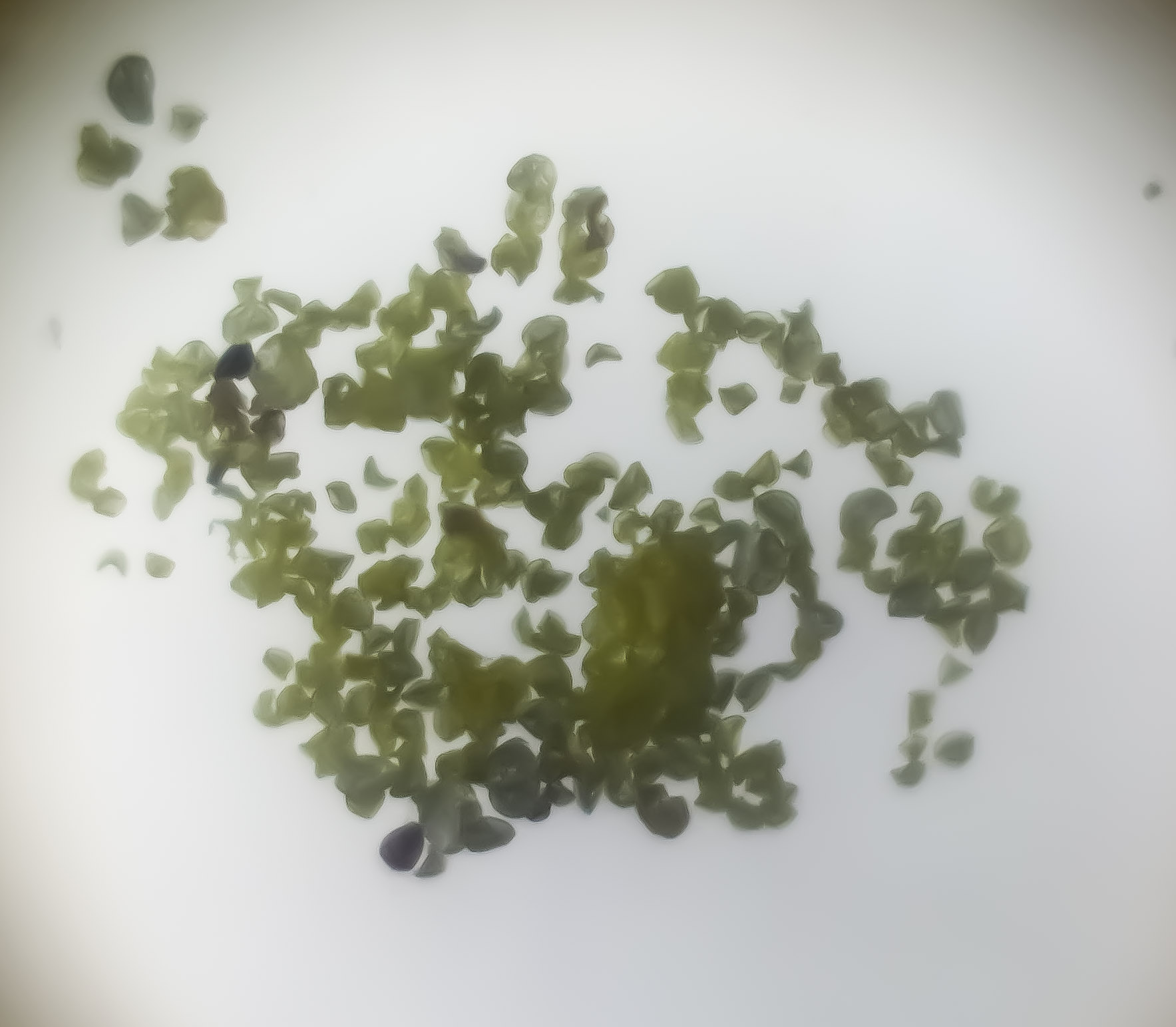
This complete reference guide covers fungal identification, Sporormiella and related taxa, part-spore fragmentation, pollen denominators, source-area modelling, preservation, sediment chronology and the fictional Cedar Marsh worksheet. Its featured image deliberately shows modern pollen grains as a microscopy comparison: they are not Sporormiella spores, not an archaeological sample and not the evidence used for the fictional calculations.
For contrasting research perspectives, read the 2006 herbivore-proxy paper alongside the 2026 critical review of the dung-only assumption.


1. A fungal spore can be a clue, not a herd census
Coprophilous fungal spore analysis is often used to explore past herbivore presence and possible dung deposition in lakes, wetlands and archaeological sediments. Some fungi frequently occur on dung, and their preserved spores can help researchers investigate grazing landscapes. But microscopic spore counts do not directly measure numbers of animals, identify a livestock species or prove human animal management. A good lesson explains where the spores might have formed, how they reached the sample and how sampling or processing changed the original record.
Begin with three hypothetical statements: a sediment sample contains distinctive fungal spore fragments; dung was probably present within the relevant source area; domestic cattle herds were maintained by an identified community at an exact time. These require different evidence. The first rests on appropriate morphological identification; the second needs ecological and contextual calibration; the third requires independent archaeological indications of domestication, management and chronology. Students should recognise that interpretive enthusiasm must not replace the missing steps.
2. Teach why scientific interpretations change
Some influential early studies treated Sporormiella fungal spores as tightly linked to herbivore dung and explored their use in reconstructing megafaunal decline. A 2026 review by Hawksworth and colleagues challenges an uncritical exclusive-dung interpretation by examining records of Sporormiella and related taxa across a wider range of substrates, including plant materials, and by reviewing the problems of counting fragments. The responsible teaching approach presents the evidence from both periods and explains why updated biological knowledge affects the proxy.
Ask learners to place a 2006 paper and a 2026 review beside one another. They identify which statements concern observed spore presence, which extrapolate to herbivore abundance and which assumptions the later study questions. The lesson is not that every older study is useless, nor that all fungal indicators fail. It is that science can revise a proxy when broader ecology, taxonomy and analytical methods reveal limits that were previously underappreciated.
3. Define coprophilous, facultative and non-pollen palynomorph
Coprophilous means associated with dung or dung-derived substrates; it need not imply absolute ecological exclusivity for every fungal taxon. Fungal spores found in pollen preparations are often included among non-pollen palynomorphs, a broad category covering biological microremains other than pollen. Different fungal taxa have different substrates and life histories. Students should learn precise terminology before referring to every dark microfossil as a dung indicator or treating one genus as a universal marker of grazing.
Build a vocabulary table distinguishing spore, part-spore, dung-associated fungus, pollen, phytolith and faecal spherulite. Ask where each is produced and what environmental processes might deliver it into sediment. Many of these can coexist in one sample while answering different research questions. Good cross-disciplinary reasoning depends on recognising the shared deposit without collapsing the biological origins of its separate particles.
4. Understand the Sporormiella and Preussia problem
Sporormiella, including organisms treated under related taxonomic concepts such as Preussia, can produce distinctive septate spores. They have become important subjects in palaeoecological studies of herbivore presence, but identification may be difficult when spores fragment during processing or are preserved incompletely. Even a correct genus-level identification does not, on its own, establish the local livestock species, source animal or precise substrate from which the fungus developed. Morphology and ecological interpretation are two different stages.
Students should draw a complete multi-septate hypothetical spore and the smaller component fragments that might be seen separately on a slide. They annotate septa, germ slit where visible, shape and the limits of fragment-level identification. Later they compare how a genus-level label from one surviving fragment differs from a species diagnosis based on a complete specimen. A microscope can support cautious identification without making the associated ecosystem unambiguous.
5. Distinguish part-spores from whole spores
One fungal spore can break into several smaller part-spores, and palynological preparation may increase fragmentation. Counting each part separately as if it were an independent reproductive unit can inflate the apparent abundance of the source fungus. The 2026 review specifically highlights this problem as a reason for caution. The effect can vary with taxonomy and preparation, so a universal conversion factor from part-spores to complete spores or dung amount should not be assumed.
Use a simple fictional slide where a single intact spore would have four recognisable parts, while another taxon has more. Suppose eight part-spores are seen; it does not follow that eight intact spores were originally present. The fragments may represent fewer source units, and the reconstruction itself may be uncertain. The purpose of the exercise is to separate counted microscope objects from biological individuals. This is the same denominator problem encountered with broken archaeological jaws and shell fragments.
6. Set a defensible microscopic identification protocol
Microscopy should specify the illumination used, magnification, preparation, image scale, diagnostic criteria and how ambiguous fragments are treated. Dark fungal spores may resemble other organic or mineral particles, while partial structures can remove the diagnostic features needed for identification. A strong method documents reference images and includes an indeterminate class. Students should not assign species names by resemblance to one cropped illustration or merge multiple taxa under a single convenient indicator label.
Train two observers to classify the same fictional slide independently. They record definite Sporormiella-like forms, uncertain fragments and other palynomorphs using an agreed rule. Compare not only final totals but the exact particles on which judgements diverge. An uncertainty interval or broader taxonomic rank may be more faithful than a crisp total obtained by silently resolving every disagreement in favour of the preferred hypothesis.
7. Use correct reference collections and local ecology
Modern fungal material can help teach morphology and clarify possible substrates, but ecological baselines vary among climates and ecosystems. Reference collections should document collection place, habitat, vegetation, dung or alternative substrate, season and sample treatment. A spore associated with grazing in one temperate wetland may behave differently in a humid tropical forest containing abundant plant litter. Species-level differences may also matter. Published associations should be treated as testable local relationships rather than universal laws.
Ask students to plan a modern survey with dung, plant litter, soil and air traps, together with relevant water or sediment samples. They must record comparable preparation and sampling effort across substrates. The design tests the relationship they hope to use when interpreting ancient sediments. Students should specify which ecological processes remain uncontrolled and avoid equating failure to detect a spore in one small modern sample with proof that a substrate cannot support it.
8. Explain why pollen-slide counts are not animal counts
Many palaeoecological analyses express fungal spore abundance relative to pollen, count a fixed number of pollen grains or report concentrations using marker spores and processed sediment amounts. These measures answer different questions. If the pollen denominator falls because the vegetation or pollen preservation changes, a fungal-spore percentage can rise even while the fungal count does not. If part-spores proliferate through fragmentation, the numerator can change without additional dung. Both issues complicate naive herd-size interpretations.
Present a fictional pair of slides with the same number of fungal part-spores but very different pollen totals. Students calculate each ratio and explain why the percentage changed. Then change the fragment classification while keeping pollen constant. The double exercise shows that a graph depends on numerator, denominator and identification protocol. A scientifically responsible report prints raw spore observations alongside the normalised result and explains the measurement units.
9. Trace spores from source to sediment
Spores may enter a lake or peatland by wind, water movement, animal activity or direct local deposition. Their dispersion depends on biological release, particle properties, vegetation cover, rainfall and basin form. A spore recovered in one lake is not automatically evidence that the source animal lived on its immediate shoreline, nor does a large lake necessarily record only its nearest field. Source area and transport need to be characterised for the specific archive and geography.
Ask learners to draw a catchment with a lake, a grazing area, wet vegetation and a stream. They trace several possible paths for spores into the core and identify where concentration could change along the way. Then move the hypothetical grazing activity elsewhere in the watershed while keeping the final sample constant. Students should see that source location can remain underdetermined by a single sediment count.
10. Consider post-depositional preservation
Once deposited, spores can be degraded, chemically altered, mixed or differentially preserved. Oxygen exposure, microbial activity, waterlogging, sediment chemistry and processing may affect survival and recognisability. A low abundance of identifiable material may reflect poor preservation or unsuitable extraction rather than low fungal production. Preservation conditions can differ across adjacent layers, particularly where sedimentation or water level changed. Interpreting a time series without checking those differences invites false ecological trends.
Give students two fictional peat samples, one well-preserved and one oxidised. Both are said to come from periods of similar grazing, but only one contains easily recognisable fungal spores. Ask which independent preservation measures would be useful and whether a negative spore result settles the grazing question. The lesson is that an environmental proxy is a record of formation and survival, not a transparent copy of the living world.
11. Recognise changing basins and hydrology
A water-level shift can alter the area contributing sediments, the degree of exposure and the transport of organic particles. A lake core might therefore show changing spore concentrations without an equivalent change in local herbivore populations. Basin morphology, wetland expansion, shoreline movement and sediment accumulation history matter. One should distinguish a change in vegetation and hydrology from a change in source animal abundance before labelling a graph as a direct grazing history.
Present an invented lake whose wetland margin expands across a period represented by several samples. Students consider whether the extra vegetated area could alter pollen, fungal habitats and particle delivery. Ask how lithology, aquatic indicators and mapped palaeoshorelines could constrain the explanation. An integrated model is preferable to assigning every rise in a spore curve to one more herd.
12. Work with caves and archaeological floors separately
A cave, shelter floor or dung-rich archaeological layer may preserve fungal particles in a different spatial and temporal setting from a long lake-core sequence. Local deposits might be closer to specific activity areas, but cleaning, trampling, later occupation and mixing can redistribute remains. A stool-like or dung-like context is not established by the presence of one spore alone. Microscopic remains need to be interpreted alongside sediment fabric, other biological indicators and site stratigraphy.
Compare a fictional cave floor with a remote lake core. Students discuss which can potentially tell them about one local activity zone and which better suits long-term regional ecological reconstruction. Neither archive is universally superior. The right choice depends on the question, dating, sample integrity and whether the indicators can distinguish source pathways. Making this distinction protects archaeology from importing palaeoecological assumptions without regard to context.
13. Do not identify wild or domesticated status from one proxy
Dung-associated spores can originate from settings involving wild herbivores, domestic animals or multiple ecological substrates. Even a robust finding of increased dung deposition does not automatically show that people domesticated, penned or owned the source animals. Management histories require archaeological evidence such as appropriate bones, enclosures, spatial organisation, material culture and chronology. The terms ‘grazing’, ‘herbivores’ and ‘livestock husbandry’ should not be used as if they were identical.
Give students a fictional valley containing wild ungulates and a later human settlement. A spore peak appears before the settlement phase, then persists afterward. Ask whether it proves the arrival of livestock. Students should design evidence that can discriminate between continuing wildlife, domestic management, changing fungal habitats and altered sediment delivery. Their answer should preserve the possibility that more than one process operated.
14. Understand regional limits of the proxy
Ecological associations reported from temperate grasslands may not transfer directly to tropical, humid or heavily forested settings. The 2026 literature cautions that Sporormiella and related forms can occur on a wider range of substrates than older exclusive-dung assumptions suggested. Researchers should therefore test proxy performance across local habitats, with consistent analytical methods and appropriate independent evidence. The value of the proxy may vary geographically rather than simply being universally valid or invalid.
Ask learners to compare two study plans, one from a cool open grazing landscape and the other from a humid forest with year-round leaf litter. Which environmental pathways might generate similar spore observations for different reasons? Students must propose matching modern reference sampling and list uncertainty arising from substrate availability. This exercise teaches ecological transferability: a good proxy needs to be assessed in the environment in which it is used.
15. Use several fungal indicators rather than one magic genus
Multiple spores of dung-associated or other ecological groups may help researchers form a stronger picture of past substrate conditions, especially when one named genus is ambiguous. However, every added taxon brings identification, ecology and preservation questions. A set of indicators is not automatically independent if they share a preparation or transport bias. Interpretation improves when the team distinguishes what each taxon is known to indicate, how strongly and in which setting.
Give the class a fictional table with several fungal morphotypes, pollen and plant remains. Require each to be classified by whether its ecological interpretation is well supported, context-dependent or uncertain. Then ask how an inference changes if one ambiguous category is removed. The goal is a transparent multiproxy model, not stacking many uncertain hints until the narrative feels certain.
16. Link spores with faecal spherulites
Faecal spherulites are tiny carbonate bodies that can occur in animal dung; fungal spores represent a different biological process. Their joint occurrence in a suitable archaeological context may be informative, but both have preservation and transport limitations. Carbonate spherulites can dissolve in unfavourable conditions, while spores have different organic preservation vulnerabilities. A disagreement between the indicators may reflect those differences rather than one method being simply wrong.
Set a fictional sediment sample rich in fungal spores but lacking identifiable carbonate spherulites. Ask whether the result excludes dung. Students should examine sediment pH, water movement, fungal substrate ecology, microscopic classification and sample history. Conversely, a rich carbonate signal without matching spores may arise from different preservation or formation paths. The best conclusion makes each proxy’s limitations explicit before integrating them.
17. Connect fungi to pollen and phytolith evidence
Pollen, phytoliths and fungal spores may coexist in one sediment preparation, but their biological origins and transport differ. Pollen informs aspects of vegetation; phytoliths preserve mineralised plant tissue traces; fungal spores may indicate ecological substrates or environmental processes. A vegetation change can affect all three without directly measuring animal abundance. Students need to avoid turning co-occurrence into automatic mutual confirmation when the indicators share causal drivers.
Construct a simple causality diagram linking plant litter, grazing, fungal activity, pollen production, transport and sedimentation. Ask which links are observed, experimentally calibrated or inferred from a particular study. The result should reveal why apparently supporting proxies can still be dependent. When interpretations converge, the class should identify the genuinely independent evidence that makes the convergence compelling.
18. Compare before and after using valid chronological control
A spore record becomes a history only when it is associated with a defensible chronology. Radiocarbon age models, marker horizons and stratigraphic sequence can provide temporal structure but often with meaningful uncertainty. Burrowing, mixing and redeposition may move spores across nominal layer boundaries. A peak plotted at an exact calendar year may represent material accumulating across a broader interval. Neither analytical precision nor plotting software can repair an insecure age association.
Ask students to match a fictional spore increase against a known settlement phase with broad chronological intervals. They must represent uncertainty honestly and discuss whether the datasets genuinely overlap. A claim that herbivore abundance declined on one particular date is unsupported if the core samples integrate decades or centuries. The exercise connects palaeoecology with the fundamentals of historical inference.
19. Use an explicit fictional Cedar Marsh example
Imagine Cedar Marsh has two equal-mass sediment samples processed under one lab method. Lower Layer yields twenty identified Sporormiella-like part-spores against five hundred counted pollen grains, while Upper Layer yields thirty part-spores against three hundred pollen grains. The simple ratios are four and ten parts per hundred pollen grains. The ratios differ by a factor of two and a half, but that number does not describe a two-and-a-half-fold increase in herbivores.
Students should notice both the increased numerator and decreased pollen denominator. They should also ask whether part-spore fragmentation, recovery and identification rules were comparable. The dataset has no independent estimate of fungal production, dung concentration, animal numbers or source area. It is a teaching demonstration only, not a real Cedar Marsh core. The correct conclusion is a change in one observed proxy ratio under stated conditions.
20. Audit a classification shift in the toy example
Suppose a second observer reclassifies ten of the Upper Layer fragments as indeterminate, leaving twenty confidently identified forms and three hundred pollen grains. Its ratio falls from ten to about 6.7 per hundred pollen grains. The lower ratio remains four. The apparent trend has weakened without any change in actual ancient grazing; only the modern identification rule changed. This does not make either count automatically wrong, but it makes the classification process central to interpretation.
Ask teams to report both observers’ counts, reasons for disagreement and a defensible primary rule. They should also calculate concentration using suitable added markers and processed sediment mass if such data become available. The point is to show how ratios, sampling choices and taxonomic uncertainty influence a curve that readers might otherwise mistake for an animal census.
21. Examine a modern background-control programme
A research programme can sample current soils, water margins, dung, vegetation and air deposition under known conditions to evaluate how fungal markers enter an archive. Appropriate controls depend on the relevant contamination and ecological pathway. Laboratory blanks help detect handling contamination; environmental background samples test whether spores are naturally present without the assumed activity. These are not interchangeable. The choice of controls should come from the research question rather than habit.
Let students design a seasonal sampling scheme with repeated locations and consistent laboratory processing. Ask what happens if only one grazing field is sampled once, or if controls are collected in a different climate and processed differently. A good baseline captures natural variability and alternative sources so the later ancient inference has a context. The next lesson can evaluate how uncertainty from the baseline should be reported.
Cedar Marsh fictional proxy-ratio calculation
| Fictional sample | Identified part-spores | Pollen counted | Part-spores per 100 pollen |
|---|---|---|---|
| Lower layer | 20 | 500 | 4 |
| Upper layer | 30 | 300 | 10 |
| Upper layer, stricter recount | 20 | 300 | 6.7 |
22. Protect specimens, samples and raw observations
Sediment cores and archaeological samples can be limited or protected. Sampling should follow permissions, stewardship responsibilities and a clear research need. Keep notes on storage, preparation, reference materials, chemical treatment and changes to taxonomic criteria. Raw photomicrographs, identified part-spore locations, counts and denominators allow later work to be reviewed. A specimen with uncertain provenance may be useful for teaching morphology without supporting a dated ecological claim.
Students should submit a reproducible lab packet: sample ID, source layer, methods, counted field, microscope scale, direct observations, category criteria, negative controls and reasons for uncertainty. A colleague should be able to reconstruct the calculations and understand whether the results refer to part-spores, complete spores or another unit. Data that can be audited are more useful than an elegant curve stripped of its history.
23. Write a defensible ecological conclusion
An honest conclusion may say that identified fungal microremains changed in observed relative abundance across a dated sediment interval, and that herbivore activity is one hypothesis requiring local ecological calibration. It should not automatically name a grazing species, domestic status, herd number or human historical cause. When stronger evidence exists, say what it contributes: dung-associated plant remains, archaeological enclosures, bones, carbonate microremains or a robust modern baseline.
Challenge students to rewrite ‘Sporormiella proves cattle farming doubled’ without emptying the finding of meaning. They might report observed spore categories and the limits of their denominator, then propose a follow-up comparison for animal management. A successful paper is one whose conclusions become clearer when caveats are added, not one whose story disappears when its assumptions are inspected.
Twenty applied teaching and evidence drills
Each case below is a fictional learning exercise, not an archaeological finding. The aim is to practise how different assumptions alter spore-based ecological interpretation.
1. Older certainty versus newer evidence
Students compare the 2006 claim of strong herbivore-dung association with the 2026 synthesis warning about wider substrates and part-spore counting. They distinguish data, generalisation and later corrective evidence. The objective is not to declare a winner by date, but to articulate which modern ecological validation is needed before applying the proxy to a new region.
2. Four fragments, one parent spore
A whole hypothetical four-part spore breaks apart during processing. Learners initially record four counted objects and later discover the pieces may come from one original. They must specify the observation unit and explain why the count cannot directly measure numbers of source fungi or animals. Fragmentation rules belong in the report.
3. Pollen denominator changes
Two sediment samples contain twenty part-spores each, but one has four hundred pollen grains and the other two hundred. Students calculate the ratios and explain why the second is larger despite identical fungal counts. The exercise builds understanding of what percentages actually measure.
4. An uncertain identification
A dark spore fragment has neither a complete germ slit nor clear septation. Students must record morphological uncertainty rather than force a Sporormiella identification. They should describe better comparative imaging, classification and reviewer disagreement procedures. A smaller defensible count is preferable to a larger but poorly defined category.
5. A humid forest baseline
A hypothetical tropical forest contains abundant damp plant litter but few large grazing animals. Students plan modern substrate controls to test whether fungal microremains might originate beyond dung. This case reflects why broader ecological evidence matters. They must not import temperate grazing interpretations without local validation.
6. A lake downstream of grazing
Spore particles can be transported from a distant source through a stream. Students map the watershed and determine whether the sediment supports local shoreline grazing or broader catchment input. The right answer should distinguish possible origins and identify field data that could help narrow them.
7. The sudden wetland expansion
Water level rises and expands the area of vegetated wetland surrounding a core site. Fungal habitats, pollen deposition and organic preservation change. Students identify how the proxy ratio might shift without an increase in animal numbers. They must examine independent hydrological and sediment evidence.
8. Fungal positive, carbonate negative
A sample contains spores but few detectable faecal spherulites. Students consider carbonate dissolution, spore source ambiguity and sampling differences. They should neither conclude that dung was definitely present nor declare the carbonate analysis defective. Both signals have their own formation and preservation histories.
9. Carbonate positive, fungal negative
A well-defined faecal spherulite signal appears where fungal spores are scarce. Students identify alternative reasons: fungal ecology, poor organic preservation, transport or incomplete detection. They must propose tests instead of inventing a universal expected ratio between two fundamentally different microremains.
10. A settlement arrives later
The first spore increase precedes the earliest secure occupation evidence. Students decide whether to attribute it to domestic herds. They should assess wild herbivores, alternative fungal substrates and dating uncertainty before making a cultural claim. The exercise teaches chronology and causation.
11. The no-spore report
A sediment layer yields no detected Sporormiella-like fragments. Students must state detection limits, sample volume, preservation, processing and wider ecological uncertainty. A negative result does not prove no herbivores or dung existed within the landscape. Its value is conditional on a transparent method.
12. A laboratory contamination check
Control blanks show a few fungal particles in a processing batch. Students identify possible material transfer and plan appropriate handling and repeat analysis. They must not automatically subtract the same number from every sample without a justified error model. The exercise distinguishes detection, source attribution and correction.
13. The small-number swing
One fictional sample contains two recognised part-spores and a second contains five. Students calculate a dramatic percentage increase and then discuss how individual classification errors, uneven fields of view and tiny samples affect confidence. Numeric precision should not suggest biological precision that the data lack.
14. Wild or domestic?
An increased fungal proxy coincides with wild herbivore bones and a later enclosure. Students must distinguish evidence for dung, wild herbivore presence and controlled domestic livestock. Each is a different historical proposition. The answer should name what the evidence directly supports and where independent archaeology is still required.
15. Taxonomic regrouping
A revised fungal classification changes which morphological fragments are assigned to a named genus. Students recompute the original curve using both classification systems and record the reasons for the revision. This teaches that reproducibility includes taxonomy as well as arithmetic; new knowledge may require a historical dataset to be reinterpreted.
16. Blind slide recount
Two students independently count the same pollen slide using a preagreed field and identification rule. They compare exact spore locations and disputed categories rather than hiding their disagreements. The exercise produces a stronger classification protocol and a documented uncertainty statement.
17. Temporal averaging
A core slice covers many decades, yet the report assigns a sudden spore change to a single year’s livestock policy. Students explain why the sampling and chronology cannot establish such fine timing. They should reframe the conclusion at the resolution the archive can genuinely support.
18. The source-area reversal
A remote lake registers a high fungal proxy signal while a near-settlement peat core does not. Students consider deposition paths, basin hydrology, preservation and habitat sources. One elevated value cannot mechanically rank two sites by animal abundance. Independent modern calibration and spatial replication are needed.
19. Report-revision clinic
A student writes that a high part-spore percentage proves a thousand cattle lived beside a marsh. The class replaces the unsupported number with a measured proxy statement and a clear set of alternatives. The final report must retain informative observations while abandoning the false herd census.
20. Research stewardship
The only protected sediment block is proposed for destructive sampling even though the study question can be addressed through archived slides. Students must compare the expected value of new sampling with its irreversible cost, seek permissions and preserve the existing record. Responsible research choices are part of evidence quality.
Advanced laboratory and inference clinics
1. A second count without a second herd
Provide two parts of one slide with different recovered numbers and ask students to distinguish local heterogeneity from independent ecological variation. A classroom team that counts more fields may gain precision about that slide, but it does not create a new independent marsh, grazing episode or source animal. Teach sampling hierarchy explicitly so the number of observations is not confused with the number of independent study units.
2. The missing blank
An impressive spore-rich result arrives without a recorded preparation blank. Students must decide what can still be reported and what cannot be confidently attributed to ancient sediment. They should specify the most relevant modern contamination routes, propose a careful rerun where material remains, and state why the omission should be disclosed. A transparent limitation protects scientific integrity better than a silent assumption.
3. The spatially mixed core
One sample includes redeposited material from an older soil horizon. Students need to distinguish the age of fungal growth from the age of sediment arrival. They can use stratigraphic observations, sediment fabric and independent chronology to test mixing. A clear ecological signal can be historically misleading when its material came from a different time or place.
4. Heterogeneous fungal substrates
A reference survey identifies similar fungal forms on dung, woody debris and moist litter. Students create a table separating confirmed observations from broader environmental inference. They must formulate a cautious ancient interpretation that remains useful without describing any one substrate as exclusive. The lesson shows how new biology can refine archaeological meaning rather than making the research question irrelevant.
5. Sensitivity to taxonomic boundaries
A palaeoecological series changes when uncertain fragments are removed from the main named category. Students compare both curves, mark layers whose conclusions depend on the contested identifications and suggest how improved reference material might help. Reporting sensitivity is an act of scientific strength: it identifies which claims remain robust across plausible methods.
6. The practicum handover
One student passes a set of counts to another without sample IDs, microscope photographs or denominator rules. The receiving student cannot reproduce the inference. The class builds a practical handover template that records every observed unit, the area or volume counted, identification confidence, reference material, age model and calculations. It turns a long scientific article into a usable laboratory standard.
7. A multi-proxy disagreement
An independent bone assemblage suggests local herbivores, while fungal spores are ambiguous and pollen indicates wetland expansion. Students design a model that preserves all three findings without forcing a single cause. They should identify shared and independent assumptions and propose a targeted follow-up. Contradiction may reveal changing source areas or preservation rather than research failure.
8. The research question gate
A team proposes expensive analysis of every sediment horizon but cannot explain what result would distinguish herbivore activity from plant-litter fungi. Students write a falsifiable comparison and select the minimum observations needed to test it. They learn that the best method begins with an answerable question, not an impressive instrument wish list.
Teaching sequence across three sessions
- Session A: classification of pollen, fungal spores and mineral microremains; whole-spore versus part-spore counting; blind recount and control slides.
- Session B: source-area, dung and alternative-substrate ecology; 2006 versus 2026 literature comparison; preservation and hydrology.
- Session C: Cedar Marsh arithmetic, ratios and denominators, chronology, multiproxy inference, ethical field sampling and a final uncertainty-calibrated report.
- Deliverables: a scale-labelled reference drawing, logged raw counts, a controls plan, two rival ecological explanations and a short properly sourced interpretation.
Evidence-grade scientific rubric
| Criterion | Meets the teaching standard | Unsupported shortcut |
|---|---|---|
| Taxonomic identification | Morphology and uncertain fragments separately documented | Every brown speck called Sporormiella |
| Counting unit | Part-spores distinguished from whole spores | Fragment count equated with original fungal individuals |
| Denominators | Pollen totals, mass and chosen ratio clear | Percentage treated as direct livestock headcount |
| Ecology | Alternative substrates and regional variability considered | One temperate association used worldwide |
| Chronology | Dating and mixing checked | One plotted point given an exact historical cause |
| Conclusions | Independent dung, bone, plant and archaeological evidence integrated | A spore peak proves domestic cattle owned by one group |
Frequently asked questions
Do Sporormiella spores prove that domestic cattle were present?
No. Even a robust dung-associated signal does not by itself identify a domestic species, ownership or herding practices. Wider substrates and ecology also require consideration.
Why does counting spore fragments matter?
A whole spore may break into several part-spores. Counting each fragment as if it were an independent original can exaggerate the apparent signal.
Has modern research questioned an exclusive dung interpretation?
Yes. A 2026 review examines wider fungal substrates, part-spore bias and ecological variation, encouraging local calibration and multiple lines of evidence.
What does a high percentage relative to pollen mean?
It describes a ratio under the chosen counting method. A fall in pollen counts can raise the ratio even without an equivalent rise in fungal production.
If no spores are found, were there no herbivores?
No. Preservation, source area, substrate ecology, sample size and analysis sensitivity all affect detection.
Are the Cedar Marsh observations real archaeological data?
No. Cedar Marsh, every sample value and all associated calculations here are explicitly invented teaching examples.
Research sources and linked eduKate reference disciplines
- Davis and Shafer (2006): Sporormiella fungal spores and herbivore density
- Hawksworth and colleagues (2026): Beyond the dung heap, a critical review of Sporormiella reliability
- Teaching Faecal Spherulite Analysis
- Teaching Archaeoparasitology
- Teaching Phytolith Analysis
- Teaching Archaeological Starch Grain Analysis
- Teaching Soil Micromorphology
- The Gold Standard of Palaeoclimatology
- The Gold Standard of Archaeology
- Gold Standard master hub
The gold standard of teaching coprophilous fungal spore analysis is a learner who can recognise what was counted, explain the difference between fragments and spores, evaluate transport and ecological alternatives, and connect any inference about ancient herbivores to evidence that genuinely supports it.