
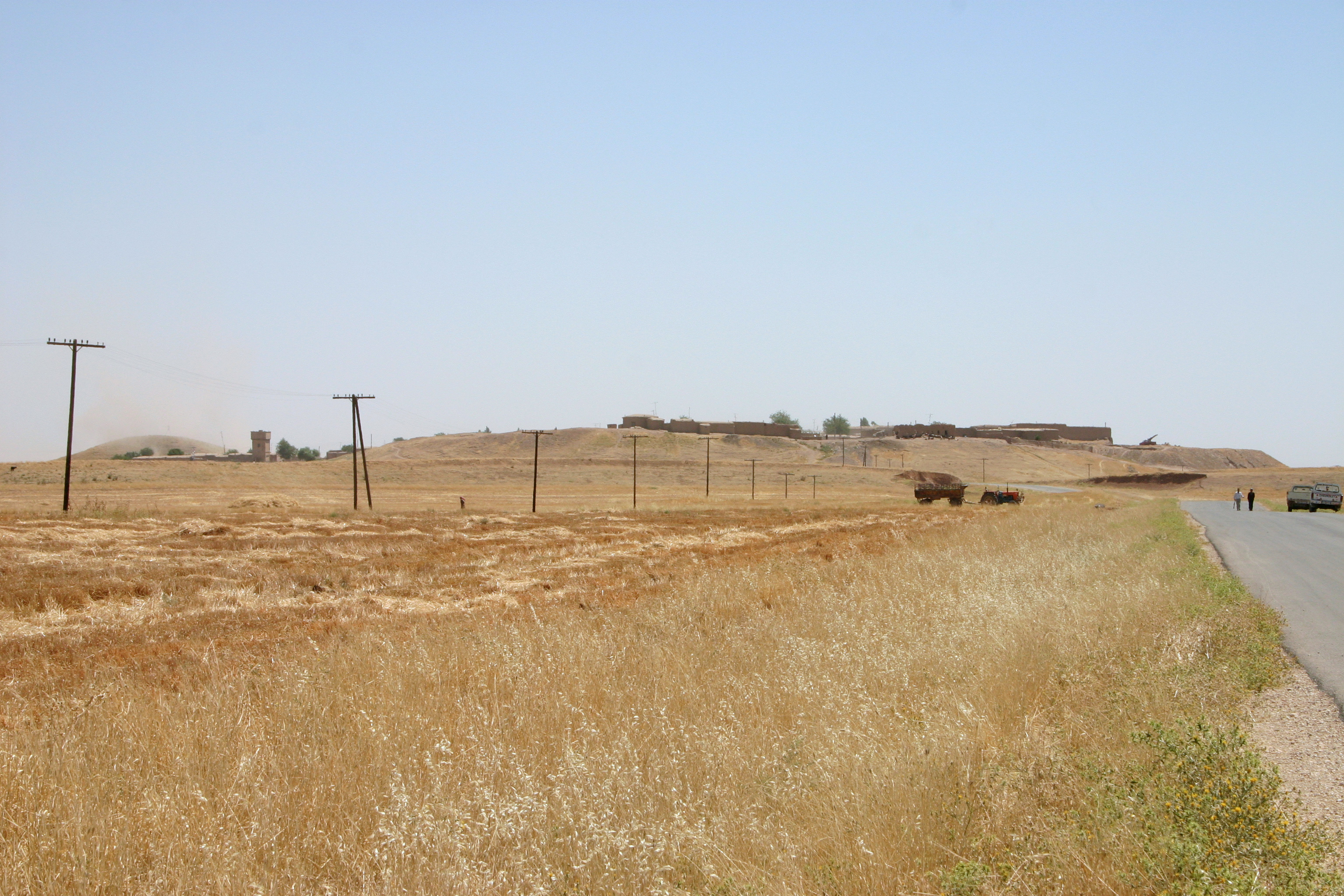
What will happen to civilisation when a powerful government depends on farms far away, and those farms experience years of water stress? The Akkadian Empire offers one of history’s most discussed examples. More than four thousand years ago, rulers in Mesopotamia connected cities, administrators, grain supplies, soldiers and trade across a large territory. Around the late third millennium BCE, that imperial arrangement broke apart. Was climate change the cause? The answer is illuminating precisely because it is not simple.
Did you know? Excavations at Tell Leilan in what is now northeastern Syria uncovered an Akkadian administrative complex, grain-related facilities and evidence of changing occupation. Climate reconstructions point toward a major dry interval around 2200 BCE. Yet northern Mesopotamian communities had different water sources, political relationships and opportunities. Some places contracted; others persisted or adapted.
Here is the idea that matters for our future: climate pressure → food exposure → fiscal and political choices → migration or adaptation. Each step has to be examined. A drought is a natural hazard; whether it becomes a widespread social catastrophe depends on the circumstances surrounding it. This guide distinguishes what archaeology shows, what climate models suggest and what remains uncertain.
Akkad and civilisation in one minute
| Question | Quick answer |
|---|---|
| What was Akkad? | A major Mesopotamian empire associated with Sargon and his successors in the twenty-fourth to twenty-second centuries BCE. |
| Where was it? | The Mesopotamian region of present-day Iraq, extending influence into parts of modern Syria and neighbouring lands. |
| Why was food important? | Imperial administration, military forces, specialists and cities depended on predictable agricultural surpluses and exchanges. |
| What happened around 2200 BCE? | Akkadian political structures fragmented, and settlement patterns shifted in parts of the north. |
| Did a drought occur? | Climate proxies, archaeology and simulations provide evidence for significant regional aridity, with remaining chronological and spatial uncertainty. |
| Was drought the sole cause? | No single cause is proved. Political competition, overextension, warfare, agricultural management and regional diversity matter. |
| What is the modern lesson? | Protect food and water security, understand regional differences and sustain governance capable of adaptation. |
The everyday machinery behind an ancient empire
An empire is often represented by a map coloured in one shade. That map conceals work: scribes track deliveries, farmers cultivate fields, merchants move goods, officials negotiate authority, and rulers expect resources from communities distant from their court.
The Akkadian rulers are famous because of the scale of their power and the written evidence they left behind. Yet the empire’s capacity depended on grain, animals, labour, waterways and regions where rain-fed farming was possible. Southern Mesopotamia relied strongly on irrigation; northern agricultural zones could depend much more on seasonal rainfall.
These differences are crucial. A rainfall shock might affect one plain severely while a community with reliable river water experiences a different problem. If imperial taxes and supply arrangements tie their fortunes together, a local harvest shortage can become a wider administrative crisis.
The Yale Tell Leilan Project describes evidence of an Akkadian administrative building and the area’s agricultural importance. The site was not merely a ruin waiting for collapse: its rooms, inscriptions and grain facilities testify to earlier organised economic life.
Did you know? The changing climate is visible without an ancient weather station
Researchers can reconstruct aspects of past climate through mineral dust, cave deposits, lake sediments, marine records and other environmental archives. Each proxy records a particular physical process. Dating methods add uncertainty, and nearby locations do not always respond identically.
A 2019 study on precisely timed dust activity examined environmental evidence from the Middle East around the so-called 4.2-kiloyear event. It found unusual dust conditions coinciding approximately with changes in ancient societies, while also discussing the difficulty of connecting a distant climate archive to conditions at one city.
The phrase 4.2 ka BP means approximately 4,200 years before the conventional reference year 1950 in geological chronology. It refers to a broad time interval rather than an earthquake-style date when a continent’s rainfall suddenly stopped.
A 2019 Journal of Archaeological Science study modelled climate changes across the Mesopotamian region over several millennia. Its simulations suggested reduced water availability around the Akkadian transition, potentially placing extra pressure on vegetation and agriculture. A model is powerful evidence about plausibility, but it is not a census of farmers or a court diary.
Why Tell Leilan matters so much
Tell Leilan, associated with ancient Šehna and later Šubat-Enlil, lies in the Khabur region of northeastern Syria. Excavations have revealed a substantial third-millennium urban centre, with buildings associated with local and Akkadian-period administration.
The Tell Leilan Project’s excavation report describes an Akkadian palace, grain-storage areas and a short-lived post-Akkadian occupation. High-precision radiocarbon dates from grain help researchers place the final activity of some buildings in the late third millennium BCE.
The research also documents a long interval of much reduced or absent urban occupation in the excavated area. For investigators, that is a significant result: a former administrative centre no longer worked as it had. But it does not identify where every previous resident went, nor does it prove all of Mesopotamia became empty.
The project’s regional overview discusses migration and changing settlement patterns across areas with different water access. In such discussions, leaving a rain-fed plain may be an attempt to preserve livelihoods, not the disappearance of a people.
A city can therefore collapse as a political centre while the knowledge of its inhabitants travels elsewhere. Archaeologists need to follow both the abandoned buildings and the regions where later communities continued.
Was the Akkadian Empire destroyed by drought?
One influential interpretation links severe drought and blowing dust around 2200 BCE to the abrupt loss of agricultural productivity and political capacity. A classic 1993 Science article assembled archaeological and soil-stratigraphic evidence for disruption in northern Mesopotamia and argued for a significant climate contribution.
Other scholarship emphasises that the transition was regional and complex. A 2020 PNAS study of Tell Tayinat and northern Levantine evidence shows that not every community responded alike to the period’s changing conditions. In some locations the chronology of settlement decline does not align neatly with a single climatic event.
This debate makes the history better, not weaker. It asks whether drought began before political turmoil, whether local agriculture was vulnerable, and what communities with other water sources were able to do. ‘Climate caused collapse’ is a hypothesis about several connected mechanisms, not an instruction to stop examining politics.
Internal rivalries, the costs of imperial control and conflict may also have contributed to Akkadian fragmentation. Some texts portray royal campaigns and ideological claims rather than neutral economic accounts, so the political record requires careful interpretation.
How a harvest problem can become a government problem
- 1. Production risk: dry farming suffers if rainfall falls below the range crops need.
- 2. Household pressure: families use reserves, change crops, sell assets, seek work or relocate.
- 3. Fiscal pressure: a governing system that depends on grain levies and supplies has less capacity to support officials and soldiers.
- 4. Political response: leaders may redistribute resources, negotiate cooperation, demand more taxes or compete for control.
- 5. Feedback: conflict and delayed maintenance can reduce agricultural recovery and make food distribution less dependable.
- 6. Reorganisation: people may move to better-watered places, rebuild smaller settlements or maintain parts of older networks.
Every arrow is conditional. Drought does not automatically create war. A tax change is not automatically a famine. A household with grain reserves and supportive neighbours can respond differently from one that is already deeply indebted.
This is why the phrase ‘the first empire collapsed’ cannot substitute for a story of regional livelihoods. An empire’s central administration and a farming household exist on different scales and time horizons.
The important distinction between dry farming and irrigation
In southern Mesopotamia, river-fed agriculture could continue under conditions different from those on rain-dependent northern plains. Both systems had vulnerabilities. Irrigation required maintenance and management of water and soil salts; dry farming relied on adequate seasonal rain and its timing.
If one region fails, an empire might import food from another. That can be an enormous advantage of political integration. Yet relying on a single distant corridor can also spread a shortage or expose the centre when transport or taxation breaks down.
A modern society has more technologies, weather forecasting and food systems than Akkad did. But the underlying question remains: do apparently independent supplies depend on the same rainfall zone, energy network, river or policy decision?
Did civilisation end when Akkadian rule fragmented?
No. Mesopotamian communities, languages, writing traditions, farming and later political centres continued in changing forms. The Akkadian language and cuneiform writing influenced later centuries, even after the empire itself was no longer intact.
The record shows shifting states and settlements, not humanity starting again from zero. Later dynasties, trade arrangements and urban centres emerged. Different communities experienced hardship and opportunity unevenly.
This does not mean that the political breakdown was harmless. Warfare, lost livelihoods and movement can be severe. It means that identifying exactly what was lost—and what persisted—produces a more truthful understanding than a dramatic single word.
Four possible futures for a connected civilisation
Scenario A: repeated drought, workable institutions
Hypothetical. Several agricultural regions experience lower rainfall. Credible forecasts, reserves and transparent support protect access to staple foods. Water-efficient changes and alternative sources help households adapt. The economy bears costs, but basic services remain intact.
Scenario B: regional inequality widens
Hypothetical. Rain-fed regions lose productive capacity faster than better-watered districts. National food totals appear manageable, but rural workers lose income and land. Migration rises because opportunities are distributed unevenly. A civilisation may remain prosperous in aggregate while many communities face deep hardship.
Scenario C: food stress collides with conflict
Hypothetical. A prolonged drought arrives as transport routes and institutions are already strained. Local disputes delay water management and relief; rising prices deepen mistrust. The original environmental pressure becomes a larger crisis because cooperation and repair capacity are inadequate.
Scenario D: new settlement patterns preserve knowledge
Hypothetical. Some towns shrink as families relocate toward more dependable water and employment. Schools, administrative records and skills transfer with people. Society changes its geography without universal cultural disappearance, although displaced households may need sustained support.
These scenarios are not probability estimates or forecasts for a particular country. They are cause-and-effect exercises that clarify what to monitor and which choices could alter outcomes.
What evidence would tell us whether a future society is coping?
- Water reliability: trends in rainfall, aquifer levels and household water access rather than one exceptional year.
- Food security: nutritious food affordability and crop outcomes at the household level.
- Public finance: whether essential services can be funded even after poor harvests or trade disruption.
- Geographical flexibility: alternative routes, crops and livelihoods that actually work.
- Institutional trust: credible information, reviewable decisions and cooperation across districts.
- Mobility and protection: whether people choosing or needing to move have safe, realistic options.
- Maintenance: trained operators, repairs and records that keep essential networks working.
No single number can predict a civilisation’s survival. Good indicators help people identify specific vulnerabilities early enough to act.
A five-minute exercise for readers
Choose an essential food on your table. Identify where it grows, the water source supporting it, the roads and markets connecting it to you, and which workers keep that chain moving. Now imagine the growing region has three poor seasons.
Can another region help? Could the same drought affect all the backup suppliers? Are reserves sufficient? Which households would struggle first if prices rose? This exercise turns a vague fear of collapse into a set of practical questions.
Akkad’s value as history is not that it makes an inevitable prediction. It is that the archaeological and environmental records remind us how closely linked agriculture, political authority and human movement can become.
Frequently asked questions
When did the Akkadian Empire collapse?
Its imperial system fragmented around the end of the twenty-second century BCE, though historical chronologies vary and the changes occurred over time rather than one precisely documented day.
Did drought alone destroy Akkad?
There is substantial evidence of aridity and regional settlement change, but a single-cause explanation is not established. Political factors, agriculture, geography and regional adaptation also matter.
What was the 4.2-kiloyear climate event?
A broad period of climatic changes, including increased aridity in parts of Southwest Asia. Its timing, extent and consequences vary among climate archives and places.
Did all Mesopotamian cities disappear?
No. Some northern settlements contracted or were abandoned, while other cities and regions continued and later political cultures developed.
What should modern civilisation learn?
Study the timing and distribution of risks, support food and water access, maintain cooperative institutions and understand that human adaptation can take many forms.
Continue learning about civilisational change
- When Food Production Falls: Mesopotamia and Soil Salinity — different soil and irrigation pressures.
- When Monsoons Shift: Indus Valley Cities — rainfall and settlement change.
- When Raised Fields and Rainfall Change: Tiwanaku — competing climate and archaeological chronologies.
- Do Civilisations Collapse or Transform? — an introduction to historical evidence and future scenarios.
- Civilisation | The Beginner’s Guide — the larger systems perspective.
Sources and evidence notes
- Yale Tell Leilan Project — Acropolis Northwest: Akkadian Palace, excavation and radiocarbon chronology.
- Yale Tell Leilan Project — Overview, post-Akkadian settlement, regional patterns and interpretation.
- Weiss and colleagues — The genesis and collapse of third millennium north Mesopotamian civilization, Science (1993).
- Precise timing of abrupt increase in dust activity in the Middle East coincident with 4.2 ka social change, PNAS (2019).
- Cookson and colleagues — Impacts of long term climate change during the collapse of the Akkadian Empire, Journal of Archaeological Science (2019).
- Beyond megadrought and collapse in the Northern Levant, PNAS (2020), variation among regional responses.
- Tell Leilan photo by Zoeperkoe / Arne Wossink, Wikimedia Commons, 2005, CC BY-SA 3.0.

Reviewed 24 October 2026. The cover is a real archaeological-site photograph of Tell Leilan taken in 2005; it is not a visual record of an ancient drought. Creative Commons Attribution-ShareAlike 3.0. Historical findings are distinguished from proposed mechanisms and hypothetical future scenarios.