
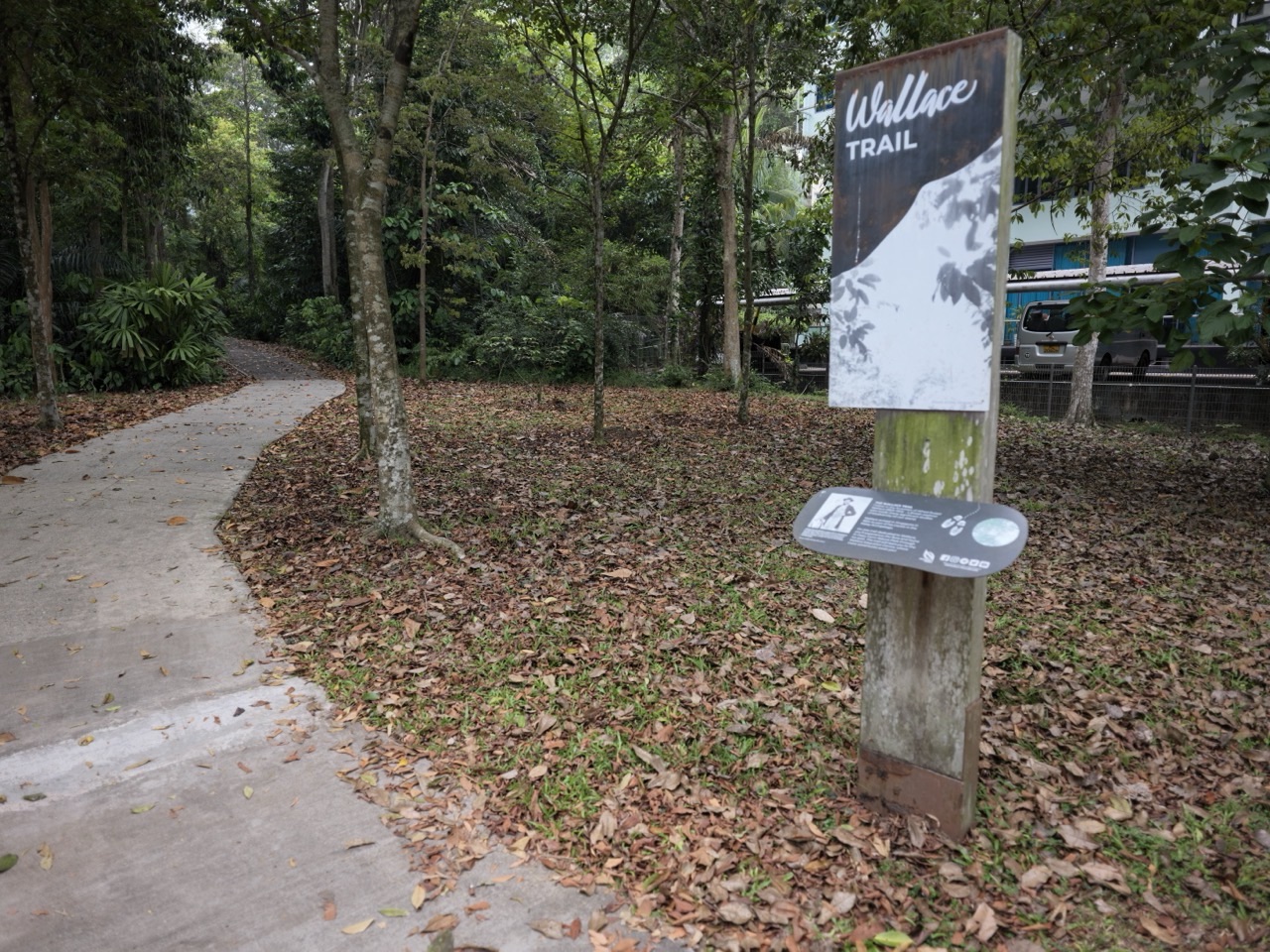
Did you know that a place called Dairy Farm Nature Park really was a dairy farm? The name is not a marketing invention. It records one of several very different ways this patch of Upper Bukit Timah land has been used.
Today, visitors walk through greenery, visit the Wallace Education Centre and observe former quarry landscapes. Earlier generations knew parts of the same ground as plantations, dairy facilities and working land. The change helps explain how land use, biodiversity and heritage interact in Singapore.
The quick answer: Dairy Farm grew from agricultural and industrial uses into a managed nature park. Its value today comes from protecting habitat while allowing people to study the area’s history—from cows and granite extraction to Alfred Russel Wallace’s natural history work.
In this guide: What was here before the park? · Why did a dairy farm become a nature park? · What has Alfred Russel Wallace got to do with the area? · How did an old cowshed become a learning centre? · Why are there two different quarry landscapes? · What does a walk along the Wallace Trail teach? · How should families plan a visit in 2026?
1. What was here before the park?
During the nineteenth century, forest on parts of the Bukit Timah foothills was cleared for gambier and pepper cultivation. Settlements and farms occupied areas that are now associated with green trails. This does not mean every tree in the neighbourhood was cut down or that the land had only one use at a time. Different patches of land had different histories.
In the early twentieth century, farming took a new form. Cold Storage acquired land in the area in 1929 and developed a dairy venture in the early 1930s, importing Friesian cattle from overseas. Maintaining dairy cattle in the equatorial climate was technically challenging, which made the operation noteworthy.
Fresh milk had to be produced, handled and distributed. That required buildings, workers, livestock care and connections to the rest of Singapore. The same basic lesson applies to modern supply chains: having a product is only part of the system; production, safety and delivery must work together.
2. Why did a dairy farm become a nature park?
Land use changes when the needs of a city change. The dairy operation eventually ceased, and the grounds later hosted vegetable farming and other horticultural activities. Former quarries were also part of the surrounding landscape. Over time, government planning placed greater emphasis on protecting and reconnecting natural habitats in the Bukit Timah area.
NParks developed Dairy Farm Nature Park, which opened in 2009, as a nature destination and a buffer around Bukit Timah Nature Reserve. A buffer park gives visitors somewhere to enjoy nature outside the most sensitive parts of a nature reserve. It can also protect important habitat and provide opportunities for environmental education.
NParks currently lists the park as 75 hectares. Older brochures sometimes describe a smaller area, so use the current park information when planning a visit rather than assuming all historical maps are identical.
3. What has Alfred Russel Wallace got to do with the area?
The name Wallace Trail commemorates Alfred Russel Wallace, the nineteenth-century naturalist who independently developed ideas about evolution by natural selection. Wallace explored the Malay Archipelago and used Singapore as a base for studying tropical species.
NParks explains that during his visits in 1854 Wallace collected about 700 species of beetles in the vicinity of what is now Dairy Farm Nature Park. He studied organisms and their geographic distribution to understand how living things differ between places.
Here is the interesting connection: a present-day trail can help visitors ask the same kind of question. Why do we see certain plants here but not elsewhere? What do shade, soil, water and disturbed land change? Nature observation turns a familiar walk into a science lesson.
Wallace’s work should not be described as if he personally designed the modern park. The trail and learning centre are contemporary tributes to a historical naturalist.
4. How did an old cowshed become a learning centre?
One former farm building was preserved and adapted into the Wallace Education Centre. NParks describes it as a refurbished cowshed containing exhibits about biodiversity, the history of the area and the natural history of the Malay Archipelago.
This is called adaptive reuse. Instead of demolishing every structure once its original purpose ends, planners keep useful elements of a building and give it another role. That decision can retain physical evidence of a place’s past while meeting present-day needs.
The centre includes an exhibition about Wallace and activities intended to encourage observation and scientific curiosity. The old agricultural function is no longer active: there are no dairy cows living in the park today. The building, not a herd, is the historical link.
5. Why are there two different quarry landscapes?
Did you know that the former Dairy Farm Quarry and Singapore Quarry look quite different? NParks explains that Dairy Farm Quarry is filled with earth, leaving exposed rock cliffs, while Singapore Quarry contains a scenic lake and wetland habitat.
That difference matters because people sometimes describe both as if they were the same water-filled quarry. They are not. Their appearances reflect different histories of excavation, subsequent land use and ecological change.
At Singapore Quarry, a designated viewing area lets visitors look for freshwater plants and animals. Do not enter quarry water, climb rock faces or leave permitted trails. A former industrial site with wildlife is not automatically safe for unsupervised exploration.
6. What does a walk along the Wallace Trail teach?
NParks’ current trail information describes the 2.2-kilometre Wallace Trail between Hillview MRT and the Wallace Education Centre. The walk is rated easy to moderate and is estimated at around one hour in one direction, depending on pace and conditions.
Walk slowly enough to notice small details. Fruit trees such as rambutan, jackfruit and mango can be reminders of older kampong landscapes. Butterflies, birds and streams reveal how living organisms use different parts of the habitat.
A useful question for students is: Is this tree likely to be here because of natural regeneration, past cultivation or modern park management? You may not be able to answer confidently by sight alone. Compare your observation with an NParks interpretive sign or a trusted field guide.
7. How should families plan a visit in 2026?
NParks identifies Hillview MRT as a nearby station and specifies that wheelchair accessibility is limited to the route from Carpark B to the Wallace Education Centre. That is a useful example of why a place marked as ‘accessible’ on a general listing may still require route-by-route planning.
The bigger lesson is simple: Dairy Farm Nature Park is not a single untouched landscape. It is a living record of how agriculture, quarrying, conservation and education can occupy the same ground at different times.
- Check the current NParks visitor page for opening hours, trail conditions and permitted activities.
- Choose the Wallace Trail for a history-and-science walk; choose the quarry viewing route if your group is particularly interested in former quarry landscapes.
- Bring drinking water, sun and rain protection and appropriate walking shoes.
- Follow wildlife etiquette and keep pets only where NParks explicitly permits them.
- Remember that accessible paths do not extend to every section of the park; confirm mobility requirements before travelling.
Frequently asked questions
Were there really dairy cows in Bukit Timah?
Yes. Cold Storage developed a dairy farming operation in the Dairy Farm area during the early twentieth century, using imported Friesian cattle.
Is Dairy Farm Nature Park the same as Bukit Timah Nature Reserve?
No. Dairy Farm is a neighbouring nature park that also provides a recreational and habitat buffer for Bukit Timah Nature Reserve.
What is special about Wallace Education Centre?
It is housed in a converted former cowshed and uses exhibits and activities to interpret natural history and biodiversity.
Are Dairy Farm Quarry and Singapore Quarry the same?
No. Dairy Farm Quarry is largely filled with earth, while Singapore Quarry is a water-filled former quarry with a wetland habitat.
Official sources and further reading
Official sources help distinguish established facts from plans and changing visitor arrangements. For current access, operating hours and development schedules, check the responsible authority.
- NParks: Dairy Farm Nature Park and current visitor information
- NParks: Hiking and nature walks at Dairy Farm Nature Park
- NParks: Wallace Education Centre
- NParks: Who, What and Where of Wallace
Keep exploring how Bukit Timah works
- How Bukit Timah Works | Why Granite, Quarries and Hills Shaped the Area
- How Bukit Timah Works | How the Rainforest Survives Inside Singapore
- How Bukit Timah Works | How the Rail Corridor Connects History and Nature
- How Bukit Timah Works | Why Schools and MRT Stations Follow the Main Road
- How Bukit Timah Works | Why Floods Happen and How the 2026 Canal Upgrade Helps
- How Bukit Timah Works | How Beauty World Grew from a Market into a Town Centre
- How Bukit Timah Works | How Kampongs, Temples and Fuyong Estate Shaped the Neighbourhood
- How Bukit Timah Works | Why Bukit Timah Was Crucial in World War II
- How Bukit Timah Works | How Dairy Farm Became a Nature Park (you are here)
- How Bukit Timah Works | Why Hawkers Moved to an Interim Market
- How Bukit Timah Works | How the Former Fire Station Became a Community Hub
- How Bukit Timah Works | Why Singapore Botanic Gardens Is UNESCO Heritage