
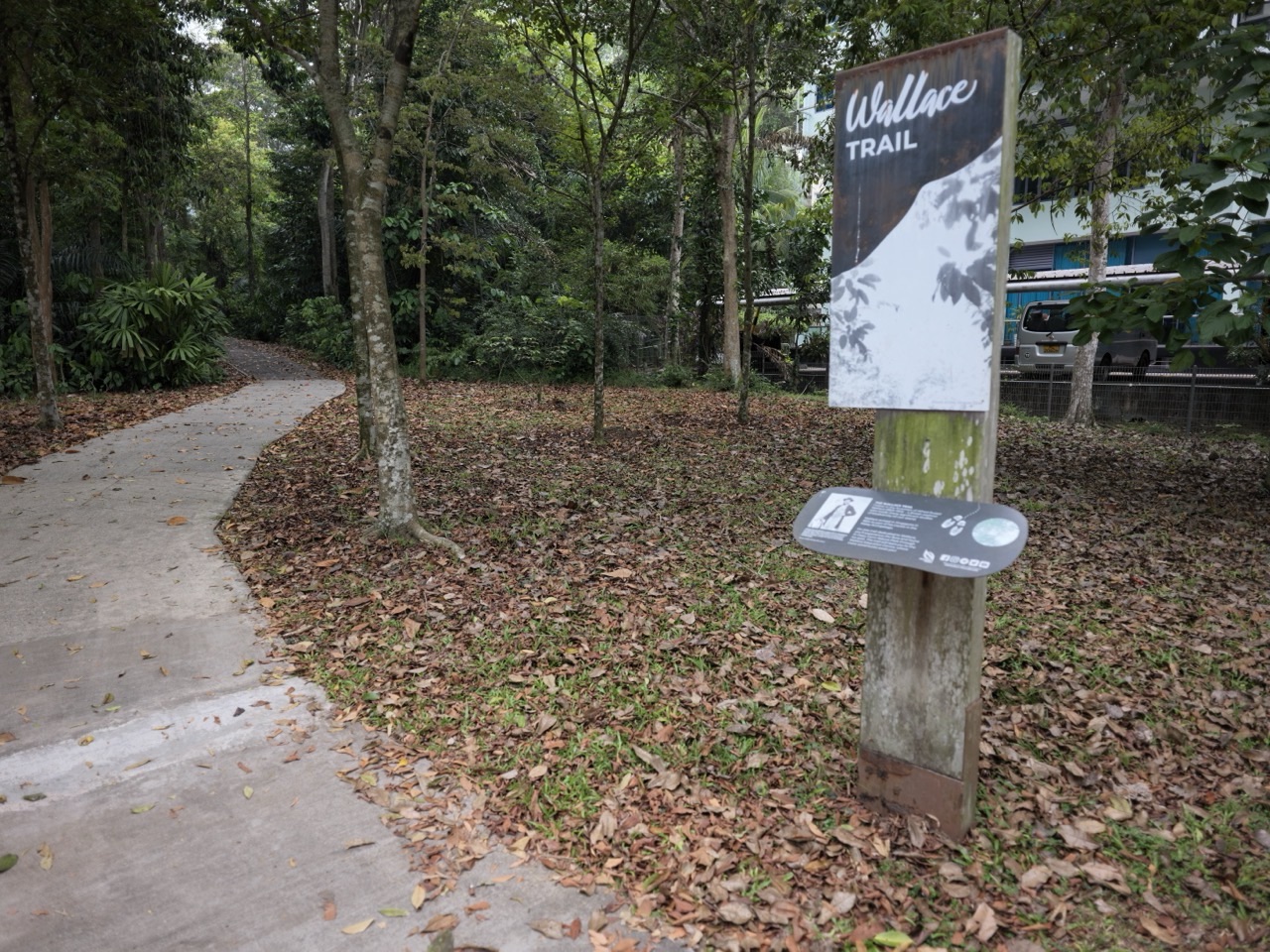
What can you do at Dairy Farm Nature Park, and where is Singapore Quarry? Dairy Farm Nature Park at 100 Dairy Farm Road is a free 75-hectare nature park near Hillview MRT, open 7am–7pm daily. Its main attractions are the 2.2km Wallace Trail, the Wallace Education Centre, the rocky but largely dry Dairy Farm Quarry and the lake-like Singapore Quarry wetland. The Wallace Trail is classified easy to moderate and takes roughly one hour one-way from the Hillview MRT area to the education centre. You cannot assume the one-hour estimate includes returning to your starting point.
If you search for Dairy Farm Nature Park hiking route, Wallace Trail difficulty, Singapore Quarry opening hours, Hillview MRT walking trail, Wallace Education Centre exhibitions, Dairy Farm Quarry rock cliff views, wheelchair access, birdwatching or pet-friendly routes in Upper Bukit Timah, the opening hours and access rules make a big difference. The park closes at 7pm, but Singapore Quarry closes earlier at 6.30pm, and the Wallace Education Centre normally operates 8.30am–5pm, Tuesday to Sunday. The official wheelchair-accessible route covers Carpark B to Wallace Education Centre only, not the whole 2.2km Wallace Trail or the Singapore Quarry approach.
Pick the destination before the entrance: use Carpark B for a shorter approach to Wallace Education Centre, Carpark A near Hillview for a longer park outing, or follow the official map to the quarry you actually want to see. This park contains two very different quarries; one has a lake and wildlife viewing, while Dairy Farm Quarry offers exposed rock cliffs above a largely earth-filled basin. Pets are barred from Wallace Trail, but leashed pets are allowed between Carpark A and Singapore Quarry. Follow the signed limits rather than treating the entire nature park as an open dog run.
Quick answer: choose your outing
| Place or route | Published information | Good reason to go |
| Dairy Farm Nature Park | 100 Dairy Farm Road; 7am–7pm | Free greenery and historic landscape |
| Wallace Trail | 2.2km, easy–moderate, ~1 hour one way | Kampung plants and nature-learning walk |
| Wallace Education Centre | 8.30am–5pm, closed Mondays | Free educational exhibits and a focused short visit |
| Singapore Quarry | 8am–6.30pm | Quarry lake, birdwatching and a quiet view |
| Dairy Farm Quarry | Rocky earth-filled quarry setting | View exposed cliff faces, not a swimming lake |
| Carpark A | Near Hillview MRT; 50 car lots | Longer walk or Singapore Quarry plan |
| Carpark B | Near Education Centre; 76 car lots | More direct education-centre and accessible access |
| Wheelchair access | Carpark B to Education Centre only | Do not generalise to forest and quarry trails |
Contents: the Wallace Trail and two different quarries
- Dairy Farm and Hillview geography
- Which carpark to choose
- Wallace Trail distance and return planning
- Kampung heritage, natural history and plants
- Wallace Education Centre
- Dairy Farm Quarry versus Singapore Quarry
- Birdwatching and wildlife
- Pet rules and mountain-bike restrictions
- Families, seniors, access and storms
- FAQs and official NParks references
1. Dairy Farm Nature Park is more than a quarry photo stop
The park is part of the Central Nature Park Network around Singapore’s central forests. NParks describes its landscape as a mix of heritage, trails, biodiversity and an education centre. Its current visitor page lists 75 hectares.
A visit can be an exploration of nature and history, not just a search for a cliffside photograph. The interesting part is how former agricultural and quarry landscapes now support vegetation and wildlife.
2. A name inherited from a real dairy farm
The park’s name reflects a former dairy-farming land use. The modern park retains traces of a once-working landscape alongside later ecological restoration.
You do not need to imagine cows grazing in today’s nature park. The value of its name is historical: Singapore’s green places have changed through agriculture, extractive industry, transport and conservation.
3. Where is it?
NParks gives the official location as 100 Dairy Farm Road. The nearby MRT reference is Hillview on the Downtown Line, a useful starting point if you are visiting without a car.
Different park accesses are not interchangeable. The education centre, Singapore Quarry and Dairy Farm Quarry are not three buildings standing next to the same main gate.
4. Carpark A suits one kind of trip
Carpark A, closer to the Hillview MRT side, has 50 car lots, five motorcycle lots, three coach bays and one accessible lot according to NParks. It is often a useful base for walking toward Singapore Quarry.
Parking fees apply and spaces can fill. A convenient carpark does not automatically mean the route from it to every attraction is flat, accessible or short.
5. Carpark B suits a Wallace Education Centre visit
Carpark B is nearer Wallace Education Centre and has 76 car lots, seven motorcycle lots, three coach bays and two accessible lots. NParks identifies the connection from this carpark to the centre as wheelchair accessible.
For someone who wants a brief educational visit instead of a long forest walk, this is the important distinction. Do not choose Carpark A merely because it appears first in an older parking list.
6. The park is free but not open all night
NParks lists 7am to 7pm for the overall nature park, with separate shorter hours for Singapore Quarry and the education centre. A free public trail is not the same as a 24-hour greenway.
Choose your final viewpoint with enough time to return to an authorised exit before closing. Forest paths become harder to judge when daylight fades, particularly after rain.
7. The Wallace Trail is 2.2km
NParks describes the 2.2km Wallace Trail as stretching from the Hillview MRT area to Wallace Education Centre, with a rustic environment and opportunities to spot fruit trees, butterflies, birds and streams.
The published one-hour estimate is one-way. If you must return by the same route, plan additional time and distance instead of promising a total one-hour round trip.
8. Easy to moderate does not mean universally accessible
The Wallace Trail is officially classified easy to moderate. The terrain can still include natural surfaces, gradients and slippery patches, which matter to people with limited mobility or new walkers.
Choose a route based on the slowest person in your group. Walking to a centre along a forest trail is not equivalent to entering it via the designated accessible route from Carpark B.
9. Why Alfred Russel Wallace matters
The trail honours Alfred Russel Wallace, a naturalist who worked in the region during the nineteenth century and independently developed ideas about evolution by natural selection. Its educational framing invites visitors to pay attention to relationships among species and habitats.
You need not know the full history of evolutionary biology to enjoy the trail. The simplest useful skill is patient observation before deciding what a plant or animal is doing.
10. A quiet natural-history observation game
Ask each person to identify one feature in three layers: the ground, middle vegetation and canopy. Observe fallen leaves, climbing plants, birds or the way sunlight changes from a gap to a shaded section.
Do not force every observation into a species label. A careful description—small bird with a curved bill on a flowering shrub—can be more accurate than an overconfident identification.
11. The old kampung traces are easy to overlook
NParks’ Wallace Trail materials describe remnants of earlier village life, including artefacts almost hidden by vegetation and fruit trees that recall the area before present-day conservation.
Treat these as heritage features, not objects to collect. If you encounter a remnant, photograph it where permitted and leave it in place rather than removing it or trying to expose buried material.
12. Rambutan, jackfruit and mango link ecology with memory
The official park description highlights fruit trees including rambutan, jackfruit and mango remaining from the area’s kampung-era planting. Their presence shows how human land use can leave living traces that persist long after settlement patterns change.
An interesting family conversation is to compare a fruit tree grown for food with a wild forest tree supporting animals. Observe the fruit without picking it; fallen fruit can still serve wildlife and ecological processes.
13. Notice fig trees and climbers
The Wallace Trail guide mentions fig species and vines, along with betel plants and wild yams. Different growth forms exploit different sources of light and support.
Watch how a climbing plant uses another tree and how the structure of the forest changes as you leave a more open section. Some plants look familiar from food or traditional use, but unknown wild material should never be eaten.
14. You may see birds without hearing them first
The NParks trail guide identifies possibilities including Crimson Sunbird, Olive-winged Bulbul, Greater Racket-tailed Drongo and Asian Glossy Starling. A visitor may hear calls before seeing movement in the canopy.
Bring binoculars if you enjoy birdwatching, and stay quiet enough to notice calls. Sightings cannot be guaranteed on a published itinerary; weather and season affect animal activity.
15. Butterflies and small animals are worth the pause
NParks mentions the Common Mormon butterfly and Plantain Squirrel among trail wildlife. These creatures can be easier to observe when you slow down instead of walking solely toward the quarry.
Keep an appropriate distance, do not capture animals and do not lure them with food. A patient two-minute observation can become the highlight of a family visit.
16. Wallace Education Centre: a built-in learning stop
The Wallace Education Centre is a nature education facility dedicated to the naturalist’s legacy and provides interpretive material for visitors. It is a useful endpoint for a Wallace Trail walk or a short destination in its own right.
It is a centre for learning rather than a giant indoor museum. Arrange your visit around the centre’s operating hours and allow room for an outdoor walk if weather permits.
17. Centre hours: the Monday exception matters
NParks lists 8.30am–5pm daily except Monday for Wallace Education Centre. The surrounding nature park remains open on Mondays during its normal park hours, but the centre’s closure can change a family’s main objective.
Do not travel on Monday expecting a complete gallery experience simply because an online map says the park is open seven days a week.
18. An educational visit can take less time than a hike
For younger children or older relatives, focus on the centre and a short, suitable section nearby instead of doing the full 2.2km trail. An engaging question or two can make a brief visit worthwhile.
The purpose is to connect what you read with what you see outside, not to race through every display. Be considerate of other visitors using the educational space.
19. Singapore Quarry has a lake-like wetland
Singapore Quarry, one of the park’s two named quarries, now contains a scenic water body that can attract dragonflies and birds. NParks mentions the Stork-billed Kingfisher as an example of wildlife associated with the wetland.
This is a viewing destination, not a swimming, kayaking or fishing facility. Observe from the designated viewpoint and keep the water and banks undisturbed.
20. Singapore Quarry closes before the park
The official visitor page lists 8am–6.30pm for Singapore Quarry, compared with 7am–7pm for Dairy Farm Nature Park generally.
These half-hour differences are important near sunset. If you arrive after 6.30pm, do not interpret the general 7pm park closing as permission to enter the closed quarry viewpoint.
21. Dairy Farm Quarry is the dry rocky counterpart
Dairy Farm Quarry is different from Singapore Quarry. NParks describes it as a former quarry that is filled with earth, exposing striking rock-cliff formations rather than a permanent broad lake.
Choose this viewpoint if you enjoy geology and cliff landscapes; choose Singapore Quarry if you prefer watching a wetland. An older blog that calls both ‘the quarry lake’ obscures the main distinction.
22. Why a quarry face tells a history story
An exposed quarry wall can reveal rock textures and the industrial reshaping of a hill, even when a visitor cannot identify every geological feature. It is an opportunity to talk about how buildings and roads depend on materials sourced from landscapes.
Keep well away from unstable edges and do not attempt climbing, hammering or collecting rock samples. A cliff face in a park is a feature to view, not a place to improvise technical climbing.
23. Does the park offer rock climbing?
Historic photographs of Dairy Farm Quarry have sometimes been associated with technical climbing. That does not establish present permission to climb any rock face. Park rules and site restrictions can change, and rock climbing requires specialised training and equipment.
Visitors should use the viewpoint and marked routes unless NParks explicitly authorises another activity under a current permit. Do not climb just because a former quarry wall looks solid.
24. Where do cyclists fit in?
The wider Dairy Farm Nature Park area includes designated mountain-biking trails, and NParks explains that some trails are strictly for mountain bikes. Hikers must not use those cycling-only trails.
Likewise, cyclists must follow the approved trail network rather than riding anywhere a footpath looks wide. The safest plan starts with an up-to-date trail map and the appropriate equipment.
25. Why walkers and mountain bikers should stay separated
A downhill cyclist and a strolling family move at very different speeds and need different stopping distances. Shared use of a narrow technical trail can create serious risk when people appear unexpectedly around a corner.
NParks’ separated-trail approach is practical, not merely administrative. Respect signage even if an apparently unused trail looks like an appealing shortcut.
26. The pet rule is narrower than you might think
The park page displays a general no-pets notice while its detailed rules permit leashed pets only from Carpark A to Singapore Quarry. Pets are prohibited on Wallace Trail to protect wildlife.
If you are visiting with a dog, stay strictly within the permitted route and confirm current signs. Never treat one permitted corridor as a free pass for pets on all forest trails.
27. A dog-friendly section is not an off-leash area
Even along the permitted Carpark A–Singapore Quarry route, pets must be on a leash. Keep animals away from wildlife, vegetation and sensitive water edges. Clean up after them and be considerate of other visitors.
For a longer free-running outing, choose a designated dog-friendly park with rules that suit the animal. Dairy Farm’s protected habitats need particular care.
28. Wheelchair access is specific, not general
NParks labels the park wheelchair accessible but clarifies that this applies only from Carpark B to Wallace Education Centre. The Wallace Trail and both quarry approaches are not thereby certified accessible.
That distinction is crucial when planning with older relatives or visitors who use mobility equipment. Confirm the present route, parking and any temporary diversions before promising the full trail experience.
29. An outing for preschool children
A young child may enjoy simple observations near the centre—leaf shapes, birdsong, tree bark and a quiet break—but may struggle with a full one-hour one-way trail plus the return. Choose a distance appropriate to the child and the conditions.
Bring water, snacks to eat only in suitable areas, protective clothing and a plan to turn around. Avoid promising both quarries and the full Wallace Trail unless your family can comfortably manage that distance.
30. A good visit for primary-school pupils
Use the Wallace story to practise careful scientific observation. Children can record one plant, one animal and one human history feature, then explain how each contributes to the experience of the landscape.
A useful discussion distinguishes direct evidence from an assumption. ‘We saw fruit on a tree’ is different from ‘every bird in the park eats this fruit’. The difference is an important habit of thought.
31. Teenagers can explore two scientific perspectives
At Singapore Quarry, ask how a former excavation site became an aquatic habitat; at Dairy Farm Quarry, compare how exposed rock forms a different ecological setting. The contrasts connect human geography, conservation and the environment.
Teens interested in photography can document these differences from the approved viewpoints. The strongest images show more than attractive scenery: they help explain the landscape.
32. A half-day itinerary from Hillview
Begin near Hillview MRT, choose your preferred official entrance and make one destination the day’s priority. The Wallace Trail to the centre is a meaningful one-way walk, so decide in advance how to return. If you want Singapore Quarry, plan that as a separate viewpoint using the map.
Trying to combine every trail and both quarries without return planning can produce an unexpectedly long and tiring day. A quiet nature outing is more enjoyable when the ending is clear.
33. A short visit from Carpark B
Families short on time can use the Carpark B approach to Wallace Education Centre, then choose a suitable nearby path or educational stop. This emphasises learning, access and manageable effort rather than distance.
Park only in legal marked spaces and check that the centre is open. If it is Monday, switch to an outdoor plan rather than expecting the closed education building to be accessible.
34. Which quarry is best for photographers?
Singapore Quarry may suit those interested in water reflections and birdlife, while Dairy Farm Quarry offers rock textures and landform shapes. Both can be visually striking for different reasons.
Use stable paths and avoid cliff edges, muddy water margins and restricted areas. Light and cloud change quickly, but no photograph requires an unsafe position.
35. A sensible plan for a rainy day
Forest trails can become slippery after heavy rain, and lightning risk makes outdoor viewpoints unsafe during thunderstorms. Check the Meteorological Service Singapore forecast and follow official closures.
A jacket is useful for a normal shower but does not provide lightning protection. If the weather deteriorates, shorten the route and use safe transport home rather than continuing for the sake of a photograph.
36. Respect the park’s sensitive habitats
Stay on trails, remove your rubbish, keep noise moderate and do not feed monkeys or birds. Never collect plants or animals from the park or introduce pets into prohibited sections.
These rules matter because Dairy Farm is part of a larger network protecting biodiversity around central Singapore. A visitor’s careful behaviour helps make nature enjoyable for the next family.
37. Larger group outings and permits
NParks says organisers of activities involving more than 30 persons must apply for a permit at least one month ahead. School visits and company nature walks therefore need different preparation from a private family walk.
Plan sufficient supervision, consider the return distance and explain trail rules before the group enters. The aim is safe observation rather than flooding a narrow route with an unprepared crowd.
38. What makes this park different from Bukit Timah summit?
The Bukit Timah Nature Reserve summit is a hill-climbing objective. Dairy Farm Nature Park offers a distinctive blend of former agricultural history, Wallace’s naturalist theme, an education centre and two contrasting quarry landscapes.
That difference is why it deserves a focused outing of its own instead of being treated as merely the back entrance to a summit hike.
Frequently asked questions: Dairy Farm Nature Park
Is Dairy Farm Nature Park free?
Yes. NParks lists hiking and nature walks as free of charge, subject to any special organised activity requirements.
What are the park opening hours?
The wider park opens 7am–7pm daily. Singapore Quarry and Wallace Education Centre have shorter hours.
Where is Dairy Farm Nature Park?
100 Dairy Farm Road, in the Upper Bukit Timah/Hillview area. Hillview MRT is the nearby station identified by NParks.
How long is Wallace Trail?
2.2km, from the Hillview MRT area toward Wallace Education Centre, with about one hour estimated one-way.
Is Wallace Trail an easy walk?
NParks describes it as easy to moderate. It remains a natural trail rather than a uniformly step-free path.
How long is a Wallace Trail return trip?
The official one-hour estimate is one-way. A return journey takes additional time depending on route and pace; use the map to plan it.
Does Wallace Education Centre open on Mondays?
No. NParks lists the Centre open 8.30am–5pm daily except Monday.
Can I visit the Education Centre with a wheelchair?
NParks identifies access from Carpark B to Wallace Education Centre as wheelchair accessible. Do not assume the complete nature trail is accessible.
What is Singapore Quarry famous for?
A former quarry transformed into a water-filled wetland, where visitors can observe birds and dragonflies from designated viewing areas.
What are Singapore Quarry opening hours?
8am–6.30pm daily, according to NParks. The park itself remains open until 7pm.
Can I swim at Singapore Quarry?
No. It is a wildlife viewing destination, not a bathing or water-sports venue.
Is Dairy Farm Quarry a lake?
No. NParks describes Dairy Farm Quarry as filled with earth, with dramatic exposed rock cliffs.
Which quarry is better for birdwatching?
Singapore Quarry’s wetland can attract birds such as the Stork-billed Kingfisher, though sightings are never guaranteed.
Which quarry has the rock cliffs?
Dairy Farm Quarry is notable for exposed rock faces above an earth-filled basin.
Are dogs allowed on Wallace Trail?
No. NParks forbids pets on Wallace Trail; leashed pets are permitted only between Carpark A and Singapore Quarry.
Can dogs go to Singapore Quarry?
Only under the park’s current limited rule: leashed pets on the Carpark A–Singapore Quarry route. Follow onsite signs.
Are mountain bikes permitted?
They are permitted on designated bike trails only. Hiking visitors must stay off cycling-only trails, and cyclists must respect approved routes.
Can hikers use the mountain-bike trail?
No. NParks explicitly says certain biking trails are strictly not for walking or hiking.
How many carparks are there?
Two official carparks: A near Hillview, and B near Wallace Education Centre, with different capacities and access.
Where should a driver park for Wallace Education Centre?
Carpark B is nearer the centre and includes the specifically identified accessible approach.
Does the whole park accommodate wheelchairs?
No. The official accessibility detail is limited to the route from Carpark B to Wallace Education Centre.
What is the Wallace Trail named after?
Alfred Russel Wallace, the nineteenth-century naturalist associated with the development of evolutionary theory.
Are there fruit trees from the kampung era?
Yes. NParks highlights rambutan, jackfruit and mango, among other plants. Do not harvest them.
Can we see a tiger orchid?
NParks lists the Tiger Orchid among interesting species, but flowering and visibility vary. No sighting is guaranteed.
Do I need a permit for a school group?
NParks requires a permit application at least one month in advance for organised activities involving more than 30 people.
Is the park open during thunderstorms?
Weather and site closures affect access; exposed nature trails are unsafe during lightning. Follow NParks and official weather advice.
Is it worth visiting with a toddler?
It can be, particularly for a short education-centre visit, but the 2.2km trail may be too much for some children and is not certified stroller accessible throughout.
Can I combine Wallace Centre and Singapore Quarry in one outing?
Yes with careful route and return planning, but they are separate destinations and have different closing hours.
Can I climb the Dairy Farm Quarry rock face?
Do not assume climbing is permitted. Follow current NParks restrictions and do not attempt technical climbing without explicit authorisation.
What’s the best official map?
Use NParks’ Dairy Farm Nature Park map and the Wallace Trail guide. Older maps may not reflect every current diversion.
Related Bukit Timah guides
- Compare Bukit Timah hiking and quarry routes
- Rifle Range Nature Park and Colugo Deck
- Wildlife watching and forest etiquette
- Dog-friendly walks and pet rules
- Bukit Timah cycling and authorised mountain-bike trails
- Photography spots and scenic routes
Official visitor information and safety sources
Checked on 22 October 2026. Park size and opening times follow NParks’ current listing. The 2.2km Wallace Trail length and one-hour estimate refer to a one-way route, not a complete round trip. Check the map and onsite notices for changes.
- NParks — Dairy Farm Nature Park hours, carparks, quarries, accessibility and pet policy
- NParks — Wallace Trail distance, difficulty, wildlife and route guide
- NParks — designated mountain-bike trail separation and safety
- NParks — nature parks and reserves etiquette
- NParks — separate Bukit Timah Nature Reserve conditions
- Meteorological Service Singapore — rain and lightning checks