
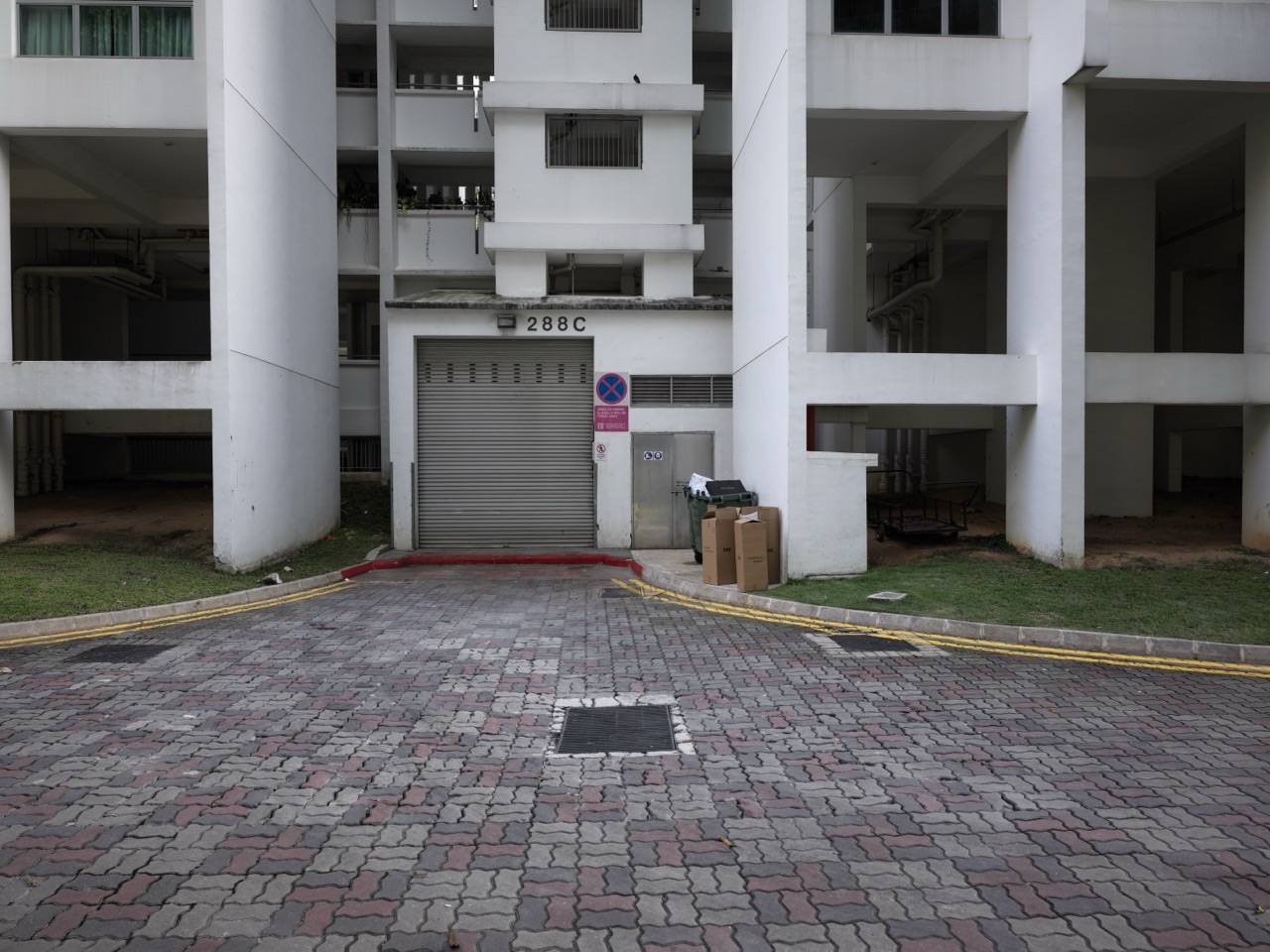
The Invisible System That Keeps a Dense Island from Drowning in Its Own Rubbish
Singapore is clean.
That is what tourists say. That is what citizens expect. That is what schoolchildren are taught. That is what postcards, airport impressions, city tours, hawker centres, train stations and shopping malls all quietly reinforce.
But Singapore is not clean because Singaporeans are naturally clean.
That is the easy myth.
Singapore is clean because cleanliness became a system.
It is a system of bins, cleaners, contracts, rules, fines, habits, public education, hawker-centre tray returns, waste collection trucks, incineration plants, recycling bins, estate management, town councils, NEA regulations, landfill planning, water discipline, disease control and social pressure.
Cleanliness in Singapore is not a personality trait.
It is infrastructure.
That is why waste and cleanliness belong inside How Singapore Works.
A dense island cannot afford to be casual about rubbish. There is too little land, too much population pressure, too much food activity, too much urban movement, too much humidity, too much risk of pests, disease, smell, blocked drains, public disgust and environmental damage.
A small island has no faraway “elsewhere” to throw things.
In a large country, rubbish can disappear into vast landfill space. In Singapore, the illusion collapses. Waste has to go somewhere, and that somewhere is limited.
So Singapore built a machine.
Not a beautiful machine. Not a glamorous machine. But one of the most important machines in the country: the system that makes yesterday’s food packet, tissue paper, cardboard box, plastic bottle, broken furniture, construction debris, old appliance, takeaway container and household rubbish disappear from the public eye.
But disappearance is not the same as solution.
That is the deeper story.
Cleanliness Is a Civilisation Layer
A dirty city is not only unpleasant.
It is unstable.
Rubbish attracts pests. Pests spread disease. Food waste rots. Drains choke. Flooding worsens. Public spaces degrade. People feel less safe. Tourism suffers. Public health weakens. Civic pride falls. Once people believe “this place is dirty anyway,” behaviour can decline further.
Cleanliness is therefore not cosmetic.
It is a civilisation layer.
A clean city tells people that the system is awake. Someone is watching. Someone is cleaning. Someone is maintaining. Someone is enforcing. Someone is paying. Someone is planning where all this waste goes after it leaves the bin.
This is why Singapore’s cleanliness matters.
It produces trust.
When a commuter enters an MRT station, they expect the floor to be usable. When a family eats at a hawker centre, they expect the table to be cleared. When a child walks to school, the pavement should not be buried in rubbish. When rain falls, the drains should not be jammed with plastic bags and food containers. When a tourist arrives, the city should not smell like neglect.
Cleanliness is not only what you see.
It is what you do not have to worry about.
Singapore’s Cleanliness Is Built on Labour
The first uncomfortable truth is this:
Singapore is clean because many people clean it.
Cleaners sweep the floors, wash the toilets, clear the tables, empty the bins, collect the rubbish, wipe the lifts, scrub the estates, maintain public spaces and remove the waste that everyone else produces.
This labour is often invisible because the whole point of cleaning is to make the mess vanish.
When it works, people forget it happened.
That is why cleanliness can become morally confusing. Citizens may say Singapore is clean as if the public naturally behaves perfectly. But many public spaces remain clean because cleaners catch what citizens leave behind.
This is an important distinction.
A cleaned society is not the same as a clean society.
A truly clean society requires both systems and behaviour. Singapore has strong systems. Behaviour is still uneven.
This is why tray return rules, littering fines, public campaigns and social reminders keep appearing. The state knows that cleanliness cannot rely only on cleaning workers forever. If the public keeps producing careless mess faster than the cleaning system can absorb it, the system becomes expensive, unfair and fragile.
Cleanliness must move from cleaner responsibility to shared responsibility.
That is the next level.
The Bin Is the First Gate
Every waste system begins with a small act.
Someone throws something away.
That simple action starts a chain.
The bin fills.
The bin is cleared.
The rubbish is collected.
The truck moves.
The waste is sorted, recycled, incinerated or sent onward.
Ash and non-incinerable waste eventually go to landfill.
The bin is the public’s interface with the national waste system.
Most people do not think beyond it. The tissue paper goes in, the wrapper goes in, the packet goes in, the bag goes in, the bin lid closes, and the mind moves on.
But in Singapore, that tiny moment matters because the whole country has limited disposal space.
A contaminated recycling bin can ruin recyclable material. Food waste in the wrong place creates smell and pests. Bulky waste dumped carelessly creates estate problems. Rubbish thrown into drains can create flooding risks. Litter left at parks, beaches or void decks forces someone else to clean.
The bin is not just a container.
It is a decision point.
Singapore’s problem is that millions of small decisions become national tonnage.
Waste Does Not Disappear
Singapore’s waste system is designed to make waste disappear from daily life quickly.
That is good for hygiene.
But it can also create illusion.
When the rubbish chute clears, people may feel the problem is gone. When the hawker tray is removed, the problem is gone. When the mall bin is emptied, the problem is gone. When the estate is swept clean, the problem is gone.
But the problem has only moved.
Singapore generated enough waste for NEA to report a 2025 overall recycling rate of 52%, with the domestic recycling rate remaining at 11% and the non-domestic recycling rate increasing slightly from 65% to 67%.
That domestic recycling number is important.
It means households are still a difficult part of the waste problem. Offices, construction, industry and commercial operations can often be organised at larger scale. Household waste is messier, more mixed, more behavioural and more dependent on daily habits.
Every home is a small waste factory.
Plastic packaging, food waste, tissue paper, drink bottles, cardboard boxes, bubble tea cups, delivery containers, supermarket bags, old clothes, batteries, electronics, broken toys, school worksheets, renovation debris, festival decorations, expired food.
The home is where consumption becomes rubbish.
Singapore can build the downstream system, but the upstream behaviour still begins with people.
Incineration Is Singapore’s Land-Scarcity Answer
Singapore cannot simply bury everything.
There is not enough land.
So the country relies heavily on incineration. NEA states that incineration reduces the volume of solid waste by about 90%, which has helped land-scarce Singapore extend the lifespan of Semakau Landfill.
That is a very Singapore solution.
Take a land problem and reduce it through engineering.
Waste-to-energy plants do not make rubbish morally disappear. They reduce volume, recover some energy and turn much of the waste into ash. That ash still has to go somewhere. Non-incinerable waste also has to go somewhere.
But incineration buys time.
It compresses the waste problem before landfill.
This is Singapore’s practical mind at work. The country does not have the luxury of huge landfill space, so it builds high-capacity systems to shrink the problem.
But shrinking a problem is not the same as ending it.
The ash remains. The emissions must be managed. The plants must be built and maintained. The system costs money. The waste stream continues.
Incineration is a powerful tool, but it is not an excuse to waste casually.
It is the back-end engine that prevents the island from being overwhelmed.
Semakau Is the Warning Light
Every Singapore system has a warning light.
For waste, that warning light is Semakau.
Semakau Landfill is Singapore’s only landfill. It is offshore. It is engineered. It is managed. It receives incineration ash and non-incinerable waste. And it has a limit.
NEA has said Semakau Landfill is projected to be fully filled by 2035, and Singapore’s Zero Waste Masterplan set a target to reduce waste sent to Semakau each day by 30% by 2030 to help extend its lifespan beyond 2035.
That date matters.
2035 is not far away in national-planning terms.
A child in primary school today may still be young when the landfill pressure becomes much more serious. A country cannot wait until the landfill is almost full before changing habits. Waste infrastructure takes years. Behaviour change takes years. Recycling systems take years. Industry adjustment takes years. Packaging redesign takes years.
Semakau is not just a landfill.
It is a countdown.
It reminds Singapore that “throw away” is not a real phrase on a small island.
There is no away.
There is only somewhere else in the system.
Food Waste Shows the Daily Problem
Food is one of Singapore’s great joys.
Hawker food, takeaway meals, supermarket abundance, buffet culture, delivery apps, family dinners, school snacks, café desserts, office lunches.
But food joy creates food waste.
NEA reported that food waste accounted for about 11% of Singapore’s total waste generated in 2025, with 790,000 tonnes of food waste generated and a food waste recycling rate of 18%.
This is a civilisation contradiction.
Singapore cares deeply about food security because the country imports much of what it eats. Yet food waste remains a major stream. That means energy, labour, land, water, transport, refrigeration, packaging and money were all spent to bring food into the country, only for part of it to become waste.
Food waste is not only a bin problem.
It is a supply-chain problem.
A tomato discarded at home carries the farm, the ship, the truck, the cold chain, the supermarket shelf and the household purchase decision. A plate of unfinished rice at a hawker centre carries the work of growers, importers, stallholders, cleaners and waste collectors.
Food waste reveals how modern abundance can produce blindness.
When food is always available, waste feels small. But at national scale, small waste becomes enormous.
This is why waste education cannot be only about recycling.
It must also be about buying, ordering, cooking, portioning and respecting the full journey of food.
Clean Tables Are Not a Small Issue
The tray return rule may look small.
It is not.
The hawker centre is one of Singapore’s most important public spaces. It is food infrastructure, cultural infrastructure, social infrastructure and affordability infrastructure. If hawker centres become dirty, the whole public dining system weakens.
NEA’s Clean Tables Campaign was launched to encourage individuals and the community to keep public dining spaces clean and hygienic, complementing the SG Clean movement and the Environmental Sanitation Regime.
The move from “cleaners clear everything” to “diners return trays and crockery” is a behavioural shift.
It asks the public to stop treating public cleanliness as someone else’s job.
This is difficult because habits form over decades. If people grew up leaving trays behind, returning them feels like extra work. If there are cleaners nearby, some people assume clearing tables is the cleaner’s role. If everyone is rushing, the tray becomes a small moral test.
But that small moral test matters.
A used tray left behind occupies a table. A dirty table slows turnover. A cleaner must clear it. Other diners wait. Birds and pests may appear. The next person’s meal begins with someone else’s mess.
Clean tables are not only about manners.
They are about public-space efficiency.
After enforcement against table littering began at hawker centres in September 2021 and later at coffeeshops and food courts, the average tray and crockery return rate in hawker centres improved from 65% in August 2021 to close to 90%, according to a 2022 written parliamentary reply.
That is how Singapore often works.
Campaign first.
Norm-building next.
Enforcement if needed.
Behaviour changes.
The system stabilises.
Cleanliness Is Also Public Health
Singapore’s cleanliness obsession has a medical reason.
In a hot, humid, dense city, waste and poor hygiene can quickly create public-health problems. Food waste attracts pests. Dirty tables affect dining hygiene. Stagnant water supports mosquitoes. Blocked drains create flooding and disease risks. Poor sanitation spreads illness.
Cleanliness is therefore tied to healthcare.
It is cheaper to prevent disease than to treat disease. It is cheaper to keep public spaces hygienic than to manage outbreaks. It is cheaper to stop litter from entering drains than to clear the consequences later.
This is the same upstream logic we saw in healthcare.
Do not wait for breakdown.
Design the system so breakdown is less likely.
Public cleanliness is preventive healthcare in environmental form.
A clean hawker centre protects diners.
A clean drain protects neighbourhoods.
A clean estate protects children and seniors.
A clean toilet protects everyone.
A clean food environment protects public trust.
Cleanliness is not vanity.
It is disease control.
Enforcement Is Part of the Cleanliness Machine
Singapore uses enforcement because norms alone are not always enough.
There are fines for littering. There are rules for tray return. There are standards for public toilets, food premises and environmental sanitation. There are inspections, enforcement officers, corrective work orders and public campaigns.
This sometimes makes Singapore look strict.
But strictness has a function.
A dense society cannot let every person externalise mess onto everyone else. If one person litters, someone else cleans. If one stall ignores hygiene, diners bear risk. If one estate allows dumping, neighbours suffer. If one household disposes irresponsibly, the town council, cleaners and public waste collectors inherit the problem.
Enforcement says: your small act is not private when it lands in public space.
That is a key Singapore principle.
Freedom is limited when the cost is transferred to everyone else.
The fine is not only punishment. It is a message about shared space.
In Singapore, public space is too dense to be treated casually.
The Cleaner Should Not Be the Final Defence
There is a moral problem in any clean city that depends too heavily on cleaners.
If citizens litter and cleaners clean, the city may still look clean.
But the social lesson becomes wrong.
People learn that someone else will absorb their carelessness. Cleaners become invisible shock absorbers for public behaviour. The city looks successful while the burden is pushed onto low-wage labour.
That is not a mature cleanliness culture.
A mature cleanliness culture asks the public to reduce the burden before the cleaner arrives.
Use the bin.
Return the tray.
Do not dump bulky waste.
Do not contaminate recycling bins.
Do not leave food waste on tables.
Do not treat the void deck like a personal disposal zone.
Do not assume a cleaner will magically erase everything.
This is the next stage of Singapore cleanliness.
The first stage was: build the cleaning system.
The second stage is: build the cleaning citizen.
Singapore has achieved much of the first. The second is still a daily project.
Recycling Is Not Just a Bin Colour
Recycling looks simple.
Blue bin. Put item in. Feel responsible.
But recycling is a system, not a ritual.
If recyclable items are contaminated by food or liquid, the value drops. If the wrong materials are thrown in, sorting becomes harder. If people treat recycling bins as general rubbish bins, the whole system weakens. If households do not understand what can or cannot be recycled, good intentions become operational problems.
This is why domestic recycling remains hard.
The household is fragmented. Each person makes small decisions. Packaging is confusing. Convenience wins. People are busy. Some do not trust the system. Some do not rinse containers. Some throw everything into the blue bin and hope.
But a recycling bin is not a magic machine.
It needs correct inputs.
The difference between recycling and rubbish is often decided in the kitchen, not at the plant.
This is why waste education must be practical. People need to know what to do with food containers, plastic packaging, paper, cardboard, glass, metal, e-waste, batteries, clothes and bulky items. They need to understand contamination. They need to understand that recycling is not a moral badge; it is an operational process.
The system can only work with usable material.
Waste Begins Before the Bin
The most powerful waste solution is not at the end.
It is at the beginning.
Before something becomes waste, it was bought, ordered, packaged, delivered, used, half-used, expired, broken, replaced or forgotten.
That means waste begins with consumption.
A takeaway meal creates packaging.
A delivery order creates containers and bags.
A supermarket purchase creates plastic, cardboard and food risk.
A fast-fashion habit creates textile waste.
A gadget upgrade creates e-waste.
A renovation creates construction debris.
A buffet creates excess food.
A cheap item bought casually becomes rubbish quickly.
The bin is late in the story.
The purchase is early.
Singapore’s Zero Waste ambition therefore cannot be achieved only by better disposal. It requires upstream decisions: design less packaging, buy only what is needed, repair where possible, reuse where practical, separate waste correctly, reduce food waste and make businesses responsible for material choices.
This is where consumer culture meets national constraint.
Singapore shopping is efficient. Supermarkets are full. Malls are everywhere. Delivery is easy. But convenience creates waste. The same systems that make daily life smooth also generate the disposal burden.
The shopping system and the waste system are connected.
One feeds the other.
Cleanliness Is Also Aesthetic Discipline
Singapore’s clean environment shapes how people feel about the country.
Clean pavements, trimmed greenery, washed void decks, cleared tables, maintained drains, working bins, orderly estates and clean toilets produce a visual language: this place is managed.
That matters psychologically.
People behave differently in places that look cared for. Disorder invites more disorder. Cleanliness can create restraint. A person may hesitate to litter in a place that looks clean. A dirty place gives permission to degrade further.
This is the broken-window logic in public-space form.
Singapore’s cleanliness is therefore also aesthetic governance.
It teaches the eye what normal should look like.
This is powerful because once citizens expect cleanliness, dirt becomes visible quickly. Complaints rise. Town councils respond. Agencies act. Cleanliness becomes a public expectation, not a luxury.
That expectation is part of Singapore’s operating system.
A dirty lift is not just a dirty lift.
It is a signal that maintenance failed.
Singaporeans are sensitive to that signal because the national brand has trained them to expect order.
Waste and Class
Waste also reveals class.
Some people create mess. Others clean it. Some people enjoy convenience. Others handle the afterlife of convenience. Some households can buy more, discard more and outsource more. Lower-wage workers often bear the physical burden of clearing, sorting, cleaning and collecting.
This is why cleanliness must not become a smug national story.
A clean Singapore should not mean one group consumes and another group quietly cleans.
The future cleanliness culture must respect cleaners, reduce unnecessary mess, pay attention to working conditions and make public behaviour better.
A society that prides itself on cleanliness should also ask who pays for that cleanliness with labour.
This is part of maturity.
The clean floor is not just a floor.
It is someone’s work.
Waste, Water and Drains Are Connected
Waste also threatens water systems.
Singapore’s drains, canals and reservoirs are not separate from public behaviour. Litter thrown on the ground can enter drains. Drains can carry waste toward waterways. Blocked drains can worsen flooding. Food waste and packaging can attract pests near water-sensitive areas.
In a country that treats water as strategic infrastructure, waste discipline matters.
The same island that built NEWater, reservoirs and drainage systems cannot afford casual littering. Water and waste meet in the urban landscape.
This is systems thinking again.
A tissue on the ground is not just untidy.
A plastic bag near a drain is not just ugly.
A clogged drain is not just a maintenance issue.
A flood is not just weather.
Small urban actions travel.
Singapore works because it tries to stop those small actions from becoming large failures.
Public Cleanliness Is a Shared Contract
Cleanliness is a contract between the state, businesses, workers and citizens.
The state designs the rules and systems.
Businesses manage premises, packaging and waste practices.
Cleaners maintain the public environment.
Citizens use public spaces responsibly.
Schools teach habits.
Families reinforce them.
Enforcement catches those who refuse.
When one party fails, the burden shifts.
If citizens litter, cleaners work harder.
If businesses over-package, waste rises.
If recycling instructions are confusing, contamination rises.
If enforcement disappears, bad habits return.
If cleaning contracts underpay workers, the system becomes unjust.
If households do not separate waste, recycling weakens.
If the state does not plan landfill and incineration capacity, the country faces crisis.
Cleanliness is not one agency’s job.
It is a network.
Singapore’s Waste Problem Is Also a Success Problem
A poor society may produce less waste because people consume less.
A successful society produces more waste because people can buy more, eat more, replace more, renovate more, travel more, package more and discard more.
Singapore’s waste problem is therefore partly the by-product of success.
More affluence, more convenience, more consumption, more deliveries, more packaging, more disposability.
This is the Ouroboros again.
The system that creates prosperity also creates waste.
The same city that builds malls must build disposal capacity.
The same households that enjoy convenience must manage packaging.
The same food culture that creates abundance must confront food waste.
The same clean city that removes rubbish quickly must remember where rubbish goes.
Success creates the next problem.
Singapore’s answer cannot be to become poor again. The answer is to become more disciplined at the level of design, consumption and recovery.
A rich small island must learn to waste less intelligently.
The Future Is Circular, Not Linear
The old model is linear.
Take.
Make.
Use.
Throw.
That model is dangerous for a land-scarce island.
The future model must be more circular.
Use less.
Use longer.
Repair more.
Recover materials.
Recycle correctly.
Turn waste into resource where possible.
Reduce what reaches Semakau.
This is not idealistic environmental decoration. It is island survival logic.
Singapore does not have infinite landfill. It does not have infinite space for waste facilities. It does not have infinite tolerance for rising costs. It cannot keep solving waste only at the back end.
A circular mindset asks a different question.
Not: where do we throw this?
But: why did this become waste so quickly?
That is the more powerful question.
Cleanliness Is Not the Same as Sustainability
Singapore can be clean and still wasteful.
This distinction is important.
A city can have spotless streets because cleaners are efficient, while producing enormous waste behind the scenes. A hawker centre can look clean because trays are cleared, while food waste remains high. A household can keep a tidy kitchen by throwing away unused food. A mall can look pristine while generating packaging waste.
Cleanliness is visible.
Sustainability is often invisible.
Singapore’s next challenge is to move from clean appearance to lower waste reality.
The street can be clean.
The landfill can still be filling.
The table can be clear.
The food waste can still be rising.
The recycling bin can be present.
The recycling rate can still disappoint.
This is the deeper maturity test.
The first achievement was to make the city clean.
The next achievement is to make the system less wasteful.
Waste Teaches the Singapore Method
Waste and cleanliness reveal the Singapore method clearly.
First, identify the constraint: land is scarce, density is high, waste has nowhere easy to go.
Second, build infrastructure: collection, incineration, landfill, cleaning contracts, bins, recycling systems, enforcement.
Third, shape behaviour: anti-littering norms, tray returns, campaigns, school education, household recycling, waste reduction.
Fourth, adjust over time: Zero Waste Masterplan, food-waste management, e-waste collection, recycling improvements, public hygiene standards.
Fifth, keep the system under pressure: Semakau’s limited lifespan forces the country to keep moving.
That is how Singapore works.
It does not rely on virtue alone.
It does not rely on markets alone.
It does not rely on government alone.
It builds a machine, then tries to train behaviour around the machine.
The Clean City Is Never Finished
Cleanliness has to be remade every day.
Yesterday’s clean hawker centre can be dirty by lunch.
Yesterday’s swept pavement can be littered by evening.
Yesterday’s empty bin can overflow after a crowd.
Yesterday’s drain can be blocked after a storm.
Yesterday’s public toilet can become unusable in hours.
Yesterday’s recycling effort can be contaminated by one careless bag of food waste.
Cleanliness is not a one-time achievement.
It is continuous maintenance.
This is why the clean city is fragile.
It looks permanent, but it is constantly being rebuilt by workers, rules and habits. Remove any of these, and the city changes quickly.
Singapore’s cleanliness is therefore a daily vote.
Every person votes with a tray, a wrapper, a tissue, a bottle, a food container, a bin decision, a recycling choice and a willingness to leave public space better than they found it.
Closing Thought
To understand Singapore, look at what happens after dinner.
The hawker tray.
The tissue paper.
The leftover rice.
The plastic cup.
The table.
The cleaner.
The tray return rack.
The bin.
The rubbish truck.
The incineration plant.
The ash.
The landfill.
The countdown to Semakau.
The next person waiting for a clean table.
That is Singapore.
Not the postcard version.
The working version.
A clean city is not clean because dirt does not exist.
A clean city is clean because millions of dirty things are handled, moved, reduced, cleared, burned, sorted, recycled, buried, regulated and prevented every day.
Singapore’s cleanliness is not magic.
It is a system.
And like every Singapore system, it begins with constraint.
Small island.
Dense population.
Limited landfill.
High public-health stakes.
Heavy daily consumption.
Then it becomes machinery.
Bins, cleaners, rules, campaigns, incineration, landfill, recycling, enforcement, public habits.
Then it becomes culture.
People expect clean spaces. People complain when standards fall. People learn to return trays. Children are taught not to litter. Cleanliness becomes part of the national brand.
But the next phase is harder.
Singapore must move from being a cleaned city to being a less wasteful city.
That means the responsibility cannot end with cleaners. It cannot end with NEA. It cannot end with incineration. It cannot end with Semakau.
It must begin earlier.
At the supermarket shelf.
At the hawker table.
At the delivery order.
At the home kitchen.
At the recycling bin.
At the moment someone decides whether to leave a mess for another human being.
Waste is civilisation’s shadow.
Cleanliness is civilisation’s discipline.
Singapore works because it refuses to let the shadow grow unchecked.
But the island is small, and the landfill clock is real.
So the next question is not only whether Singapore can stay clean.
The next question is whether Singapore can learn to waste less.
That is the future of the cleanliness machine.