
Greendale Primary School is at 50 Edgedale Plains in Punggol. Its published Learning by Design programme and outdoor-education emphasis give parents two useful avenues to explore: how children solve practical problems and how they learn to manage themselves with others.
Did you know that a child’s first design improvement may begin with listening? Before making a better object, someone needs to understand who will use it and what is difficult for that person. That is a more helpful way to understand design thinking than imagining that it is only about attractive models.
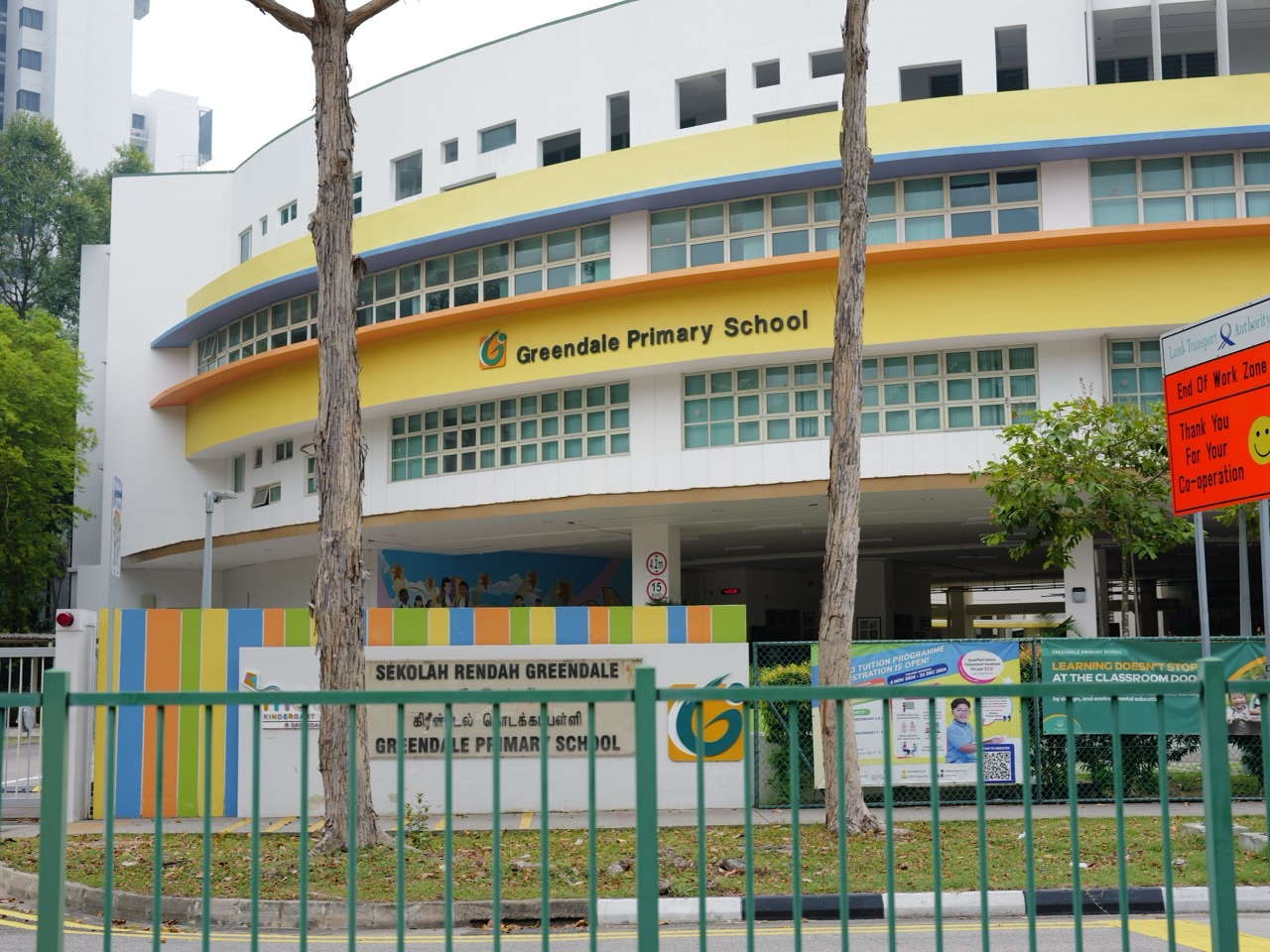
The new photograph shows Greendale Primary’s name on the curved frontage, with trees and fencing in the foreground. This article connects that recognisable local school with verified information and a family-friendly way to think about creative learning, foundational skills and the daily routine.
Photograph: Exterior view of Greendale Primary School in Punggol, Singapore. Photo: eduKate.
Find the part your family needs
Start with the school’s published approach, check the daily routine, or go straight to the questions for your next visit.
Understand the school · Check the journey · Plan your next questions
Contents
1–3 · School, place and learning
1. What Greendale Primary says about its programmes
4–6 · Questions, support and next steps
4. Questions that reveal everyday school fit
| At a glance | Details |
|---|---|
| Institution | Greendale Primary School |
| Stage | Primary education |
| Location | 50 Edgedale Plains, Singapore 828848 |
| Focus in this guide | Learning by Design and outdoor education |
The school’s ALP page describes Learning by Design as using design thinking for authentic problem solving. Its published examples span primary levels, including visual arts, drama, design challenges and a games carnival. It distinguishes activities for all pupils from further opportunities for selected Design Ambassadors.
Greendale also publishes an outdoor-education Learning for Life Programme. The stated emphasis includes character, resilience and working with others through outdoor experiences.
Together, those descriptions suggest questions worth asking about the child’s experience: how are ideas tested, how do pupils share a task, and what support is available when something feels unfamiliar? They are programme aims, not evidence that every child will respond in the same way.
The school name is clearly visible above the entrance area. A photograph taken from the road, however, is not a map of authorised drop-off and collection points. Confirm those arrangements directly.
Greendale Primary and Greendale Secondary are different schools with similar names in the same local area. Use the full school name and the primary school’s address when planning a journey or arranging collection with another caregiver.
The official contact page identifies Coral Edge LRT and Punggol Plaza among local reference points. Walk the final approach rather than estimating it from a map. A child carrying a school bag may experience the route differently from an adult hurrying through it.
Here is an optional eduKate activity: design a reading bookmark for someone in the family. Begin by asking what annoys that reader. Does the bookmark fall out? Is it hard to find? Does it cover the text?
Let the child sketch two ideas and explain who each one might help. Use spare paper for a simple prototype. A ruler, a clear label and a few sentences of instructions are enough; there is no need to buy a craft kit.
Test the bookmark in an actual book. Ask the user what worked and what did not. Then change one feature and test again. The useful learning is in the explanation of the change: “I made this part wider because it slipped between the pages.”
Younger pupils can describe the user’s need orally. Older pupils can compare measurements, note a limitation and write a short evaluation. This is an original home example inspired by a design approach, not a description of a Greendale lesson.
Ask how the design programme is organised for your child’s level and how pupils are supported when working in groups. What happens if a child has many ideas but finds writing difficult? How does the teacher notice a student who lets others do most of the task?
For outdoor learning, ask about the activities planned for the relevant cohort, how families receive instructions and how support needs are discussed. The school can explain current arrangements more reliably than a list copied from an older guide.
Then check the practical foundations: transition into Primary 1, student care, dismissal and communication with teachers. Consult the MOE registration guidance for the intended intake. A programme shortlist and an admission plan are related but separate pieces of work.
Read the companion Greendale Primary school-choice guide alongside your visit notes. Use it to organise questions, while relying on the school for current operations.
The eduKate Mathematics continuity article encourages attention to the connections between earlier and later learning. In the bookmark activity, measuring is meaningful only if the child understands where the ruler starts and what the units represent.
The vocabulary hub offers another route. Words such as user, purpose, compare and improve become easier to discuss when there is a real object on the table. Ask the child to explain their own design rather than borrowing an adult’s polished description.
Greendale’s published approach gives you something specific to investigate if your child enjoys creating, exploring or solving practical problems. It can also be worth discussing for a child who needs encouragement to try, provided the school’s support fits that child.
Choose one observation to follow over time. Can the child listen to feedback without abandoning the task? Can they state what they changed? Can they prepare their materials with fewer reminders? These are practical family observations, not a substitute for teachers’ assessment.
A good next step is to confirm the commute and ask the school how a typical pupil participates in the programmes. Then leave room for the child to tell you what caught their interest.
Official sources and further checks
Checked on 10 October 2026. Programmes, operational arrangements and admission requirements can change; use the school or university’s current information for the relevant intake. This is an independent eduKate guide, not an official school publication or an endorsement by the institution.
Explore the photographed Punggol school series
This series covers the institutions in these photographs. For wider local context, continue to the existing Punggol schools and education overview.
Primary schools · Secondary schools · University
Greendale Primary School — you are here
For a specific learning concern, bring recent schoolwork and the weekly timetable to an eduKate parent–student consultation. Begin with the child’s starting point and consider a suitable 3-pax arrangement where support is needed.