
The idea in fifty seconds
Government is how a society authorises people and institutions to make binding public decisions, organise shared resources and carry responsibilities that cannot be settled by private agreement alone.
Its civilisational achievement is dependable cooperation: rules people can understand, disputes they can resolve, services they can use and commitments that survive a change of leaders. Its danger is concentrated power. Good government therefore needs both the ability to act and effective limits on how it acts.
The order worth building leaves room for disagreement, privacy, initiative and different ways of living. It can hear bad news, explain a decision, correct a mistake and protect people who lack influence.
This essay follows that work from a neighbourhood notice to the institutions, money, knowledge and generations behind it. The question throughout is practical: what becomes possible for ordinary people because public authority exists, and can they challenge it when it fails them?
Explore the 42 reading sections and sources
- A notice changes the lives around it
- Chaos is a problem of coordination, not a description of people
- Government, the state and society are different things
- Strangers need something they can rely on together
- Public authority carries an unusual power
- Law makes disagreement survivable
- Legitimacy asks why anyone should accept the decision
- Representation brings absent people into the room
- A constitution organises power before the argument begins
- The executive has to turn a choice into a programme
- Bureaucracy is society remembering how to do the work
- A government must learn what is actually happening
- Priorities reveal what an institution is prepared to protect
- A budget is a set of commitments competing for reality
- Procurement is where public promises meet materials and work
- Public capacity lives in people who know what to do next
- A service is complete when somebody can use it
- Standards let separate contributions fit together
- Some decisions belong close to the people affected
- People can govern shared things without waiting for a ministry
- Care reveals the work that administrative boundaries hide
- Accountability needs somebody who can require an answer
- A complaint can be the beginning of institutional intelligence
- Enforcement must protect the rule without becoming the problem
- Good numbers need a journey back to the people counted
- Maintenance keeps yesterday's decision available tomorrow
- Reserves buy time, but they must remain usable
- Emergency government needs a way back to ordinary government
- Government helps make markets possible, then has to govern their limits
- Singapore makes the connections unusually visible
- Digital government must remain answerable to a person
- Public language can clarify power or conceal it
- Borders do not contain all the problems government must solve
- Nature does not negotiate with the administrative chart
- The future is affected before it can speak
- Government is also a traveller through time
- When government stops working, rebuilding begins with particular functions
- Competence and coherence must meet at the person's life
- The control-system analogy has a boundary
- Return to the crossing and follow the complete repair
- Six questions help us read any government more carefully
- The best public order gives life room to continue
- Sources and further reading
A notice changes the lives around it
The notice is attached to a temporary fence on Friday afternoon. A familiar stretch of road will close on Monday. There will be a diversion, a new crossing and, eventually, a safer route past the school.
To the engineer, the drawing shows a necessary improvement. To a shopkeeper, it shows where a delivery van will no longer stop. To a parent accompanying a child, the crossing looks welcome. To an older resident whose clinic lies on the other side, the diversion looks considerably longer than the line on the plan.
We will use this imagined neighbourhood throughout the essay. Its residents, discussions and administrative difficulties are fictional. They give us a way to examine real institutional questions without pretending that a made-up incident is evidence about a particular government.
Nobody in the scene is required to be foolish. The engineer may have done careful work. The shopkeeper may support road safety. The parent may care about the older resident. Agreement that a problem deserves attention does not make its solution costless, or distribute the costs equally.
This is where government becomes interesting. Someone must decide what happens on Monday. Waiting is also a decision: the existing crossing remains as it is. Letting each person choose independently cannot determine which direction vehicles will travel on a shared road. A solution must fit the physical space and establish an arrangement that many people will have to accept.
Yet a signature alone is insufficient. The official needs lawful authority. The design needs evidence. The contractor needs payment. The school needs notice. The older resident needs an accessible route. Somebody must check that the installed crossing matches the intended one. Somebody must respond if it does not.
The notice is the visible tip of a long public relationship.
We often encounter government at precisely this point: when an arrangement changes, a form is required, a service disappoints or an official decision touches our plans. It is easy to mistake that encounter for the whole institution. Behind it sit accumulated rules, earlier investments, competing priorities, inherited mistakes and people working within different limits.
The task of understanding government is to follow those relationships without losing the person standing at the fence.
The larger Civilisation essay asks how human worlds remain capable of living, learning and renewing themselves. Government belongs inside that inquiry because cooperation at scale repeatedly meets questions of authority. Who may decide? Who pays? Who is protected? What happens when the decision is wrong?
The existing government-system explanation follows the practical movement from information to action and repair. Here we widen the frame. A public decision must do more than travel efficiently through an organisation. It must also have a defensible purpose, recognise the people affected and remain open to challenge.
Monday will arrive. The quality of government lies partly in what has happened before then, partly in what happens that morning, and partly in whether the institution is willing to return on Tuesday and look again.
Chaos is a problem of coordination, not a description of people
The title needs a careful definition. Chaos here means conditions in which people cannot reliably coordinate important parts of shared life: obligations are uncertain, conflicts have no accepted route to resolution, responsibilities are unclear or essential services fail unpredictably. It is ordinary language, not a claim about mathematical chaos or thermodynamic entropy.
A lively market is not necessarily chaotic in this sense. It may contain bargaining, noise, improvisation and excellent informal coordination. A silent administrative hall may be deeply disordered if nobody knows which decision is valid or whether a completed application will ever receive an answer.
Difference is also not disorder. People can hold different religions, organise different households, prefer different policies and speak different languages while sharing reliable public arrangements. Government becomes dangerous when it treats ordinary diversity as a malfunction to be removed.
Consider the road again. The residents disagree because the same project affects them differently. Their disagreement is information about the problem. Suppressing it may make the meeting shorter while making the final design worse. A system that cannot distinguish a useful objection from deliberate obstruction will eventually discard knowledge it needs.
There are several different uncertainties to manage. A driver needs to know the rule at the crossing. A contractor needs to know when payment is due. A resident needs to know where to appeal. A planner needs to know whether traffic observations represent an ordinary week. These uncertainties require different responses. More enforcement cannot repair a missing pavement. More consultation cannot determine the strength of unsuitable concrete.
The distinction protects us from a familiar rhetorical shortcut: presenting one powerful instrument as the answer to every kind of disorder. Some problems require clearer rules; others require resources, better information, mediation, technical work or a change in the distribution of power.
The civilisation branch on rules and dispute resolution provides a useful companion because it begins with the problem people are trying to settle. The article on shared resources examines another class of difficulty: people can act sensibly for themselves while collectively exhausting or damaging something they depend on together.
Order, then, is not simply the presence of commands. It is a pattern of expectations and capabilities reliable enough to support life. People can plan a journey, accept a job, open a business, raise a child or disagree with an authority without every ordinary action becoming a fresh struggle over power.
This makes order plural. A courtroom needs procedural order. An emergency team needs coordinated action. A university needs room for intellectual disagreement. A neighbourhood needs enough predictability for strangers to share space. Imposing the organisation of one setting on every other setting can destroy the very function being protected.
The civilisational challenge is to discover which kinds of order help people live together, where flexibility belongs and how the arrangement can change without forcing everyone to begin again.
Government, the state and society are different things
Before going further, we need a few distinctions that ordinary conversation often compresses into one word.
The state is the continuing structure of public authority associated with a territory and population. Government can refer broadly to its governing institutions or more narrowly to the office-holders directing the executive at a particular time. A ministry is an organisation within that arrangement. A political party is an organisation seeking or exercising political influence. Society includes relationships and activities far beyond them all.
These definitions vary across disciplines and constitutional settings. Their purpose here is to prevent a change of subject from passing unnoticed. When we say a government has changed, we usually do not mean that every court judgment, school record, public debt and property right has disappeared. Institutional continuity allows office-holders to change while many obligations remain recognised.
Governance is broader again. It concerns the arrangements through which people make decisions, coordinate conduct and hold responsibility. A cooperative has governance. A university has governance. An association managing a shared facility has governance. These organisations do not thereby become sovereign governments.
Why does this matter to our fictional street? Because many people contributing to the crossing may work outside government. A private contractor installs it. Families teach children how to use it. A residents’ group reports a visibility problem. An independent expert may challenge the design. Public authority helps organise the conditions, but it does not manufacture every contribution.
Civilisation has always contained more social intelligence than any single administration could possess. Families, traders, craftspeople, religious communities, professional groups and voluntary associations carry knowledge and habits that formal institutions may depend upon. Recognising this does not romanticise every community practice. Informal systems can also exclude, exploit and resist correction.
It means that the question is relational: what should government do itself, what should it enable, what should it regulate and what should it leave to people to organise?
The existing Political Science master gives the disciplinary map of power, institutions and collective decisions. Civilisation | The Governance connects these responsibilities to the wider civilisation argument. Our essay occupies the space between them: a sustained explanation of why public authority is needed, what makes it useful and how it can become harmful.
A society is not a department. Its citizens are not employees of an administration. Government has responsibilities towards people whose purposes it does not choose and whose disagreement does not cancel their standing.
That boundary is particularly important when we use the language of systems. A transport system can have an operating target. A whole society contains people entitled to argue about its targets. Public reasoning must therefore remain part of the explanation, rather than disappearing beneath an impressive diagram.
We can now ask what government contributes without granting it ownership of everything valuable in human life.
Strangers need something they can rely on together
In a small group, a promise may rest on personal knowledge. You know who repaired the roof, who contributed to the shared meal and who can be trusted to return a borrowed tool. Reputation travels through repeated encounters. The cost of checking may be modest because everyone understands much of the surrounding story.
As cooperation reaches farther, that arrangement becomes harder to sustain. A component arrives from another country. A person you have never met approves a payment. A building will be used by people who were not alive when it was designed. Personal familiarity cannot carry every obligation.
Institutions allow important expectations to survive distance, anonymity and time. A recognised unit of measurement makes an order intelligible. A legal process gives a broken agreement a route beyond private retaliation. A public record allows a later official to understand an earlier decision. Inspection can provide assurance where the user lacks the expertise to inspect for themselves.
The important word is assurance. A certificate has value only to the extent that the work behind it deserves confidence. If the crossing is certified as accessible but cannot be used by the older resident, the document has not completed its public job. It may instead make the error harder to see.
The institutions essay explains how recurring needs become durable combinations of roles, rules, resources, records and correction. That is a useful starting point for seeing why civilisation can coordinate people who will never meet. The arrangement carries part of the burden that would otherwise fall on personal trust.
Government contributes to this shared environment through law, public administration and, where appropriate, direct provision. It may establish standards, maintain registers, enforce decisions and support public infrastructure. These functions create room for other people to act independently. A shopkeeper does not need to design an entire dispute-resolution system before buying equipment.
But strangers also need protection from the institutions themselves. An official register may contain an error. A licence may be refused for an improper reason. An inspection may be selective. The institution that creates certainty in one direction can impose vulnerability in another.
Reliable cooperation therefore has two sides: people can rely on public arrangements, and they can contest those arrangements through recognised procedures. A rule that everybody must obey but nobody can question is a different kind of order from one that remains answerable to evidence and law.
This also explains why trust should not be demanded as an act of loyalty. Trust is more useful when it is earned and appropriately limited. We can trust a payment system for one purpose without assuming that every decision by every institution is correct.
The achievement is not a world in which nobody checks anything. It is a world in which checks are distributed sensibly, records can be examined and an ordinary person does not need extraordinary influence to obtain a fair hearing.
Public authority carries an unusual power
A voluntary association can often ask a member to leave. A government can impose obligations on people who never individually agreed to join it. It can collect taxes, regulate conduct, enforce judgments and authorise coercive action within its legal framework. That makes public authority unusually consequential.
Its necessity does not remove its danger. The same ability that can protect a person from violence can be used to intimidate them. The same administrative reach that can distribute assistance can be used to exclude. The same legal machinery that makes a contract enforceable can be written or applied to favour those already powerful.
We should resist two easy stories. One assumes that public power is good whenever it is effective. The other assumes that power is illegitimate whenever it constrains an individual choice. Shared life requires some enforceable decisions, but effectiveness alone cannot settle whether a decision is justified.
At the crossing, a temporary restriction may protect children while burdening deliveries. That burden needs explanation and proportionate treatment. The existence of a safety purpose does not excuse every possible restriction. Nor does one inconvenience prove that no public intervention should occur.
The difficult work is to establish the authority, identify the aim, examine the evidence, consider less burdensome alternatives and provide a route for review. These are general questions for understanding public decisions, not a substitute for the particular legal tests that apply in any jurisdiction.
The Law master gives readers a fuller explanation of authority, procedure, evidence, interpretation and remedies. It reminds us that a desirable outcome and a lawful decision are not identical. The question of who may exercise a power is part of the substance.
A government’s powers are also distributed across people and institutions. It is tempting to speak as though one central mind receives all facts and chooses every action. In practice, many decisions are delegated, bounded by budgets, shaped by rules and made under uncertainty. Responsibility must be traced through that structure.
The principal–agent problem enters here. People entrust authority to representatives and officials who may possess more information and face different incentives. Monitoring every act is impossible. Yet abandoning oversight invites self-protection, neglect or capture. The institutional challenge is to combine professional discretion with meaningful accountability.
This is why integrity cannot rest entirely on the personal virtue of one leader. Honest people need arrangements that make honest work possible. They need records, suitable powers, independent scrutiny and protection when they report a problem. Successors need the same conditions.
Public authority becomes civilisationally useful when it can carry difficult shared responsibilities without becoming a private possession. That requires institutions capable of saying both yes and no: yes to action within a legitimate mandate, and no when the mandate is exceeded.
Law makes disagreement survivable
Suppose the shopkeeper believes the road closure violates an established right of access. The engineer believes the work has been properly authorised. If there is no recognised way to resolve the dispute, each side may seek allies, threaten obstruction or try to impose its preferred outcome directly.
Law offers another possibility. The dispute can be translated into questions that an authorised institution can hear: which rules apply, what happened, what evidence supports the claims, what power was exercised and what remedy is available?
This translation is a civilisational achievement. It gives conflict a form that can be examined without requiring one party simply to defeat the other. It also creates a record that future cases can consult, subject to the rules of the legal system concerned.
The United Nations explanation of the rule of law includes the accountability of the state itself, public laws, equal enforcement and independent adjudication. That provides a useful standard for distinguishing government through law from government merely using laws as instruments of command.
A statute book alone cannot establish that standard. Rules may be inaccessible, enforcement selective or legal help unaffordable. A person can possess a right on paper and still lack a practical route to make it matter. Time, cost, language, disability and fear can stand between a formal guarantee and an effective remedy.
The government-failure branches on selective enforcement and judicial overload illuminate different failures in this relationship. In one, the treatment of similar conduct depends improperly on who is involved. In the other, the correction process may become too slow or burdened to provide timely relief. Neither can be repaired by announcing that the rules already exist.
Legal order also needs disciplined disagreement within its own institutions. Lawyers argue about interpretation. Courts may disagree. Legislatures can amend laws. A later generation can recognise injustice in an earlier rule. The capacity for lawful change prevents continuity from becoming permanent captivity to the past.
This does not mean every dispute can be dissolved into a technical legal answer. Legislatures and citizens still face political choices about priorities and rights. Courts operate within jurisdictions and procedures; they are not universal substitutes for public debate, competent administration or adequate services.
In our imagined neighbourhood, a resident who loses a lawful challenge may remain disappointed. The value of the process is not that everyone gets their preferred outcome. It is that the disagreement receives a reasoned, reviewable treatment, and that power has to answer questions instead of merely asserting itself.
The national civilisation guide to resolving disputes follows this broader function. A civilisation converts some conflicts into procedures so that people can continue sharing a world after they disagree. The procedure deserves protection because the relationship has to outlast the argument.
Legitimacy asks why anyone should accept the decision
The road can be closed by force. That does not fully answer why the closure should be accepted as a rightful public decision. Legitimacy concerns that second question: the recognised justification of authority and the grounds on which people accept its exercise.
Different societies and institutions draw on different sources of legitimacy, including constitutional rules, public participation, elections, tradition and performance. These sources can reinforce one another or come into conflict. An effective service may strengthen confidence in an administration; it does not by itself resolve every question about representation or rights.
We can see the distinction in a modest encounter. An official explains the safety evidence, acknowledges the delivery problem and describes how the plan was authorised. The shopkeeper may still oppose it, but the encounter offers reasons that can be examined. An official who says only that the decision has been made asks for a different kind of acceptance.
The public is also not a single person with one preference. People may agree that a decision-making process is legitimate while arguing vigorously about its outcome. That separation is valuable. It allows a society to change policies and office-holders without treating every loss as the end of the shared political arrangement.
But acceptance can be conditional. A process that repeatedly excludes a group, protects misconduct or refuses correction can lose justified confidence. The remedy cannot be communication alone if the underlying treatment remains unfair. Better explanations help when a decision has been misunderstood; they do not turn abuse into legitimate government.
The branch on fear replacing trust is useful here because visible compliance can conceal a deteriorating relationship. Silence may reflect confidence, exhaustion, indifference or fear. An institution needs evidence before interpreting it as consent.
Likewise, keeping power contestable concerns more than the presence of a complaints box. There must be a credible possibility that a challenge changes something: a decision is reconsidered, an error is remedied, an office-holder is held accountable or a rule is revised through the appropriate process.
The Universal Declaration of Human Rights places participation in government and equal access to public service within its statement of human rights. Its relevance here is the recognition of people as participants in public life. Domestic constitutional arrangements and enforceable legal rights still require their own careful examination.
Legitimacy is therefore neither a publicity score nor a demand that citizens feel grateful. It is a relationship between authority, justification, participation and treatment. Institutions strengthen it when they make their powers understandable, keep their commitments and accept limits that remain meaningful when inconvenient.
An orderly street is a small success. A public arrangement in which people can question how that street is governed, without losing their dignity or standing, is a deeper one.
Representation brings absent people into the room
The meeting about the crossing takes place at seven in the evening. That sounds convenient until we ask for whom. A parent arranging childcare, a shift worker and an older resident who finds night travel difficult may all be missing. The people present can speak sincerely without representing the whole neighbourhood.
This is a small version of a large political problem. Decisions affect people who cannot all sit at the same table. Representation creates ways for their interests, experiences and judgements to enter public decisions. Elections are central to democratic representation, while committees, public consultation, civic organisations and other channels can contribute between elections.
Each channel has limits. A vote bundles many issues into a choice. A consultation may attract those with time and confidence. An organised group can know a problem deeply while representing only part of the population. A survey can estimate views while missing the intensity or reasons behind them.
The task is to understand what each form of evidence can tell us. A room full of supporters establishes that support exists. It does not establish that everybody supports the proposal. A large number of identical submissions may reveal mobilisation, but it does not automatically reveal how benefits and burdens are distributed.
Representation also requires an account of what happened after people spoke. Which concerns changed the design? Which were rejected, and why? Which fell outside the institution’s authority? If participation leaves no trace in the decision, people may reasonably question whether they were invited to contribute or merely to witness a completed choice.
The Political Science master explains how electoral rules, parties, legislatures and public opinion shape these relationships. Readers who want the vocabulary for examining competing claims can also use the guide to government, regulation and civil liberties. Language matters because vague terms can hide who is actually included.
There is a further absence: future people. The children using the crossing today will inherit its maintenance requirements. People not yet born cannot attend the meeting, but decisions about land, debt, pollution and infrastructure will shape their lives. Representation across time requires additional arrangements, which we will return to later.
For now, the practical lesson is simple. A good public process asks whose knowledge and interests are missing before calling the discussion complete. It does not assume that the loudest, most numerous or most technically fluent participants exhaust the public.
Government converts conflict into a decision partly by giving different experiences a recognised place. That involves judgement and compromise. No procedure can guarantee unanimous satisfaction. But a decision becomes more defensible when the people carrying its burdens were visible in its making, and when those who remain dissatisfied retain a legitimate route to keep arguing.
A constitution organises power before the argument begins
Imagine that every disagreement about the crossing also required a fresh negotiation over who was allowed to decide. The engineer, the contractor, the school and the residents would first have to establish the authority of the institution itself. Ordinary work would repeatedly become a foundational political contest.
Constitutional arrangements reduce that uncertainty by establishing public offices, assigning powers and setting procedures and limits. Some constitutional orders rely on a single codified document; others combine statutes, conventions, judicial decisions and other sources. Their precise form differs, but the recurring question concerns the organisation and restraint of public authority.
These arrangements matter before any particular policy becomes popular. Rules designed only after a dispute has begun may be shaped to favour whoever already holds power. Durable constitutional procedures attempt to establish how decisions, review and succession should work across changing political circumstances.
The division of functions also matters. Making general laws, administering programmes and deciding legal disputes require different kinds of work. They may interact closely, but one function cannot simply swallow the others without changing the distribution of power.
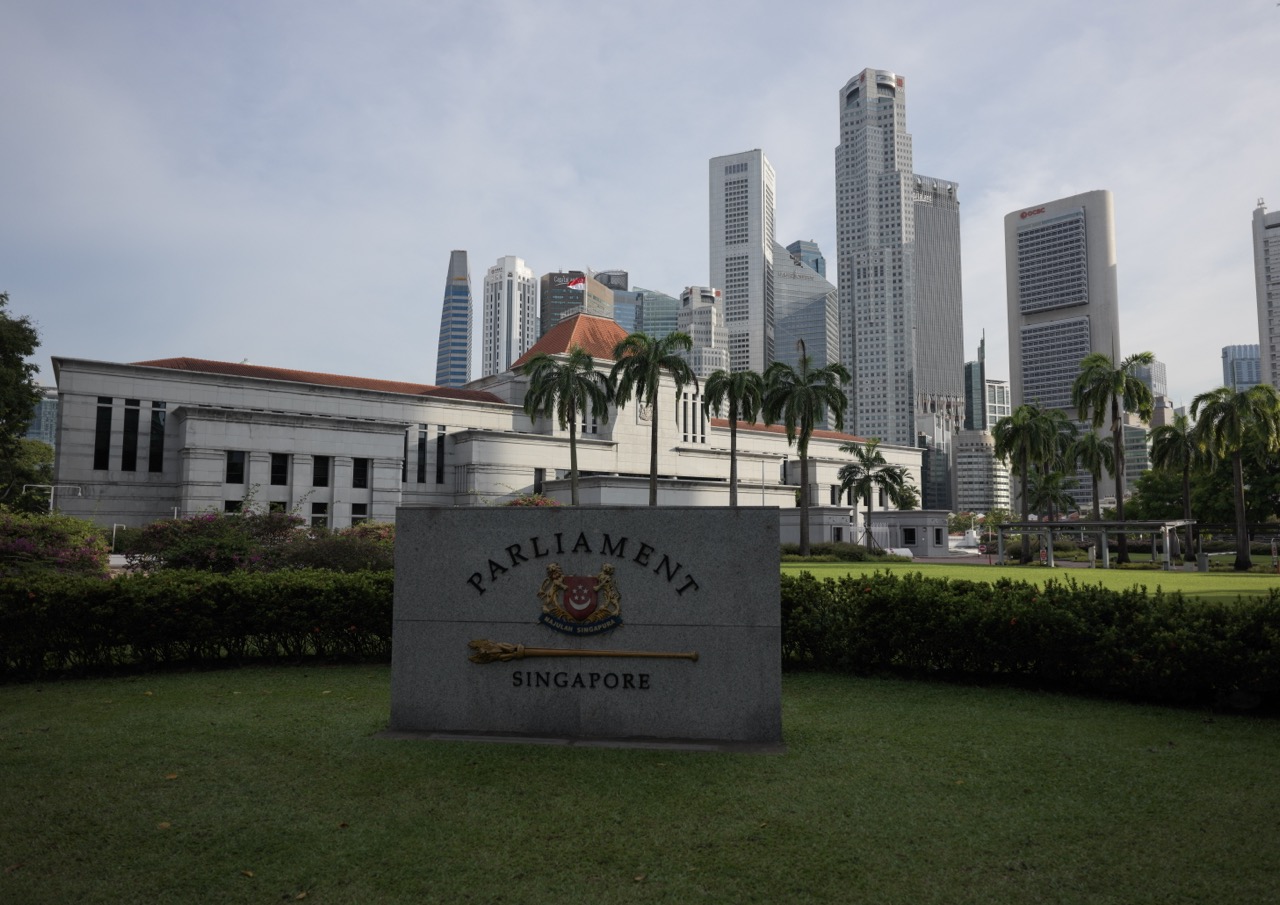
In Singapore, the Judiciary’s explanation of the legal system identifies the Legislature, Executive and Judiciary and describes their roles. Parliament’s own account includes law-making, scrutiny of public finances and holding the Government to account. These official descriptions provide the institutional starting point; examining performance requires further evidence about how the arrangements operate. Parliament’s functions are therefore a source for the formal role, not a blanket verdict on every outcome.
The eduKate Parliament first-principles article offers a systems-oriented companion, while the Parliament House article connects the institution to its visible setting. A building and an institution deserve different questions. Architecture can house public authority; it cannot by itself guarantee the quality of debate or scrutiny inside.
Constitutional continuity also concerns difficult days: a vacancy, an election, a crisis, a dispute over authority. An arrangement that works only while everyone is friendly has left much of its hardest work unfinished. Rules for appointment, removal, review and transition help a society manage disagreement without suspending the whole state.
Yet formal design should never be confused with automatic operation. Institutions need people willing and able to respect their boundaries, records that preserve decisions, resources to perform their functions and effective consequences when powers are abused.
The point of a constitutional order is not to make political judgement unnecessary. It creates a framework in which judgement can be exercised, challenged and transferred. It tells the official at the crossing not only what they may do, but where their authority ends—and which other institution has the right to ask them to explain.
The executive has to turn a choice into a programme
A legislature can authorise a public purpose without deciding every practical detail required to achieve it. The executive and public administration must translate that purpose into organised work: responsibilities, budgets, staffing, schedules, procurement, communication and delivery.
This translation is often where the distance between an attractive policy and an effective service becomes visible. A commitment to safer school journeys might require transport planning, accessibility review, enforcement, school coordination and maintenance. Each part has its own information and constraints.
The executive’s coordinating role matters because these parts must eventually fit. Someone needs to identify conflicts, decide priorities within lawful authority and ensure that an unresolved boundary does not become an excuse for inaction. A project can fail even when each agency has completed the task it thought it owned.
In our fictional case, the road team installs the crossing on time. The school sends families a map. The contractor removes the old kerb. But the temporary accessible path is missing because each organisation assumed another would provide it. The aggregate report may contain several completed tasks and one unusable journey.
The national guide on turning decisions into public services examines exactly this passage. The authority-diffusion article explores the failure in which responsibility is widely announced while practical decision rights remain unclear. Naming more stakeholders does not necessarily establish who can resolve the problem.
Effective coordination does not mean sending every question to the highest office. That would turn the centre into a bottleneck and deprive local professionals of useful discretion. The centre should resolve matters that genuinely require wider authority while leaving suitable decisions close to the knowledge needed to make them.
It also needs escalation rules. A routine design adjustment, an unresolved legal question and an urgent safety risk should not travel through identical channels. The route must fit the issue. Otherwise a system can be simultaneously over-controlled in trivial matters and under-directed in consequential ones.
The escalation-failure branch is a useful reminder that information does not reach authority merely because an organisational chart contains connecting lines. People must know when to escalate, have a channel that works and believe that raising a problem will lead to responsible attention.
There is a political dimension too. Executives choose among competing priorities and must explain those choices through the constitutional arrangements that govern them. Technical coordination cannot remove disagreement about what deserves public resources.
Government begins converting a choice into order when people can identify the public purpose, the responsible office, the resources committed and the conditions that would require a change of course. A programme becomes credible when these are more than statements in a launch document. They have to guide Monday’s work.
Bureaucracy is society remembering how to do the work
The word bureaucracy often arrives as a complaint. It suggests forms, queues and somebody explaining why a simple request cannot be processed. Those experiences are real. They are not the whole reason administrative systems exist.
A public service needs to perform work repeatedly, across different staff members and cases. It needs to preserve decisions, treat similar situations consistently, prevent funds from being diverted and explain what happened later. Procedures and records make that possible. Without them, each encounter depends too heavily on personal memory, preference or influence.
The official receiving an application should not have to invent the eligibility rules each morning. Nor should an applicant have to discover which member of staff is sympathetic. A workable procedure protects both parties by making expectations more stable.
But a procedure can drift away from its purpose. A required document may no longer prove anything useful. Several agencies may request the same information in incompatible formats. An exception may need so many approvals that it arrives after the need has passed. The system remembers a method while forgetting why it was created.
The two eduKate discussions of legibility illuminate different sides of this problem. One examines rules that lose clarity and consistency; the other asks what happens when people cannot tell what the system is doing. Clear instructions and visible progress are related, but each needs attention.
Consider the older resident seeking help with the diversion. A form requires a fixed category: road defect, traffic enforcement or accessibility issue. Their difficulty spans all three. Forcing the person to choose the correct departmental language transfers organisational work onto the public.
A competent front line can recognise the underlying need, record it accurately and route it appropriately. That requires training, sufficient time and authority to do more than repeat a script. Professional judgement is not the enemy of consistency. It is often what allows a general rule to be applied responsibly to a particular life.
The capacity-illusion article makes another useful distinction: staff numbers do not tell us whether an institution has the right capabilities in the right places. An office can be full while a critical role remains unfilled or poorly supported.
Good administration therefore combines memory with judgement. It preserves the steps that protect fairness and reliability, reviews those that create needless burdens, and gives staff ways to report recurring problems. It also records exceptions so that discretion can be examined rather than becoming invisible favouritism.
A bureaucracy earns its place in civilisation when it helps a service continue through changing people and circumstances. The public should experience that continuity as dependable treatment. When continuity merely preserves an avoidable obstacle, administrative reform has found a concrete job to do.
A government must learn what is actually happening
The traffic count says the road is lightly used. The school says the crossing is crowded. Both observations may be accurate. One records an average across the day; the other describes a short period in which many children arrive together.
Government needs evidence, but evidence does not arrive already organised around the right question. Measurements have definitions, boundaries, dates and omissions. A national average, an administrative record, a resident’s account and a technical inspection reveal different aspects of a situation.
The first task is to establish what each observation means. What was counted? Who was included? When was it observed? Does the measure describe the people affected by the decision? Has the underlying process changed since the data were collected?
The measurement and feedback essay provides a broad route into this discipline. The government-failure guides distinguish missing or ineffective observation, failure to verify claims and numbers that become detached from outcomes. These are different problems. Collecting more data addresses none of them automatically.
Evidence also has a political environment. A junior official may notice a serious defect but fear reporting it. A contractor may have an incentive to describe work as complete. Residents who have complained repeatedly without response may stop participating. An apparently quiet system may have trained people to withhold information.
The branch on reality suppression is therefore central to government, not peripheral. An organisation loses the ability to correct itself when accurate reporting becomes professionally dangerous. The damage is larger than one concealed incident: future decisions are made using an increasingly unreliable account of the world.
The answer requires more than exhorting people to be truthful. Reporting channels need protection, records need to remain inspectable, and leaders need to distinguish responsible disclosure from culpable misconduct. Independent research, journalism, audit and public challenge can reveal things an administration’s own reporting system misses.
The media explanation helps readers examine how events become representations and public attention. A dramatic account deserves scrutiny; so does an official reassurance. Neither emotional force nor institutional status removes the need to check the claim.
Our fictional crossing offers a manageable test. Observe it at the relevant times. Walk the route with the people who use it. Compare the drawing with the installation. Record near misses as well as completed journeys. Look for users who changed their behaviour because the route became difficult and therefore disappeared from the count.
Evidence improves government when it changes the questions, not merely when it decorates a decision already made. The institution must be willing to discover that it measured the wrong thing, overlooked a group or misunderstood the problem. That willingness is part of public competence.
Priorities reveal what an institution is prepared to protect
Once government can see several needs, it must decide which to address first. This is uncomfortable because resources and time are finite. The crossing competes with another road repair, a clinic extension, a drainage project and many needs that have no visible spokesperson.
Calling everything urgent does not remove the choice. It conceals it inside queues, staff exhaustion and whoever succeeds in obtaining attention. A public priority system should make the choice more intelligible: what risk is being reduced, how serious is the harm, who is affected, what can wait and what becomes harder to repair if delayed?
The triage-collapse guide examines the consequences of failing to distinguish priorities. It does not provide a universal ranking of human needs. Different services require different criteria, and some rights impose constraints that cannot simply be traded away for a higher aggregate score.
In the imagined neighbourhood, one small defect might deserve immediate attention because it creates a serious danger. Another visible inconvenience might be tolerable for a week while a less visible but more consequential problem is repaired. The justification needs to be specific enough that affected people can understand and question it.
Time changes the choice. A delay in repainting a wall and a delay in addressing a structural warning are not equivalent because both are measured in days. We need to understand how harm develops. The latency-failure branch asks what happens when decisions arrive after the opportunity for useful action has narrowed or passed.
We should also avoid treating speed as an unconditional virtue. Some decisions benefit from urgent action; others require deliberate investigation, consultation or safeguards. A system that removes every pause can become faster at making irreversible mistakes.
The national article on decisions under uncertainty offers a complementary perspective. A reasonable decision may use incomplete evidence while recording what is uncertain, protecting against severe harm and specifying when it should be revisited. Waiting for perfect knowledge can itself impose costs.
Prioritisation becomes more legitimate when the criteria are public, the evidence is current and exceptions are explained. If influential people can quietly jump the queue, the published system loses credibility even if its written principles remain attractive.
There is another discipline: review what was deferred. Temporary postponement can turn into permanent neglect when no institution remembers the unresolved need. A queue is a set of people and risks moving through time. It should not become a place where responsibility disappears.
The conversion from chaos to order begins to look less theatrical here. It can consist of a clear reason for acting today, a protected path for a person who cannot wait, and a reliable commitment to return to the problem scheduled for next month.
A budget is a set of commitments competing for reality
The crossing has been approved. It still needs money, workers, equipment and time. A budget provides authority and a financial plan for using public resources, but the figures are not themselves the completed work.
This distinction matters because public debate can stop at the announcement of expenditure. A large allocation may be necessary, wasteful or insufficient. We need to ask what it is intended to purchase, whether the required capacity exists and what other obligations accompany it.
Taxes, fees, borrowing and other public revenues operate within particular legal and economic arrangements. Their incidence and effects differ. This essay is concerned with the general civilisational relationship: present decisions create claims on resources, distribute burdens and shape what future administrations can do. It is not a guide to a country’s tax or borrowing rules.
The Finance explanation and Banking explanation remain the fuller routes for understanding money, credit, payments and risk. Government belongs in that network, but fiscal choices, banking operations and central-bank responsibilities are not interchangeable. Giving each institution its proper job prevents a vague appeal to money from obscuring real constraints.
In our fictional case, the construction budget covers the crossing but omits future inspection and repainting. The project appears affordable because part of its cost has been moved beyond the planning horizon. The omission will return later as deterioration, emergency work or a burden on another department.
The resource-drain branch examines how core capabilities can be weakened while demands continue. We should not infer such a pattern from one budget line alone. The relevant evidence includes the function, its obligations, available resources and what is actually happening to service quality.
Public money also raises a question of fairness. Who pays for the improvement, who benefits and who bears temporary disruption? A total cost-benefit estimate can help organise a decision while concealing important differences among households. A small average cost may be severe for a person with little income or flexibility.
The authority to spend must therefore be accompanied by explanation and scrutiny. In Singapore, Parliament’s formal role includes financial scrutiny of the Government’s annual Budget. The institutional principle is broader: a request for public resources should be answerable to an authorised process, not treated as the private preference of the spending organisation.
A responsible budget is a commitment to delivery and stewardship. It connects the initial purchase to operation, maintenance, eventual replacement and the public purpose that justified the spending. It records assumptions so that later reviewers can understand what changed.
Civilisation converts money into durable order only when the resources behind the money become usable public capability. The crossing must exist, work and remain safe. A fully spent budget is an accounting event; the public outcome still has to be observed.
Procurement is where public promises meet materials and work
The crossing exists first as an intention, then as a specification, a contract and a sequence of physical tasks. Procurement connects public resources to the organisations and people capable of carrying out that work.
It is easy to reduce procurement to choosing the lowest price. But the public is buying an outcome that must function over time. A cheaper surface that deteriorates quickly may cost more to maintain. A delivery schedule that ignores school access may impose costs outside the contract. A system that cannot be repaired without one supplier may create a long dependency.
The specification is therefore a consequential public document. It expresses what the institution believes it needs. If it describes the wrong thing precisely, the procurement process can operate efficiently and still purchase an inadequate solution.
Singapore’s Ministry of Finance describes procurement processes that include sourcing, evaluation, award approval and contract management. Its explanation also identifies approvals and the separation of key roles as checks on the use of public resources. This official description illustrates the distinction between selecting a supplier and ensuring that the promised goods or services are actually delivered.
The procurement-failure branch connects that distinction to the wider government collection. A budget, an award notice and an invoice are evidence of different events. None should automatically substitute for evidence that the public function works.
In the fictional project, inspection must establish whether the crossing is built to the agreed requirements. Acceptance should also consider the intended use: drainage, visibility, accessibility and maintenance access. The institution needs enough expertise to ask these questions even if it has contracted out construction.
Outsourcing a task does not eliminate the public body’s responsibility for choosing, supervising and evaluating the arrangement. It changes the form of that responsibility. The contract becomes one part of a relationship that still requires judgement, records and the ability to act when performance falls short.
Competition matters because it can widen the available options and make favouritism harder. But competition can also be weakened by specifications tailored to an incumbent, excessive participation costs or evaluation criteria that reward appearances over capability. A tender that looks open may still be difficult for a competent new supplier to enter.
The World Bank’s Governance and the Law report is useful here for its attention to power and exclusion in policy processes. Its broader argument cautions against assuming that a well-designed formal rule will automatically produce its intended result when incentives and access to decision-making remain unequal.
Good procurement makes the public promise inspectable. The institution can explain what it sought, how it selected a provider, what was delivered and what happens if the delivery fails. That record protects public resources, honest suppliers and the people whose everyday lives depend on work they will rarely see being purchased.
Public capacity lives in people who know what to do next
There is a particular kind of institutional weakness that becomes visible only when one person is absent. A senior technician is on leave. An experienced caseworker retires. A records officer who remembers an old decision moves elsewhere. Suddenly an ordinary task becomes difficult or impossible.
The organisation may retain its name, budget and headcount. What it has lost is a specific capability: someone who knows how to interpret a warning, resolve an unusual case or connect a document to the history behind it.
Public capacity is therefore more than staffing. It includes competence, tools, authority, working relationships, records, time and the ability to replace and support people. A trained person without access to the necessary equipment cannot deliver the same service. Neither can an exhausted person carrying a workload that makes careful judgement impractical.
The replacement-failure guide examines succession and institutional memory. The single-point-fragility guide asks what happens when one dependency can interrupt the whole function. These are closely connected. A critical role can become a single point of failure even in a large organisation.
At our crossing, a technically competent inspector notices that the temporary arrangement creates a problem for people with reduced mobility. That observation requires more than checking a box. It draws on knowledge of the design, experience of use and confidence to challenge an incomplete installation.
A healthy institution makes this competence reproducible. Junior staff observe real work, receive feedback and gradually take responsibility. Procedures preserve essential knowledge without pretending that every judgement can be reduced to a script. Experienced staff have time to teach instead of being permanently consumed by emergencies.
The national essay on maintaining capability across generations develops this relationship at civilisational scale. Public services are inherited through teaching and practice as well as through buildings and budgets. The next generation must be able to perform the function, not merely recognise its name.
This also changes how we interpret failure. A missed deadline might reflect poor effort, but it might also reflect an impossible caseload, inadequate training, conflicting instructions or missing authority. Responsible management investigates the mechanism before selecting the remedy.
Equally, structural explanations should not dissolve personal accountability. Deliberate misconduct and honest error require different responses. A capable institution can distinguish them, correct the conditions that encouraged failure and take appropriate action where individual responsibility is established.
People are not interchangeable parts, and they are not inexhaustible reserves. Public capacity grows when work is organised so that competence can be exercised, renewed and passed on. The institution becomes less dependent on heroic improvisation and more capable of offering ordinary reliability—the kind that allows a resident to trust that someone will know what to do next.
A service is complete when somebody can use it
The new crossing opens. The project report records completion. The older resident walks towards the clinic and discovers that the temporary route ends at a step they cannot manage.
This is a small fictional failure with a large explanatory value. The institution has produced something. The person has not received the intended capability. Between those facts lies much of the real work of public-service design.
An output is what an organisation produces: a road, an appointment, a licence decision, a payment. An outcome concerns what changes because of it: a safer journey, access to care, a business able to operate lawfully or a household able to meet an essential need. Outcomes can have many causes, so they require careful evaluation. But ignoring them leaves institutions judging their own activity instead of their public purpose.
The national guide on public-service delivery helps connect these stages. The broader Civilisation capabilities article asks what a society must actually be able to do. Both direct attention towards usable function.
For the resident, the relevant journey includes finding the information, understanding it, reaching the service, meeting its requirements and resolving any error. A service that works perfectly after a person has navigated an impossible entry process is not equally available to everyone.
Time is part of access. A clinic appointment that requires repeated unpaid leave has a different burden for a salaried professional and a worker paid by the hour. A benefit paid after an urgent expense may help eventually while failing at the moment it was needed. A long diversion can turn a theoretically accessible facility into a practically inaccessible one.
Language, disability, confidence and documentation also matter. Public institutions should not assume that every user can interpret administrative language, upload files, travel during office hours or explain a complex life situation in a small text box.
The Civic and Public Systems Tutor provides a useful learning route for adults navigating institutions and services. Its presence in the ecosystem also reveals a reciprocal responsibility: people can learn how public systems work, while those systems should reduce unnecessary demands on the people using them.
The coordination-overload article about too many interfaces becomes relevant when a person is sent repeatedly between organisations. Each office may be following its own procedure, yet the whole journey remains unfinished. The public should not have to act as the unpaid project manager of the state’s internal boundaries.
A service reaches completion when the institution checks the experience it was meant to enable. In our neighbourhood, that means walking the route, hearing the resident’s account and correcting the step. The report can then describe a real improvement. Until that happens, the word completed is describing the organisation’s position rather than the person’s life.
Standards let separate contributions fit together
A crossing has to connect with the pavement, the traffic signals, drainage and the behaviour of people using the street. Each component can be competently made and still fail to fit the others.
Standards help independent contributions become compatible. They establish shared expectations about dimensions, information, safety, performance and responsibility. Without them, every interface demands a new negotiation. The cost of cooperation rises, and failures appear where one person’s work becomes another person’s dependency.
This is one reason government regulates. People using a building, buying food or taking public transport often cannot inspect every technical condition for themselves. Rules and professional standards can provide a common baseline, while inspection and enforcement help make the baseline meaningful.
But a standard is a choice with consequences. It can improve safety or exclude a useful alternative. It can make information comparable or erase relevant differences. It can protect the public or create unnecessary obstacles that favour established organisations.
The protocol-drift branch examines what happens when rules change faster than people can understand and apply them. Constant change can make compliance difficult even for willing participants. Stability has value, provided it does not preserve a rule after its purpose or evidence has changed.
The load-mispricing discussion points towards a related issue: a requirement creates work somewhere. A new reporting obligation may appear inexpensive to the institution requesting it while imposing substantial effort on small organisations or households. Good regulation considers the burden it generates, who carries that burden and whether it produces useful protection.
We can test a proposed rule with concrete questions. What harm or coordination failure does it address? What behaviour does it require? Can the intended participants comply? How will compliance be assessed? What happens when the rule encounters an unusual but legitimate situation?
The answers may support a firm universal requirement in one case and a more flexible performance standard in another. A dangerous structural defect and a preference about the appearance of a sign deserve different regulatory treatment. Proportionality begins with understanding the actual purpose and stakes.
The Law master offers the legal framework for thinking about rule-making and application. The existing government discussion of unclear rules and inconsistent enforcement shows why intelligibility is part of practical effectiveness. People cannot coordinate well around requirements that competent readers interpret in incompatible ways.
A good standard allows the next person to continue the work safely. It also provides a method for revision when experience exposes a problem. In the crossing project, that might mean a shared accessibility requirement, consistent signage and an inspection process that tests how the pieces meet.
The larger achievement is compatibility without unnecessary uniformity. Government helps different contributions work together while preserving room for local knowledge, professional judgement and innovation that genuinely improves the public result.
Some decisions belong close to the people affected
The local maintenance worker knows that leaves collect at one corner after heavy rain. The national planner understands how a major transport change affects the wider network. Each possesses knowledge the other may lack. Good governance needs a way to use both.
Central coordination can establish common standards, pool resources and manage effects that cross local boundaries. Local decision-making can respond to detailed conditions, shorten communication and give affected people a more direct relationship with public authority.
Neither is automatically superior. A local authority can be responsive or captured by influential interests. A central agency can be capable or distant from the problem. The relevant question is which responsibility belongs at which scale, with what resources, information and accountability.
The national article on central coordination and local autonomy is the main companion here. It treats the allocation of responsibilities as a design problem. A task transferred without adequate money, staff or authority has not necessarily been brought closer to a solution.
At the crossing, an on-site team may be able to correct a temporary access problem immediately within an approved design. Changing a major traffic route may require broader analysis. Revising a legal requirement belongs to an authorised process. Treating all three decisions as identical would either overload the centre or give the local team powers it should not possess.
The government-failure discussion of complexity outrunning coordination explains how growing interdependence can overwhelm arrangements that once worked. Adding a committee may help if it resolves a real boundary. It may also create another step without giving anyone the authority to settle the issue.
The useful alternative is a clear division of work with explicit connections. The local team knows which changes it may make, what evidence to record and when to escalate. The wider institution knows which decisions require its attention and how quickly it must respond.
Local participation also needs protection from local exclusion. A community meeting should not assume that long-established residents speak for tenants, newcomers, workers or people with less confidence. Proximity makes some information easier to obtain; it does not make power disappear.
Likewise, national equality may require support across places with different resources. A wealthy district and a poorer one cannot always provide comparable services from their own resources alone. Coordination across scale can help establish a public floor while allowing local adaptation above it.
The article on knowledge across institutions deepens this relationship. Information must move without being stripped of the context that makes it useful. The planner needs more than a coloured mark on a dashboard; sometimes they need the maintenance worker’s explanation of why the same corner keeps flooding.
Civilisation becomes more capable when authority follows the real shape of the problem. The appropriate scale can change as causes, consequences and available knowledge change. Government needs enough structure to coordinate that movement and enough humility to recognise that the centre does not see everything.
People can govern shared things without waiting for a ministry
Suppose the residents organise a shared garden. They agree on watering duties, access, tools and how to settle disagreements. A public authority may provide a legal setting or permission to use the land, but the daily cooperation comes from the participants themselves.
This is governance too. It reminds us that social order does not arise only from central command or private purchase. People can build durable arrangements for shared resources, provided the arrangement fits the resource, participants and surrounding institutions.
Elinor Ostrom’s Nobel lecture on polycentric governance is an important research route into this subject. Her work examines multiple centres of decision-making and the ways communities and public institutions can organise common problems. Its significance here is the challenge it poses to a simple choice between one all-controlling state and unregulated individual action.
That insight should not be turned into another universal formula. A successful local arrangement depends on conditions. Participants may need clear responsibilities, reliable information, workable conflict resolution and ways to respond when rules are broken. A community may also require support or protection from a wider public authority.
The national guide on governing shared resources develops these questions within the civilisation collection. It asks how people continue benefiting from something whose use creates obligations towards one another.
Informal cooperation also has limits. A volunteer group can supplement public care, but a government should not quietly rely on unpaid people to carry responsibilities that have become too large or unequal for them to sustain. Community spirit cannot substitute for every kind of specialist capacity or lawful protection.
We should distinguish a freely chosen contribution from a burden imposed because a public service has failed. A neighbour helping someone reach the clinic is valuable. Requiring that help indefinitely because an accessible route was never provided is a different arrangement.
The Hougang community and social-support account gives a local route into the relationships between institutions, neighbourhoods and care. The lesson is not that every form of community should be absorbed into administration. Government can recognise, support and cooperate with independent organisations while respecting their distinct purposes.
There is also a danger of capture in the language of community. A small group may claim to speak for everybody or control access to a shared resource. Public safeguards, clear rights and accessible review can protect those excluded from informal authority.
A civilised public order therefore makes room for several kinds of cooperation. Government establishes and carries certain responsibilities; communities organise others; businesses and professions contribute their own capabilities. The quality of the whole depends on their relationships, including the ability to challenge one another.
At the garden, the watering rota is modest. It nevertheless contains a serious political idea: people are capable of organising parts of their shared lives, and effective government should help that capability endure without abandoning its own obligations.
Care reveals the work that administrative boundaries hide
The older resident is travelling to the clinic because a family member needs support. The journey connects healthcare, transport, housing, employment and unpaid care. No single department owns the whole life.
This is one reason public policy can look coherent on paper and feel fragmented in practice. Each service is designed around a category, while a person’s needs move across categories. A hospital discharge can change the demands on a household. A transport problem can interrupt treatment. An employment schedule can determine whether a caregiver can attend an appointment.
The public system may count a successful discharge while the household experiences an unmanageable transfer of work. To understand the result, we must ask what support, knowledge, equipment, time and income are available after the person leaves the institution.
The Public Health master offers a wider route into the conditions that protect population health. The ageing Singapore article connects demographic change to social load. These subjects belong in a government essay because capability and demand change together over time.
Care also exposes a limitation in conventional measures of productivity. An organisation may reduce its recorded costs by requiring families to perform more coordination. The work has not vanished. It has moved to people whose time may not appear in the same accounts.
That movement can be justified in some circumstances and harmful in others. Families may prefer greater involvement, and community support can be deeply valuable. The point is to examine the actual arrangement rather than assuming that a lower institutional cost represents a lower social cost.
The national guide to dependencies and fragility helps identify what happens when one part of a system quietly becomes dependent on another’s unmeasured effort. If the caregiver becomes ill or loses flexibility at work, the arrangement may fail quickly because the apparent reserve never existed.
Government can respond by designing services around complete transitions, improving information sharing within appropriate privacy limits and giving people a clear point of responsibility when several services meet. These are general design principles, not a claim that one administrative model suits every family or country.
Care also requires dignity. People should not have to repeatedly prove distress through confusing processes to obtain support for which they qualify. Equally, public institutions need fair eligibility rules and responsible use of resources. Good administration works through that tension with clear information, proportionate evidence requirements and effective review.
Our fictional resident does not experience government as a set of ministries. They experience whether the route is usable, whether the appointment is reachable and whether someone helps when the arrangement breaks. Care brings the civilisation question back to its human scale: can people continue living with reasonable security when their needs exceed what they can manage alone?
Accountability needs somebody who can require an answer
A department publishes a report about the crossing. The report is accessible, attractively designed and full of figures. That is useful transparency. It becomes accountability only when someone can examine the work, require an explanation and secure an appropriate response when a problem is established.
The distinction matters because information can be abundant while consequences remain absent. An audit identifies the same weakness repeatedly. A committee receives assurances without follow-through. A complaint is acknowledged but never reaches anyone authorised to change the decision.
Accountability requires a relationship between responsibility and answerability. Who was expected to do what? What evidence records the action? Which institution can review it? What remedy or consequence follows? Different offices have different mandates, so one oversight mechanism cannot perform every task.
The institutional-capture guide examines the danger that oversight becomes unable to correct the power it is meant to scrutinise. This need not begin with a dramatic act. Dependence on the same small group for appointments, information or professional opportunity can gradually weaken the willingness to ask difficult questions.
Corruption is one form of public power being diverted towards improper private benefit. It can distort procurement, enforcement, access to services and the information used to make decisions. The harm includes the resources lost and the behaviour taught to everybody watching: formal rules may matter less than private connections.
The Singapore Atlas account of clean-government institutions provides a historical route into this subject. It should be read alongside current official information when examining legal powers or procedures. Our general point is institutional: integrity needs arrangements that can withstand inconvenient evidence and influential people.
There is also a distinction between corruption and ordinary failure. A project can overrun because its design was poor, conditions changed or a supplier failed, without proving bribery. Conflating every mistake with dishonesty can make people hide errors. Treating every failure as innocent can conceal misconduct. Investigation must establish the facts.
Independent scrutiny needs resources, expertise and access to relevant records. It also needs a connection to correction. A beautifully reasoned finding that nobody acts upon leaves the public problem unresolved.
At the crossing, accountability might establish that the accessibility review was omitted, identify who had responsibility, require a repair and change the process so the omission is less likely to recur. If misconduct is found, a different consequence may also be needed. Learning and accountability can operate together.
The principal–agent essay helps explain why delegation makes these arrangements necessary. Public trust cannot depend on watching every official all the time. It depends partly on knowing that meaningful checks exist, that records survive and that a person with authority can be required to answer for how that authority was used.
A complaint can be the beginning of institutional intelligence
The older resident reports the step. A reference number arrives. A week later the case is marked closed because the contractor has confirmed that the work matches the drawing.
The complaint has travelled through the system and returned without changing the problem. The administrative loop has closed; the practical loop has not.
This fictional example shows why feedback requires interpretation. A complaint is not automatically a correct diagnosis, but it is evidence that deserves appropriate attention. The institution needs to understand what was experienced, compare it with other information and determine whether a repair or explanation is required.
The learning-failure article examines what happens when repeated mistakes do not improve the system. The upgrade-blockage article studies a different situation: a workable correction may already be known, but organisational rules, resources or interests prevent it from being installed.
These distinctions help avoid the reflex of collecting more feedback when the real problem is the inability to act on feedback already received. A resident survey is useful only if the institution knows how its results will enter a decision.
Good complaint handling also distinguishes individual remedy from systemic learning. The step must be fixed for this resident. The institution should then ask whether the same design assumption affects other projects. A single case may reveal a wider pattern, but that inference still needs checking.
Patterns can also be misleading. A sudden rise in complaints might mean a service has deteriorated, or that a new channel has made reporting easier. A fall might mean improvement, or that people have lost confidence that reporting achieves anything. Counts require context.
The truth-threshold discussion is a useful companion for examining when noisy or poorly checked information begins to guide decisions. The answer is neither to dismiss public experience nor to treat every allegation as established fact. It is to create a fair route from report to investigation, finding and response.
Public feedback should also remain distinct from political loyalty. A person who complains about a service is not thereby rejecting the whole institution. They may be contributing the information that allows it to improve. Punishing inconvenient reports teaches the organisation to prefer reassurance over reality.
The narrative-capture guide explores the danger of allowing the desired story to determine what can be recognised. A government needs communication, but it also needs facts that can interrupt its communication plan.
In the neighbourhood, the useful response is to walk the route with the resident, inspect the design and document what changed. The case can then close for a reason connected to the original need. A complaint has become institutional intelligence when it improves the organisation’s understanding and leaves a better arrangement behind.
Enforcement must protect the rule without becoming the problem
A public rule may require enforcement. Drivers cannot each decide whether a crossing applies to them. A supplier cannot simply ignore contractual obligations. A court decision needs more than an expression of hope that the parties will comply.
But enforcement is a powerful intervention into people’s lives. It needs lawful authority, proportionate use, consistent treatment and appropriate opportunities for review. Its purpose and methods both matter.
The fictional road closure offers an ordinary distinction. A driver who did not see an obscured sign, a contractor who repeatedly ignores a safety requirement and a person deliberately endangering others present different circumstances. A responsible system needs to establish what happened and apply the relevant rules fairly.
The enforcement-backlash article asks how a response can worsen the conditions it was intended to improve. That can happen when enforcement is indiscriminate, humiliating, poorly explained or detached from the actual causes of non-compliance. A crackdown cannot make an impossible administrative requirement feasible.
The cascading-compliance guide examines another relationship: when people observe widespread evasion or unequal treatment, their own willingness to comply may weaken. This is a possible mechanism to investigate, not a universal prediction that every breach causes general collapse.
Compliance itself has several sources. People may follow a rule because they understand its purpose, believe it is fair, expect others to comply or anticipate a sanction. Good governance should not assume that stronger punishment is the only available instrument.
Clear design can make safe behaviour easier. An intelligible process can reduce accidental errors. A usable appeal can correct a mistaken decision before resentment hardens. Consistent enforcement can protect those who do comply from being disadvantaged by others’ misconduct.
Yet explanation and convenience do not remove every conflict. Some conduct remains harmful even when the person benefits from it. Public authority must sometimes impose a consequence. The civilisational question is whether that power is bounded and answerable, including when the affected person is unpopular or lacks influence.
The branch on shadow governance is relevant when private networks or informal coercion begin determining outcomes that formal institutions are supposed to handle. People may turn to such arrangements because public routes are slow, inaccessible or distrusted. That explains a pathway without justifying intimidation or exploitation.
The rule-of-law standard helps keep the larger purpose visible. Enforcement should support a public order in which people can rely on law and seek protection from arbitrary power. It should not create a second uncertainty about whether the authority itself will act unpredictably.
The best result at the crossing is not an impressive number of penalties. It is a safer, understandable arrangement with fair treatment when rules are broken. Enforcement contributes to that result; it is not an adequate substitute for the whole design.
Good numbers need a journey back to the people counted
Suppose a public office begins a week with one hundred unresolved applications. During the week it receives one hundred and twenty more and completes one hundred. The closing backlog is one hundred and twenty. If those rates continue unchanged for five weeks, the backlog reaches two hundred.
These are invented figures for explanation. They show a simple relationship: closing backlog equals opening backlog plus arrivals minus completed cases, with other adjustments recorded if they occur. The calculation tells us something useful before anybody argues about whether staff are working hard enough.
Now suppose the office reports that it has completed five hundred cases in five weeks. That statement is true. It can sound successful while the queue has doubled. Activity and system condition have moved in different directions.
The next questions matter even more. Are complex cases accumulating while easy ones are cleared? Are people submitting again because earlier work was wrong? How long have the oldest cases waited? Are applicants withdrawing because they no longer need the service or because the process has become intolerable?
The measurement-failure article and metric-capture guide provide deeper routes into the separation between recorded performance and public reality. A target can encourage useful attention, but it can also reward behaviour that improves the measure while weakening the purpose.
For readers who want to strengthen the underlying reasoning, Bukit Timah Tutor’s mathematics collection offers a route into quantities, rates, graphs and interpretation. Civic judgement benefits from asking what a number measures and how it changes over time.
The office should examine capacity, process and demand together. Increasing throughput may help, but rushing decisions can create errors and repeat work. Restricting entry may shorten the recorded queue while excluding people with legitimate needs. Adding staff may fail if the real bottleneck is a specialist review or an incompatible information system.
The national guide to measuring progress and decline widens this discipline beyond one office. Comparisons need consistent definitions, relevant periods and attention to distribution. A national average can improve while a particular group experiences deterioration.
This is also where public reporting can become more honest. Show the stock as well as the flow, the long waits as well as the average, the errors as well as the completions. Explain changes in definitions. Record important gaps rather than filling them with certainty the evidence cannot support.
A dashboard should help people ask better questions. It should not become a wall between the institution and the lives it describes. The resident unable to cross the road remains evidence even if the project score is green. Public numbers deserve confidence when they retain a reliable path back to what actually happened.
Maintenance keeps yesterday's decision available tomorrow
The crossing is completed, the opening photographs are taken and attention moves elsewhere. Rain falls. Paint fades. A surface begins to loosen. The public benefit now depends on work that will attract little ceremony.
Maintenance is the continuation of a promise. A government that creates an asset also creates obligations to inspect, operate, repair and eventually replace it. If those obligations are ignored, the apparent achievement is partly a transfer of cost into the future.
The repair-failure guide examines deterioration under continuing load. The repair-starvation article explores the condition in which urgent responses consume the resources needed to address underlying problems. One concerns the balance between damage and repair; the other concerns how work is allocated. Both deserve attention before failure becomes spectacular.
The mechanism is easy to imagine. Small defects remain unresolved. They create additional incidents. Staff spend more time responding. Planned maintenance is postponed again. The organisation becomes busier while the condition of its assets worsens.
That pattern is not inevitable, and no simple formula can predict every institution’s future. Weather, design, use, staffing and investment all matter. But the possibility gives public managers a concrete reason to examine the age and condition of assets, recurring faults and the work repeatedly deferred.
Maintenance also applies to information and institutions. A contact list expires. A form refers to a procedure that has changed. A public database contains duplicate records. A law remains on the books although its assumptions no longer fit the activity it governs. Keeping a system usable requires attention to these quieter forms of decay.
The national article on what to preserve and what to change helps frame the judgement. Preservation should protect useful function, memory and rights. It should not become an excuse to retain every inherited process. Change should solve a demonstrated problem while respecting what the existing arrangement still does well.
Funding maintenance can be politically difficult because its achievement is often the absence of a breakdown. A bridge that remains safe, a service that continues without interruption and records that remain retrievable may appear less newsworthy than a new project. Public evaluation needs to recognise this value.
It also needs to avoid treating every maintenance request as automatically justified. Assets can become obsolete, priorities can change and replacement may be more sensible than indefinite repair. The decision should compare whole-life consequences and explain the assumptions.
For the residents, the crossing’s meaning is repeated use. It must work in a month, in heavy rain and after the original project team has moved on. Government converts chaos into durable order when it accepts that completion is the beginning of stewardship. The public promise continues after the ribbon has been removed.
Reserves buy time, but they must remain usable
An organisation operating at full stretch can look efficient during an ordinary week. Every person is occupied, every vehicle is in use and no supplies appear idle. Then a disruption arrives, and there is no room to respond without abandoning something essential.
Reserves and spare capacity can provide time to investigate, redirect work and absorb shocks. They include trained backup staff, alternative suppliers, emergency funds, replacement parts, accessible records and arrangements for continuing critical services.
The civilisation essay on slack provides the broad explanation. The government guides distinguish thin buffers that permit failures to spread from the exhaustion of remaining spare capacity. A reserve can be too small, inaccessible, unsuitable or already committed elsewhere.
That last distinction matters. A list of emergency vehicles is not the same as vehicles available with trained operators and fuel. A stockpile may exist but contain expired or incompatible materials. A backup agreement may name a supplier that depends on the same disrupted source as the primary supplier.
In the crossing project, spare signs and a standby crew may allow a dangerous temporary arrangement to be corrected promptly. But keeping unlimited resources idle is neither feasible nor necessarily wise. Reserves carry costs, and resources committed to one risk are unavailable for other public needs.
The design question is therefore specific: which function must continue, against which disruption, for how long and with what recovery plan? The answer should be tested against the real dependencies of the service.
The cascade-amplification guide is useful when one failure creates additional demand elsewhere. A transport interruption can increase pressure on another route. A communications failure can slow coordination. An inaccessible service can create repeated visits, calls and unresolved cases. The reserve needs to address the pathway through which harm spreads, not merely the first visible incident.
Resilience also depends on diversity. Several identical components may all fail for the same reason. Different routes or methods can provide more useful protection, although diversity may create additional training and maintenance requirements. There is no free escape from design trade-offs.
Testing helps establish whether a reserve is real. Can records be restored? Can another person perform the critical task? Does the alternative route work for people with different needs? A plan that has never met these questions is an intention awaiting evidence.
Public reserves are easiest to defend when their purpose is clear and their condition is regularly reviewed. They should neither become hidden stores of privilege nor be eliminated simply because they were not used last month. Their value is the ability to preserve essential function while the institution learns what has happened and organises a responsible response.
Emergency government needs a way back to ordinary government
A severe storm changes the neighbourhood’s priorities. The crossing project becomes one part of a wider response involving blocked routes, damaged infrastructure and people who need assistance. Some decisions must now be made faster than ordinary procedures allow.
Emergency powers and procedures can help public institutions act under exceptional conditions. Their precise legal basis differs across jurisdictions. The general governance questions concern necessity, authority, scope, duration, oversight and the route back to ordinary arrangements.
The temptation is to treat speed as sufficient justification. But an emergency does not make every action useful or every restriction proportionate. Information may be incomplete, rumours may spread and vulnerable groups may bear disproportionate burdens. Those conditions increase the importance of clear reasons and review.
The control-plane-collapse guide examines the failure in which nobody is effectively coordinating the response. The time-compression article considers the pressure created when events propagate faster than institutions can verify and respond. These are useful explanatory lenses, provided we examine the actual event rather than assuming one clock governs every problem.
A responsible response establishes which functions must continue, who has decision authority and how information will be checked. It communicates what is known, what remains uncertain and when the next update will occur. It also maintains records so that urgent decisions can later be examined.
Public communication has to fit what people can actually do. Telling residents to avoid a route is incomplete if some have no viable alternative. Telling people to use a digital service is inadequate when power or connectivity is disrupted. The response must connect instructions to practical capability.
The emergency-normalisation guide warns about a different failure: exceptional arrangements become permanent, and ordinary repair is continually deferred. A public institution can grow accustomed to urgency because urgency suspends difficult questions or attracts resources. The society then lives inside a response that never becomes recovery.
The return path should therefore be considered from the beginning. Which conditions will end an exceptional measure? Who reviews its continuation? What obligations remain after the immediate danger has passed? Which people need support to recover, and which underlying weaknesses require repair?
An after-action review should distinguish decisions reasonable under the information available from decisions that ignored evidence or exceeded authority. Hindsight can reveal necessary improvements without pretending that every uncertainty was avoidable.
The national account of failure, fragmentation and recovery provides a wider continuation. Recovery is not simply the removal of emergency signs. It is the restoration of dependable services, lawful ordinary procedures and the ability to learn from what happened. A government shows strength when it can act decisively during a crisis and relinquish exceptional arrangements when their justification ends.
Government helps make markets possible, then has to govern their limits
The shopkeeper beside the crossing wants a fairly ordinary freedom: to buy supplies, serve customers, pay staff and plan the next month. Much of that activity is organised through private decisions. It nevertheless depends on a surrounding public order.
Contracts, recognised money, property arrangements, transport, public safety and rules against harmful conduct help strangers exchange goods and services. Government does not conduct every transaction, but its institutions shape the conditions under which transactions occur.
The Economics master and Business master offer the fuller subject routes. Their place here is to show that government and markets are interdependent. An economy cannot be understood adequately by imagining either an administration that creates all value or a market operating outside law and public institutions.
Some needs are difficult to organise through individual purchase alone. People may benefit from a flood barrier whether or not they voluntarily contributed to it. Pollution from one activity can impose costs on others. A buyer may lack information about a product’s safety. Market power can limit meaningful choice.
These are different reasons for considering public action. They do not establish that every proposed intervention is effective. Governments face information limits, administrative costs and political incentives of their own. A useful analysis compares feasible arrangements and their consequences rather than an imperfect reality with an imaginary perfect alternative.
Publicly important services also differ economically. Education and healthcare are not identical to a streetlight simply because government may fund or provide them. Capacity, congestion, access, external benefits and distribution must be examined on their own terms. The label public good should not replace this analysis.
For the shopkeeper, regulation can protect customers and fair competition. It can also impose unnecessary burdens if poorly designed. Infrastructure investment can improve access while disrupting trade during construction. Taxation can finance shared services while affecting disposable income and business decisions. These relationships need to be considered together.
The Finance guide explains how credit and capital connect present resources to future obligations. For government, the relevant question includes what a financial commitment buys and whether its benefits, risks and future burdens are understood. Public borrowing may support investment or respond to shocks, but money does not automatically create the engineers, land or productive capacity needed to carry out a plan.
Distribution remains central. An aggregate improvement can coexist with losses concentrated on particular households or firms. Compensation, transition support, access rules or redesign may change the fairness and feasibility of an intervention. Those choices require public justification.
Government contributes to economic order by preserving reliable conditions for exchange, addressing particular failures and supporting public purposes that private transactions alone may not deliver. Its success must be assessed through real opportunities, burdens and resilience. A flourishing economy is something people live within, not merely a total that an institution reports.
Singapore makes the connections unusually visible
Singapore is a useful place from which to study government because many national and urban responsibilities meet within a small, highly connected territory. Housing, transport, water, education, trade, public health, land and infrastructure repeatedly touch one another.
That does not make Singapore a universal template. Its geography, history, scale, institutions and international position matter. An arrangement that works in a city-state cannot simply be copied into a large federation or a rural region and expected to produce the same result.
The expanded Singapore essay is the central route for understanding the country across these relationships. The Singapore Atlas provides closer historical and institutional studies. Together they allow us to move between a general mechanism and the particular conditions in which it operates.
Water offers a concrete example. PUB describes Singapore’s supply through four National Taps: local catchment water, imported water, NEWater and desalinated water. This is an official account of diversification across different sources. The Singapore Water Story explains the arrangement and its development.
The governance significance extends beyond the list. A water service connects engineering, land, energy, finance, maintenance, regulation, public use and relationships beyond the border. A supply option may improve one form of resilience while introducing costs or dependencies elsewhere. Understanding the whole requires following the connections.
The same discipline applies to food. The Singapore food-security account connects an import-dependent city to supply chains and resilience. Public authority can shape preparedness and diversify options, while farms, transport firms, retailers, workers and households still perform much of the practical work.
Singapore also provides a useful example of organising public contact around issues rather than expecting residents to know every agency. The Municipal Services Office’s OneService information directs residents to report municipal problems through a common channel when they are unsure whom to contact. That is a concrete design response to an organisational boundary.
Its wider lesson is a question for evaluation: does the route help the person reach a responsible institution and obtain a useful response? The existence of an application or portal establishes an access channel, not automatic success in every case. Outcome, accessibility and follow-through still need examination.
The digital-government Atlas article supplies the historical continuation, while the leadership-succession account considers institutional continuity through changes in executive leadership. Both help separate a country’s continuing capabilities from any single technology or individual.
To learn from Singapore responsibly, we should ask which mechanism appears to work, what conditions support it, whose experience differs and what costs accompany it. Admiration and criticism both become more useful when they are specific. A country is neither a flawless diagram nor a single failure. It is a continuing public arrangement whose achievements and difficulties deserve to be understood in full.
Digital government must remain answerable to a person
The older resident’s family opens a public-service portal. The application is clear, the relevant information is available and a status update arrives promptly. Digital systems can make government easier to reach, reduce repeated work and improve coordination across services.
They can also make an error travel farther and faster. A mistaken record may be reused by several agencies. An automated classification can send a person down the wrong route. A digital-only process can exclude someone who lacks a suitable device, confidence, connectivity or accessible design.
The Smart Nation Atlas account and digital-government history provide the Singapore routes into this changing environment. The broader institutional question is what must remain true when the interface changes from a counter to a screen.
Authority still needs a legal basis. The person still needs understandable information. Data should be appropriate to the public purpose, handled with suitable safeguards and corrected when inaccurate. A consequential decision should have a meaningful route for review under the applicable rules.
Automation makes the distinction between assistance and decision especially important. A system can help locate a service, summarise a document or flag a case for attention. That does not establish that it should make an unreviewable determination about a person’s rights or access to essential support.
Human review is also not meaningful merely because a staff member appears somewhere in the workflow. The reviewer needs time, information, competence and authority to reconsider the outcome. If they can only approve the machine’s recommendation, the label human review promises more than the process delivers.
Digital systems should also preserve the ability to explain what happened. Which information was used? Which rule or criterion applied? Was the record current? What can the person do if a fact is wrong? Not every technical detail belongs in a public interface, but the explanation must be sufficient for a real challenge where a challenge is available.
Continuity requires alternatives. Essential services need plans for outages, interrupted communications and people unable to use the ordinary digital route. This is a service-design question about maintaining access; it does not require every process to retain an identical paper version.
The government-failure branches on verification and single-point fragility become relevant in new forms. A shared digital component can simplify many services while concentrating a dependency. Convenience should therefore be examined together with recoverability and responsibility.
The most useful digital government reduces the public’s need to understand administrative machinery. It does not make that machinery impossible to question. When something goes wrong, a person should be able to reach an accountable institution, correct the relevant record and receive a reasoned response.
A faster interface is valuable. A public service that remains fair, accessible and correctable through that interface is the deeper achievement.
Public language can clarify power or conceal it
The notice says that access arrangements have been optimised. The resident wants to know whether they can reach the clinic. The two sentences occupy different worlds.
Public language matters because it connects institutional decisions to the people expected to understand and act on them. A technically accurate phrase can still be unhelpful if it hides the action, the responsible party or the practical consequence.
Compare an announcement that implementation will proceed with one that explains which road closes, when it closes, why the change is needed and how affected people can obtain help. The second requires the institution to understand its own decision clearly enough to describe it from the public’s position.
Language can also obscure agency. An error occurred leaves open who made the decision and what will be done. That phrasing may be appropriate while facts are being established, but it becomes evasive if used to avoid responsibility after the facts are known.
The ecosystem’s English and civic resources belong in this conversation because public reasoning depends on reading, evidence and expression. The Civic and Public Systems Tutor connects understanding to practical navigation. The Punggol account of public English during the English Civil Wars offers a historical reading route into the relationship between political argument and the circulation of language.
Modern media changes the scale and speed of that circulation. The media agenda-setting guide examines why some issues receive attention while others remain peripheral. A government can face intense pressure around a vivid incident while slow deterioration elsewhere attracts little notice.
The response should not be to dismiss public attention as irrational. A vivid case may reveal a serious institutional failure. Nor should every highly visible issue automatically displace less visible but more consequential work. Public judgement needs both the particular story and the wider evidence.
Education helps people move between them. Readers can learn to distinguish a claim from its support, an average from a distribution and a promise from a completed result. They can ask what would change their minds and examine the strongest version of an opposing argument.
Government has a responsibility to make useful public information available and understandable within appropriate legal limits. Independent journalism, scholarship and civic discussion have distinct roles in questioning and interpreting it. A society loses intellectual capacity when public explanation becomes a single authorised story that cannot be challenged.
This is where the narrative-capture warning meets the larger civilisation argument. Coherence should mean that institutions and contributions can work together. It should not mean that everybody must describe reality in the same way.
A well-written notice is a small democratic and administrative courtesy. It recognises the reader as someone entitled to understand what is happening. Good public language makes the institution easier to use and harder to hide behind.
Borders do not contain all the problems government must solve
The materials for the crossing may come from abroad. The payment system may depend on international connections. A storm forecast may use data gathered across borders. A local public service can rest on relationships that no single government controls completely.
International order is therefore part of ordinary government. States negotiate, exchange information, make agreements, manage disputes and coordinate around problems whose causes or consequences cross jurisdictions. They also compete, disagree and sometimes use force. Cooperation cannot be assumed, but neither can permanent isolation.
The Singapore Atlas account of diplomacy and international institutions provides a concrete historical route into how recognition and external relationships become practical national capabilities. The wider Interconnected World essay follows the human experience of moving and working through systems that reach across countries.
The United Nations Charter sets out purposes that include maintaining international peace and security and developing cooperation among states. Its full text provides the primary source for those commitments. The existence of an international framework does not guarantee compliance or settle every dispute; it establishes rules and institutions whose operation must still be examined.
Government’s external responsibilities include protecting people from threats while preserving a society worth protecting. Defence, diplomacy, emergency preparedness and civil institutions perform different jobs. Collapsing them into one idea of strength can obscure the ways they support or constrain one another.
The Political Science master offers routes into international relations, bargaining, conflict and cooperation. The national guide on how civilisations compete and cooperate broadens the view beyond the modern state system, while requiring attention to historical differences.
Cross-border problems often involve mismatched authority. Pollution travels beyond the place where it is produced. A supply disruption affects countries that did not cause it. A financial shock can move through institutions connected by obligations and expectations. An effective response may require coordination at a scale larger than any one locality or nation.
Yet international cooperation must connect back to domestic legitimacy and practical delivery. An agreement announced abroad still needs lawful implementation, resources, responsible institutions and people able to perform the work. A commitment that cannot survive its return journey into administration remains fragile.
There are distributional questions too. Who benefits from an agreement, who bears adjustment costs and who has a voice in its design? International rules can create shared gains while leaving particular groups exposed. A responsible government examines those effects instead of treating a national total as the complete human account.
The public order behind the crossing reaches farther than the street. Government helps maintain those external relationships so that local life can continue with reasonable reliability. Sovereignty involves making decisions, but it also involves understanding dependencies and choosing how to cooperate in a world where no country supplies everything it needs alone.
Nature does not negotiate with the administrative chart
Rainwater follows the ground. Heat moves through materials. A coastline responds to physical processes whose timescales do not align neatly with budget cycles. Government can allocate responsibility for these conditions; it cannot repeal them by changing a departmental boundary.
Environmental governance makes that limitation unusually clear. Decisions about land, energy, waste, water and infrastructure interact. A measure that solves one problem can create another if its wider effects are ignored. Moving water away from one neighbourhood may increase pressure elsewhere. Reducing a visible cost may leave an unrecorded burden on ecosystems or future residents.
The Singapore coastal-protection account and energy-transition account provide specific routes into long-term public decisions. They are companions for understanding the relationships and historical development; current engineering projects and policy commitments should be checked against their official sources when used for a particular decision.
The general problem is one of stewardship under uncertainty. Public institutions must decide before every future condition is known. They need credible scientific evidence, appropriate margins, monitoring and the ability to adjust when observations change.
Scientific uncertainty does not mean that every claim is equally plausible. Nor does scientific expertise determine every public value. Research can help estimate consequences and identify physical constraints. People still have to debate acceptable risks, distribution, costs and priorities through legitimate institutions.
The national guide to different timescales is especially relevant. A maintenance decision may operate over months; a major asset over decades; an environmental consequence over longer periods. A choice can look successful inside one reporting window while imposing costs outside it.
Government therefore needs records that connect present action to future obligations. What assumptions were used? Which conditions would require redesign? Who will monitor them? What funding and expertise must remain available? These questions make long-term responsibility practical.
The public also needs a way to understand the trade-offs. A technically complex project can be explained in terms of what it protects, what it costs, who is affected and what remains uncertain. Complexity is a reason for careful explanation, not a reason to exclude people from the discussion entirely.
Environmental decisions reveal another limit of narrow economic accounting. If a cost is omitted because it lacks a convenient market price, it has not ceased to exist. Equally, assigning a number to it does not remove uncertainty or settle the moral judgement. Quantification can improve deliberation when its assumptions remain visible.
The crossing’s drainage is a small reminder of this larger truth. Public order depends on fitting human arrangements to the physical world. A government becomes more capable when its plans can be corrected by evidence from that world, including evidence that its preferred design is no longer adequate.
The future is affected before it can speak
A child crosses the road today. In thirty years, that child may be paying taxes, caring for a parent and using infrastructure built under decisions made now. The future enters government long before future citizens can participate in it.
Long-term responsibility includes debt and assets, but also knowledge, institutional trust, environmental conditions and the competence of public services. A government can leave an impressive building and an unfunded maintenance obligation. It can preserve financial resources while allowing essential expertise to disappear. No single balance sheet captures the whole inheritance.
The national guide on protecting future generations in present decisions is the natural continuation. It asks how institutions can give weight to people who are absent from current bargaining but deeply affected by its outcomes.
There are several possible arrangements: long-term assessment, transparent accounts of future obligations, independent review, maintenance commitments and institutions tasked with examining intergenerational consequences. Their effectiveness depends on powers, resources and how findings influence real decisions. A future-generations label is not itself a guarantee.
The problem is not simply that present people are selfish. They also face genuine immediate needs. A household requiring assistance now cannot be answered only with a promise of national strength decades later. Responsible government has to hold present hardship and future capability in the same account.
The time-structure of civilisation helps explain why continuity is more than keeping an organisation alive. A society must carry functions through formation, change, disruption and renewal. The people performing the work will change, and the conditions in which they perform it will change too.
Some commitments deserve stability. People need confidence that public obligations will not be casually abandoned. Other arrangements need revision because the world has changed or the original decision was unjust. The difficulty lies in distinguishing dependable continuity from an institution protecting itself against necessary reform.
One useful question is what options a decision leaves available. A reversible trial may preserve room for learning. An irreversible commitment may be justified, but it deserves more careful examination of uncertainty and alternatives. Future freedom is part of the inheritance.
Another question concerns who will know enough to continue the work. Records can preserve the reasons for a decision, including rejected options and the evidence available at the time. Training can preserve the ability to interpret those records and act on them. A successor needs both.
Government converts chaos into order across time when it leaves more than instructions. It leaves usable institutions, understandable obligations, recoverable knowledge and legitimate ways to change course. The child on the crossing will eventually inherit the right to question the arrangement. A responsible public order prepares for that moment instead of treating today’s decision as the final word.
Government is also a traveller through time
Imagine carrying a modern administrative handbook a thousand years into the past. It contains organisational charts, procurement rules, public-service standards and a sophisticated description of constitutional government. Would possessing the book create the institution?
The question belongs to eduKate’s Time Traveller branch. It separates having an idea from having the conditions needed to use it. The people receiving the book would need language, relevant knowledge, recognised authority, records, material resources and reasons to cooperate. Their society would also have its own institutions, conflicts and legitimate forms of knowledge.
A modern model cannot simply be installed over that reality. Government has developed through varied histories of cooperation, bargaining, coercion, conflict and institutional change. No single origin story explains every society. Administrative sophistication also does not establish moral superiority: capable institutions can organise harmful purposes.
The thought experiment becomes more useful when we reverse it. Government itself travels through time by passing responsibilities, records and capabilities from one set of people to another. Each generation receives an arrangement it did not wholly design and must decide what to preserve, repair or change.
An archive allows a later official to discover why a boundary was drawn, what a contract promised or which evidence supported a decision. A museum can preserve objects and accounts that reveal how people experienced the institution. A professional tradition can carry practical judgement that a document does not fully capture.
The companion What is a Museum | The Idea distinguishes surviving objects, understandable records and living capability. Government needs all three kinds of inheritance. A preserved plan is useful only if people can interpret it; interpretation is useful only if someone can apply it to a real public responsibility.
Records also protect people against the loss of institutional memory. A person should not lose a recognised entitlement because the official who understood the case has retired. A public commitment should not disappear because an information system was replaced. Continuity needs deliberate preservation and lawful handling of sensitive information.
At the same time, public memory should contain more than the institution’s preferred account of itself. Complaints, failed policies, dissenting analysis and the experiences of excluded groups help future generations understand what the official record may omit. Privacy and cultural authority require care, but they should not become casual excuses for erasing inconvenient history.
The national guide on capability across generations brings the practical task into focus. Train successors. Keep records understandable. Preserve the ability to question them. Make handovers explicit. Review which obligations have outlived the people who made them.
A government travels well through time when its successors inherit the means to serve people and the freedom to correct their predecessors. The institution’s continuity is valuable because public life continues. It is not a claim that every inherited decision deserves to remain untouched.
When government stops working, rebuilding begins with particular functions
An institution can retain its signs of existence after its practical capacity has weakened. Offices remain open, rules are issued and budgets are announced, yet people increasingly rely on private workarounds to obtain basic outcomes.
The existing government-failure overview and mechanical failure collection examine how evidence, enforcement, resources, dispute resolution and repair can deteriorate. These are useful diagnostic routes. Their categories should be applied to observed functions and evidence, rather than used to declare that an entire country has crossed a universal numerical threshold.
The collapse-plateau article adds a sobering possibility: a poor arrangement can persist. People adapt to unreliable services, develop informal routes and lower expectations. The system may continue at a low level without either recovering or disappearing completely.
That persistence can make reform difficult. Some workarounds protect people from immediate harm; others create private benefits for actors who gain from dysfunction. Removing every informal arrangement at once may hurt the people depending on it. Preserving all of them may entrench exclusion and corruption.
Rebuilding therefore begins with a clear account of the function that must improve. A slogan about modernisation is too broad. Can the institution reliably record a claim, make a lawful decision, deliver a payment, repair an asset or hear a dispute? Which part of that journey is failing, and what evidence would show improvement?
Suppose a fictional public office has lost the ability to process applications consistently. A useful first intervention might restore accurate records and a manageable case route for one service, with fair eligibility, competent staff and an appeal mechanism. The bounded scope makes it possible to observe whether the repair works before extending it.
That is an illustrative approach, not a universal sequence for every damaged state. Severe conflict, immediate threats, legal obligations and humanitarian needs can change the order of action. No administrative recipe replaces knowledge of the place and its people.
The national recovery guide helps keep this contextual view. Recovery involves material services, institutional legitimacy, relationships and the ability to sustain improvements after outside assistance or exceptional leadership recedes.
A repair should also avoid creating a new dependency that is invisible until support ends. If a pilot works only because its most experienced staff are borrowed from every neighbouring service, the local success may conceal wider deterioration. If an external team supplies all expertise, the handover needs to be part of the design.
Public confidence can return through repeated, verifiable experiences: a fair hearing, an accurate record, a service delivered when promised, a mistake corrected without humiliation. These achievements may be small relative to the scale of the problem. They still matter because they give people evidence that cooperation through public institutions can become worthwhile again.
The goal is not simply to restore the appearance of command. It is to rebuild particular capabilities under legitimate authority, protect the people who depend on them and make improvement durable enough to survive the next difficult period.
Competence and coherence must meet at the person's life
By now, we can see why government cannot be understood through one quality alone. Competence gives an institution the ability to perform its work. Coherence allows different contributions to fit. Accountability allows errors and abuses to be challenged. Care and fair access determine whether people can actually benefit.
The eduKate essays on Civilisation and Competence and Civilisation and Coherence are natural companions. Their relationship becomes concrete in public administration. A skilled team can produce an excellent component that fails at the boundary with another team. A closely coordinated organisation can execute a mistaken or unjust plan very effectively.
Coherence therefore needs a purpose and limits. It should connect responsibilities, information, timing and resources around a legitimate public function. It should preserve the independence of institutions whose role is to question, review or oppose. A court does not become incoherent merely because its judgement inconveniences an executive programme.
This is an important correction to the image of society as a machine. Some friction is protective. A second review can prevent a serious mistake. A public objection can expose an overlooked cost. A legal boundary can stop an institution from using a convenient but unauthorised power.
Other friction is wasteful. Repeatedly entering the same information, waiting for an approval nobody owns or receiving contradictory instructions can burden people without protecting any meaningful value. The task is to distinguish these forms of friction through their function.
The coordination-overload guide and institutions essay offer routes into that distinction. They help us ask whether a connection enables the next action or merely adds another handoff.
For our older resident, competence means that the engineer understands accessibility, the caseworker understands the request and the contractor can build the correction. Coherence means that the request reaches the engineer, the design reaches the contractor and the repaired route is checked against the original need.
Accountability means that someone can explain why the error occurred and ensure that the remedy is completed. Fair access means that the resident can obtain this attention without knowing an influential person. Care means recognising that an extra week of delay is part of somebody’s actual life.
We do not need to turn these dimensions into one score to understand their relationship. A single total could allow excellent performance in one area to conceal a serious failure in another. Some requirements should remain visible as requirements: a lawful basis, an effective remedy, a usable essential service.
The Civilisation Invariant Test asks what must remain when forms change. Applied to government, it directs us towards responsibilities that survive a new office, technology or organisational chart. Can the institution still hear, decide, act, explain, correct and continue?
The test ends at the person’s life because the institution exists for a public purpose beyond its own continuation. Competence and coherence become civilisational achievements when they preserve real human capabilities under conditions people can reasonably examine and challenge.
The control-system analogy has a boundary
It is useful to describe government as receiving information, making decisions, allocating resources, acting and learning from results. The existing government-system article develops that practical cycle. It can reveal missing responsibilities, slow responses and failures that repeat because no correction occurs.
But government is not simply an engineering controller with one agreed target. People disagree about ends. They have rights, identities, histories and purposes that cannot be reduced to the institution’s preferred measure. Power affects which facts are collected, whose problems enter the agenda and which remedies are considered possible.
That means a mechanically effective government can still be unjust. It can organise discrimination, suppress legitimate dissent or extract resources from people excluded from decision-making. Strong execution does not excuse the purpose or methods of execution.
Conversely, a noisy political process is not necessarily failing. Debate, public criticism, judicial review and changes of policy can be signs that correction is possible. Delay may sometimes represent avoidable obstruction; it may also reflect a necessary attempt to understand consequences or protect a right.
The World Bank’s governance analysis directs attention to unequal power, exclusion and incentives. It is a useful external challenge to explanations that treat public administration as a purely technical exercise. Our synthesis draws an inference from that work: delivery capacity and the politics of whose purposes are served must be examined together.
We should also resist deterministic collapse claims. A backlog, a disputed statistic or a failed project does not by itself prove that an entire government is approaching collapse. Institutions can fail in one function while remaining capable in others. They can recover, adapt or persist in uneven conditions.
The question is what evidence would support the proposed mechanism. If we think poor information caused a bad decision, did better information reach the relevant authority? If we think insufficient resources caused delay, did added resources resolve the bottleneck? If we think coordination is the problem, did clearer responsibility improve the complete journey?
We also need rival explanations. A policy may be technically difficult, politically contested, legally constrained or deliberately designed to favour a group. Calling all four coordination failure would obscure the cause and encourage the wrong repair.
The national guide to uncertainty and Political Science master provide complementary disciplines: be precise about what is unknown, and examine institutions, interests and power rather than assuming them away.
The analogy earns its place when it helps us ask useful questions. It reaches its limit when it treats people as components, political disagreement as noise or stability as proof of justice. A civilisational account of government must preserve the human and constitutional dimensions that make public order worth having.
This article therefore offers an explanatory framework, supported by existing subject guides and selected primary sources. It does not present a universal law of government, a validated country-ranking instrument or a formula that determines which political system is best in every setting.
Return to the crossing and follow the complete repair
Let us finish the imagined case properly. The resident reports that the diversion is unusable. A responsible officer acknowledges the precise difficulty and records the location, circumstances and urgency. The report is directed to a person who can examine the design and organise a lawful response.
The engineer visits at a relevant time. The team compares the drawing, the installed arrangement and the actual journey. They find that the temporary access plan assumed a step-free connection that does not exist. The problem is now defined closely enough to repair.
Several options are considered. A short temporary ramp might restore access, but its suitability needs checking. A different diversion might work, but its distance and exposure matter. Changing the construction sequence might reduce the problem while affecting the contractor’s work. Each option has consequences beyond the first visible obstacle.
The authorised decision records the chosen remedy and the reasons. Funding and responsibility are clear. The contractor performs the work. A competent person checks it. The resident is told what has changed and how to report any continuing difficulty.
This is already better than closing the case because a drawing was followed. Yet the institution still has several questions to ask.
Was the original problem genuinely solved for people with different mobility needs? Did the repair create a new hazard, obstruct drainage or shift the burden onto another group? Has the shopkeeper’s delivery access become unworkable? Does the temporary solution remain safe after rain and repeated use?
These checks matter because a repair can displace a problem instead of resolving it. The national guide on dependencies and fragility encourages attention to such connections. A local improvement should be evaluated within the wider journey it affects.
The institution then examines the process failure. Was accessibility absent from the specification? Was it included but not inspected? Did somebody identify the issue earlier without being able to escalate it? The answer determines whether the remedy is a design change, training, clearer responsibility, a different inspection or an accountability action.
The same evidence can also challenge our assumptions. If the original design was sound and the problem arose from a later unreported obstruction, the diagnosis changes. If the resident’s difficulty persists after the step is corrected, the team must investigate again. The story should not be protected from facts that make it less tidy.
Finally, the record is retained and the relevant lesson reaches future projects. The next team should not have to rediscover the same problem from another resident’s distress. A useful public institution converts one person’s experience into a better general arrangement without exposing private information unnecessarily.
This is government converting chaos into order at human scale. A conflict becomes a recognised issue; an issue becomes an investigated decision; a decision becomes work; work becomes a usable route; experience becomes institutional learning. Law, money, competence and accountability all remain present. The resident can reach the clinic, and the institution is better prepared for the next person.
Six questions help us read any government more carefully
After following one small decision, we can approach larger claims with greater precision. The questions are useful for students, parents and readers trying to understand public life. They are a reading discipline, not a scoring system.
What public function is being discussed? A statement that government works or fails is incomplete until we identify the service, decision, institution, people and period. A strong transport system does not establish that every legal or social arrangement is equally strong. A serious failure in one programme should be examined without automatically turning it into a verdict on everything else.
Who has authority, and what limits it? Identify the institution legally responsible for the decision, the powers it may use and the available forms of review. A person can support the intended outcome while questioning the method. The Law master is the deeper route for this distinction.
What evidence connects the claim to reality? Look for definitions, observations, dates, uncertainty and a clear comparison. Ask whose experience is absent. A photograph, testimony, administrative total and long-term study do different evidential jobs. Several reports repeating one source are not necessarily several independent confirmations.
Who receives the benefit and who carries the burden? Follow time, money, risk, access and unpaid work. A national total or institutional saving can conceal costs moved to households, particular communities or future people. The guide to future generations extends this question beyond the people currently visible.
Can a problem return to someone able to correct it? Trace the complaint, appeal, audit or political challenge beyond its entry point. An acknowledgement is useful, but it is not the same as a reasoned decision or completed remedy. The branch on contestable power explains why the possibility of change matters.
What would show that the arrangement should change? A credible explanation identifies conditions that would challenge it. If no evidence could count against a policy’s claimed success, the claim has become difficult to examine. Public institutions need ways to recognise changed circumstances and distinguish improvement from self-justification.
These questions also clarify familiar debates. More government is not a complete programme without identifying the function to expand. Less government is not a complete programme without explaining which responsibilities move, who carries them and how people remain protected. Strong government can refer to coercive reach, administrative capacity, legitimacy or institutional resilience; the meanings should not be silently exchanged.
The national World Systems Directory offers wider routes into institutions and flows. The government and civilisation companions throughout this essay provide closer analysis when a question becomes specific. Readers need not memorise every branch. The purpose of the connections is to make the next useful explanation available at the moment it is needed.
Understanding government begins to feel less like choosing a slogan and more like following a public responsibility carefully enough to see what it does in the world.
The best public order gives life room to continue
Months later, the temporary fence has gone. The child uses the crossing on the way to school. The shopkeeper has adjusted the delivery arrangement. The older resident reaches the clinic without having to think about the engineering beneath the route.
This is a modest ending. It deserves to be modest. Much of government’s value appears as ordinary life that does not require an extraordinary struggle. A person can make plans because the public arrangements around them are sufficiently reliable.
That reliability is built from work distributed across many institutions and people. Rules give expectations a public form. Representation brings different interests into decisions. Administration carries memory. Budgets commit resources. Procurement obtains capability. Professionals exercise judgement. Communities contribute knowledge. Courts, auditors, journalism and public challenge help keep authority answerable.
None of these contributions is sufficient alone. Nor should they all become one organisation with one voice. Their differences can protect society as well as complicate it. A civilisation needs cooperation, but it also needs institutions capable of disagreeing for good reasons.
Government converts chaos into order when people can coordinate essential parts of life without repeatedly negotiating them through private power. It does its work well when that order remains lawful, humane, usable and correctable. It fails its purpose when the appearance of stability conceals exclusion, fear, unremedied harm or the decay of practical capability.
The existing How Governments Work explanation supplies the operational foundation. The Civilisation master places that work among the other responsibilities that keep human worlds alive. The Museum companion reminds us that the arrangement must leave evidence and knowledge for those who come later.
We can now return to the title with a fuller meaning. Chaos is not the presence of different people, vigorous argument or an unfinished future. Order is not the removal of every uncertainty. The task is to create dependable public conditions in which people can live differently, cooperate where they must, challenge harm and continue learning.
The child at the crossing will grow up. The officials will change. The materials will age. Another generation will ask whether the road should be arranged differently. A durable government does not regard that future question as an insult to the people who built the present.
It leaves a clear record, a capable institution and a legitimate way to decide again.
That is the civilisational promise of government: public power organised so that human life can continue beyond the immediate contest, beyond the individual office-holder and beyond the generation that made the original plan.
Sources and further reading
The recurring neighbourhood story and the queue calculation are fictional teaching examples. The argument is an original synthesis; the linked eduKate essays offer related explanations and research routes. Their presence does not make every interpretive model a settled scientific law.
For primary institutional and research sources, begin with the United Nations on the rule of law, the Universal Declaration of Human Rights and the UN Charter; the World Bank’s World Development Report 2017: Governance and the Law; and Elinor Ostrom’s Nobel lecture on polycentric governance.
For the Singapore examples, consult Parliament’s functions, the Judiciary’s legal-system explanation, PUB’s Singapore Water Story, the Ministry of Finance’s procurement processes and the Municipal Services Office’s OneService information. These sources support the particular institutional descriptions linked in the essay. A formal mandate, service description or published policy remains distinct from independent evidence of its performance in every case.
Read this essay alongside Civilisation, Singapore, What is a Museum | The Idea, How Political Science Works and How Law Works. Each retains its own subject and purpose. The connections are invitations to continue the inquiry wherever a more specific question arises.