
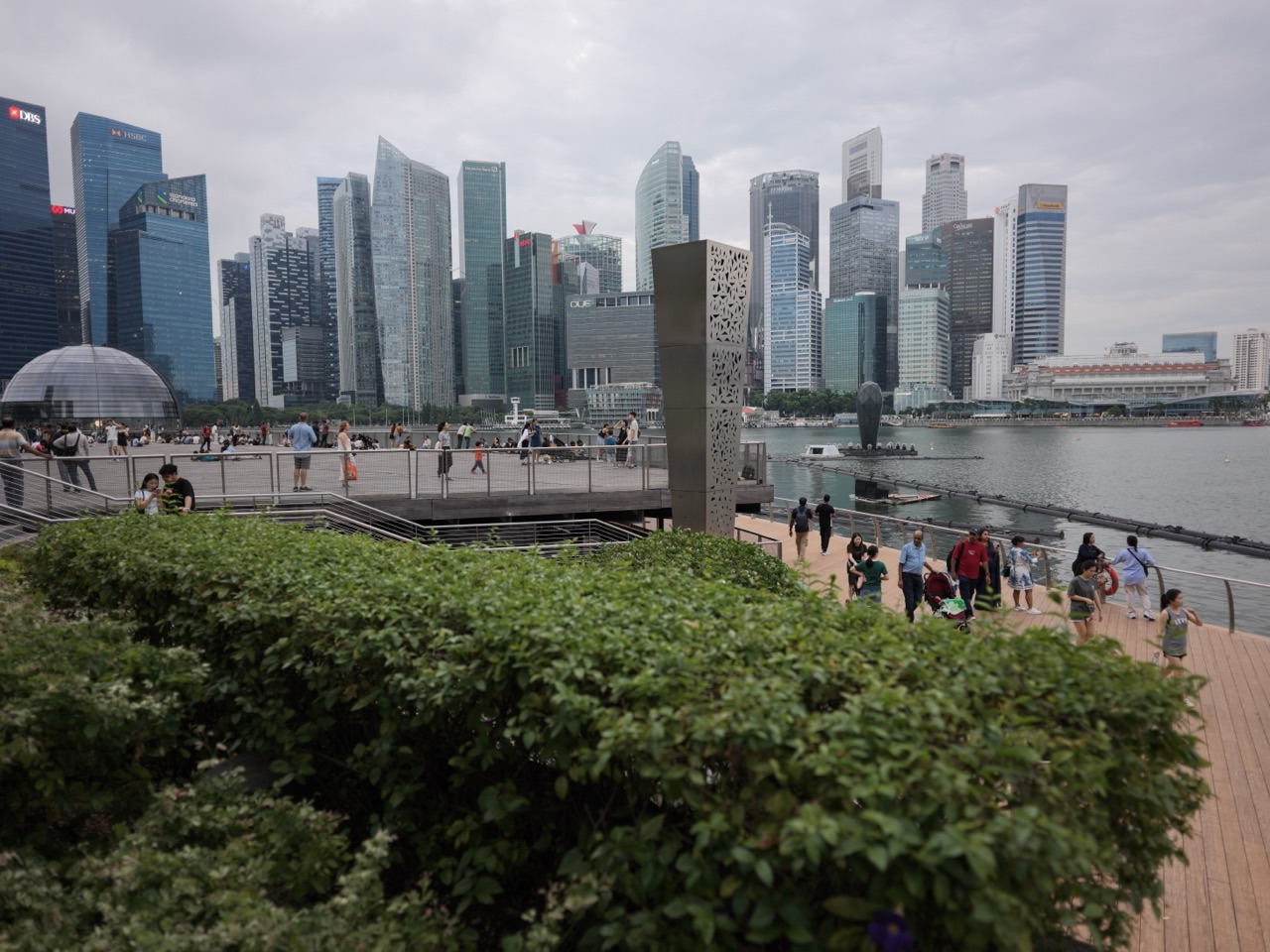
How does Singapore’s tourism industry work? It connects international travellers with flights, border clearance, hotels, public transport, food, shopping, attractions, culture, conferences and local service businesses. The Singapore Tourism Board (STB) develops and markets the destination, while airlines, hotels, licensed travel agents, guides, venue operators and thousands of workers create the actual visitor experience. The airport is an important gateway, but tourism only succeeds when the visitor can use the city.
If you are asking why Singapore attracts tourists, how tourism contributes to the economy, what Changi Airport and Sentosa have to do with it, why business events matter or how hotels and tourist guides are regulated, this guide connects the answers. It builds a reading route across eduKateSG’s How Singapore Works Tourism, transport, visitor services, hotels, museums, shopping districts, food, aviation and public safety articles.
The key question is not simply how many visitors arrived. It is what those visitors came to do, which systems allowed them to do it, what economic value was created, and whether the destination remains good for the people who live here. A crowded landmark is not automatically a successful tourism strategy.
Quick answer: Singapore tourism in seven layers
- Demand: travellers choose Singapore for leisure, business, events, family ties or connections
- Gateways: air, sea and land transport plus immigration and customs bring visitors into the country
- Accommodation: hotels and other lawful options turn an arrival into a comfortable stay
- Movement: MRT, buses, taxis, walking routes and signs connect places
- Experiences: heritage, food, attractions, shopping, sport, arts and neighbourhood activities offer reasons to visit
- Industry and regulation: STB, licensed agents, guides, venue businesses and workers manage service quality
- Long-term value: spending, jobs, investment, sustainability and residents’ experience determine success
STB announced at its Tourism Industry Conference 2026 that Singapore welcomed 16.9 million international visitors and recorded S$32.8 billion in tourism receipts in 2025. Those are tourism-specific indicators, not the same as all airport passenger movements or total GDP.
1. Start with one visitor arriving for three days
Imagine a visitor from overseas landing at Changi Airport. The traveller clears the necessary border process, collects luggage, finds public transport, checks into a hotel and spends the afternoon exploring a neighbourhood. In the evening they eat at a hawker centre and return by MRT.
Many businesses and agencies have contributed to that one day. Airlines, airport operators, immigration officers, transport providers, hotel staff, food businesses and public planners are all parts of one experience even though no single company controls the entire journey.
Tourism works when these handoffs are easy to understand. The root How Singapore Works | Tourism explains its national role, while Hotels, Visitor Services and Tourism Journeys follows the traveller’s route.
2. Why Singapore can attract visitors despite its small size
Singapore combines air connectivity, urban services, distinctive neighbourhoods, events, attractions and a location linked to major Asian markets. Travellers may be drawn by food, culture, business meetings, shopping, leisure or the convenience of a short stopover.
A small city can be attractive when it offers several experiences within a manageable area. But accessibility depends on the actual traveller: a family with children, a person with limited mobility and a corporate delegate may have very different needs.
The destination must therefore be designed for variety rather than assuming one famous landmark is enough. The wider framework appears in Trade and Connectivity Engine.
3. What does the Singapore Tourism Board do?
STB is the national development and marketing agency for tourism. It works on destination strategy, industry development, partnerships, visitor information and relevant licensing or support programmes.
STB does not personally operate every attraction, hotel, aircraft or restaurant. Those services are provided by different businesses and institutions subject to their own responsibilities. The agency helps create conditions for a coherent and competitive tourism economy.
STB’s Tourism 2040 page describes a future-oriented approach to demand, destination attractiveness and the development of a productive tourism sector.
4. What are tourism receipts?
Tourism receipts measure specified visitor spending associated with tourism. That includes more than admission tickets to landmarks; accommodation, food, shopping and other categories can contribute depending on the statistical definition.
Tourism receipts should not be confused with the profit of every tourism firm or the money paid to workers. Businesses still incur salaries, rent, purchases, energy costs and other expenses. The difference between gross spending and net economic value matters.
STB reported S$32.8 billion in tourism receipts for 2025, a record at the time of its May 2026 conference, alongside 16.9 million visitor arrivals. Use the current industry conference or official STB statistics to check later updates.
5. Why airport passengers are not the same as tourist arrivals
An airport counts passenger movements through its operating system, while tourism arrival statistics use their own definition of international visitors. A traveller transiting, arriving, departing or passing through more than once can contribute differently to these measures.
STB’s 2026 conference noted that Changi Airport handled nearly 70 million passenger movements in 2025. It would be incorrect to say that almost 70 million tourists visited Singapore on that basis.
This distinction is a useful lesson in reading public numbers: define the unit before comparing it. Changi’s physical operations are explained in How Does Changi Airport Work?.
6. How does Changi Airport help the visitor economy?
Changi brings travellers from international markets into a local transport network. Its terminals, airlines, runways, baggage systems, immigration facilities, ground handlers and public transport links have distinct jobs.
A passenger may travel to Singapore for leisure, business or a flight transfer. Converting an eligible stopover into a local visit is different from merely counting the traveller’s time in an airport terminal.
STB’s Tourism 2040 strategy recognises the opportunity around global connections and future capacity such as Terminal 5. A future terminal is not proof that every planned flight or visitor opportunity already exists. Read Changi Baggage and Aircraft Turnaround.
7. Why border clearance matters to tourism
Visitors need to meet the applicable entry requirements, including travel documents, visas if necessary and SG Arrival Card submissions where required. The immigration process is legally distinct from booking a hotel or buying a tour ticket.
A traveller can have a confirmed hotel room yet not satisfy all conditions for entry. Conversely, an eligible visitor may complete immigration clearance and then use different transport providers to reach the hotel.
The practical guide is How Singapore’s Immigration System Works and the specialist Border Checkpoints, Immigration and Customs.
8. How do land and sea arrivals fit?
Not everyone enters Singapore by air. Cross-border road connections and passenger sea terminals are also part of the visitor network. Travellers may arrive by bus, car, ferry or cruise under the applicable operating and immigration arrangements.
A cruise visitor may spend only part of a day ashore, while someone crossing a land checkpoint could be visiting family, shopping or attending a business meeting. They use different kinds of public transport and may create different patterns of local spending.
The physical routes are covered by Cruise Terminals and Immigration and Woodlands and Tuas Checkpoints.
9. How do hotels fit into the tourism machine?
A hotel provides a room, but its service extends into booking, check-in, safety, cleaning, customer support and the visitor’s relationship with the surrounding city. A guest who cannot find the entrance or access suitable transport will feel that friction immediately.
Hotels also support jobs, suppliers and local businesses. They consume electricity and water, receive food deliveries and generate laundry or waste. The price of a room is therefore connected to many inputs beyond the building itself.
Room categories and rules vary by operator and dates. Read Hotels, Visitor Services and Tourism Journeys and How Singapore’s Economy Works.
10. Why tourist accommodation rules matter
Visitors need lawful, safe places to stay. Hotels and other accommodation categories have applicable permissions and conditions, and not every residential property can be rented to tourists as if it were a licensed hotel.
This is particularly important for an online booking in a country with HDB and private residential rules. A listing appearing on a marketplace is not proof it complies with minimum-stay or planning requirements.
Travellers should verify property details and cancellation terms before paying, while hosts should check local laws. The connection to housing is How HDB Towns Are Planned and HDB Rental and Tenancy.
11. Why the MRT and buses make a tourist destination stronger
Visitors can experience more of Singapore when attractions and neighbourhoods are connected by understandable public transport. Reliable trains and buses reduce dependence on expensive individual journeys and help spread visitor activity beyond the most famous areas.
The map is only the first step. Station exits, fare payment, sheltered routes and clear signs matter to someone unfamiliar with the system. An international traveller may not instantly understand an interchange that local commuters use every day.
This is why tourism and everyday urban transport reinforce each other. Read How Singapore’s Transport System Works and Passenger Wayfinding and Multilingual Signs.
12. Why signs and visitor information are infrastructure
A sign pointing to the correct hotel entrance or museum exit may seem minor next to an airport terminal, but it converts physical geography into an instruction a visitor can use.
Language choice, accessibility, emergency information and an understandable transport map all affect the visitor’s ability to complete their journey. Information must be reliable, current and consistent enough that a first-time visitor can act on it.
STB supports visitor information through Visit Singapore Visitor Centres. The wider system is Visitor Services and Tourism Journeys.
13. How do attractions create reasons to visit?
Attractions can include gardens, wildlife experiences, architecture, leisure venues, shopping districts and cultural spaces. Their purpose is not identical, and a visitor’s enjoyment depends on more than a headline ticket.
A family might value easy access and child-friendly facilities, while a history enthusiast might prefer a guided neighbourhood walk. A major attraction must handle crowd management, accessibility, safety and the quality of the actual experience.
Tourism development should therefore be evaluated by how people use attractions and whether those experiences justify the time and spending. The original Tourism article owns the broader story.
14. Why Singapore’s heritage precincts matter
Chinatown, Kampong Gelam, Little India, Katong and other neighbourhoods tell different parts of Singapore’s social history. Food, architecture, places of worship and street life can be meaningful visitor experiences.
These districts are not theme parks created solely for tourists. People live, work and worship there, and the interests of residents and business owners need respect. Tourism can help businesses while creating crowd and rent pressures.
A responsible visitor learns enough history to avoid treating an entire community as a costume or stereotype. Connect How Singapore’s Multicultural Society Works with Museums, Archives and Public Memory.
15. Why hawker food is an economic and cultural attraction
Food is one of Singapore’s best-known visitor experiences because it combines flavour, heritage and everyday neighbourhood life. A hawker centre can also offer a tourist direct contact with routines shared by local residents.
Yet the stallholder still has a real business to run. Ingredient prices, rental arrangements, staff, hygiene rules and queue management shape the experience. A sudden wave of popularity can create both opportunity and operational pressure.
Food tourism therefore cannot be separated from the food supply and the people preparing meals. Read Hawker Centres and Hawker Centres, Markets and Shared Tables.
16. How shopping connects to tourism
Shopping districts such as Orchard Road combine retailers, public transport, hotels, restaurants and streets designed for large numbers of people. Visitors may spend on fashion, gifts, technology and dining while moving between several properties.
Retail tourism depends on clear prices, consumer trust, suitable payment systems, tax rules and convenient movement. One impressive mall does not create a successful district if getting between properties is confusing or unpleasant.
The connected systems are Banking and Payments and Consumer Protection.
17. What does MICE mean?
MICE stands for Meetings, Incentives, Conventions and Exhibitions. This is business travel built around professional events, conferences, trade exhibitions and related programmes.
A delegate may use hotels, transport and restaurants while also participating in high-value professional exchanges. This helps explain why tourism strategy cannot focus only on families visiting landmarks.
STB’s MICE overview says Singapore supports events through infrastructure, industry partnerships and Singapore Exhibition & Convention Bureau programmes. The events themselves still need effective organisers and commercial participation.
18. Why a conference visitor can contribute differently
A person attending a large professional conference may stay in a hotel, use taxis, eat in restaurants and buy services connected to the event. Organisers may also book venues, technical support, catering and translation.
That spending and the professional activity differ from someone passing through Changi on a flight transfer. Counting both solely as passenger movements would hide the difference.
STB has explained that high-value MICE activity is an important part of Tourism 2040. The MICE programmes describe support for relevant business events and delegate experiences.
19. Why sports and concerts create tourism
Major sports events, festivals and concerts can give international visitors a reason to time a trip around a particular weekend. The value extends into hotels, food, transport, merchandise and other experiences.
Large events also place demands on local residents: crowd management, road use, security and pricing can affect daily life. An event is not necessarily a net benefit simply because the audience looks large in photographs.
Good planning considers both event operations and the surrounding city. The specialist Arts Venues, Festivals and Cultural Audiences and the companion Sports and Recreation System explain the related public systems.
20. What is a licensed tourist guide?
Under STB’s current tourist-guide rules, individuals providing in-person guiding services to tourists for remuneration generally require the applicable licence. Training, assessment and licensing are distinct from simply being enthusiastic about Singapore.
A useful guide combines accurate research, storytelling, safety awareness and the ability to adapt to different audiences. A misleading or invented historical anecdote may be entertaining but undermines the visitor’s understanding.
STB’s Tourist Guide Licence describes approved training organisations and the licensing process. A licence is separate from general public permission to talk about your home city.
21. What is a travel agent licence?
Businesses selling or arranging travel and tours may need a Travel Agent Licence under Singapore’s Travel Agents Act, depending on the activity and exceptions. Selling a tour through a company website does not automatically avoid licensing requirements.
STB’s current guidance distinguishes General and Niche licences with different authorised activities and eligibility. There are financial and operational conditions that new operators should verify before promising packages.
The STB Travel Agent Licence page is the authoritative starting point. It also shows how tourism connects to ACRA Business Registration.
22. Why the travel agent and tourist guide are different roles
A travel agent may package or arrange transport, accommodation and tours under a commercial offering. A tourist guide provides in-person guiding services under the relevant rules. A business may employ licensed guides or work with other operators, but the licences address different activities.
A traveller who buys a walking tour may assume the guide and the seller are the same legal entity. They need not be. When a refund or complaint arises, understanding who sold the service and who was responsible for delivery matters.
This is similar to the distinction between a shipping company and the person delivering the parcel. Separate organisations need a coordinated contract and a usable customer support process.
23. Why visitors need consumer protection
A visitor may book a hotel room, attraction ticket or tour long before arriving. The contract can involve cancellation conditions, specific inclusions, payment methods and a provider operating in another country.
An attractive advertisement is not proof of a guaranteed experience. Customers should read material conditions, use reputable sellers and retain booking records. Businesses should make clear promises and provide appropriate recourse.
Singapore’s consumer-protection framework intersects with tourism regulation but has its own institutions and rules. Read How Consumers Are Protected in Singapore.
24. How do tourist attractions handle safety and access?
An attraction’s responsibilities may include visitor movement, capacity, equipment maintenance, emergency plans and accessibility. The correct requirements depend on the type of facility, risk and operating approvals.
A fun activity is only sustainable if the provider can operate safely under the conditions actually encountered. Weather, crowd size and the needs of visitors with disabilities can change what is appropriate.
Accessible travel is part of visitor experience rather than a decorative feature. Compare Barrier-Free Public Transport with Emergency Calls and First Response.
25. What does Tourism 2040 aim to achieve?
STB’s Tourism 2040 roadmap seeks quality tourism growth through demand, destination attractiveness and industry development. It describes an ambition for tourism receipts of S$47 billion to S$50 billion by 2040.
That is a future projection and policy objective, not evidence that Singapore already collects that amount annually. The roadmap also recognises global competition, changing traveller preferences, sustainability and limited resources.
Long-term success requires productive businesses and destinations residents are proud to share. Read STB — Tourism 2040 for the current official vision.
26. Why tourism technology cannot replace hospitality
Online bookings, visitor analytics and translation tools can reduce time spent on routine decisions. STB’s 2026 conference highlighted industry AI initiatives, including an AI Playbook for Tourism and a Tcube Centre of Excellence.
But a traveller’s experience remains human. A correct reservation, kind help after a missed train and clear advice during a disruption may matter more than an elegant app interface.
Technology should help staff deliver more reliable and personal service, not make it impossible to reach a person when something goes wrong. The wider digital connection is Singapore’s Internet Infrastructure.
27. Why tourism also has environmental costs
Flights, hotels, air-conditioning, attractions and transport require energy, water, land and materials. Large visitor flows may create waste or put pressure on crowded neighbourhoods.
Tourism can contribute to the economy while still needing sustainability plans. A destination’s long-term appeal depends partly on whether public spaces remain pleasant and environmental systems cope with demand.
An honest assessment measures both benefits and costs rather than assuming every additional visitor is automatically an unqualified gain. The linked guides are Essential Supplies and Waste, Recycling and Sewage.
28. Why residents’ everyday experience matters
Tourists and residents use many of the same MRT lines, parks, public spaces and shops. An event that brings economic activity may also cause congestion, noise or higher demand for services at particular times.
A sustainable destination should provide worthwhile visitor experiences while protecting a liveable home for residents. Local businesses can benefit from tourism without every neighbourhood becoming a performance staged solely for outsiders.
That balance belongs to national planning, public feedback and the shared culture of hospitality. Read Multicultural Society and The Shared Table.
29. Worked example: one business traveller extending a stay
A delegate attends a conference for two days. They use Changi, an MRT or taxi, a hotel and the convention centre. After the meetings, they extend the visit to explore hawker food, a heritage area and a museum.
That journey demonstrates several overlapping economies: the air gateway brings the person in, the business event creates the initial reason to visit, and local tourism businesses offer additional value. The same visitor can contribute to different sectors in one trip.
Now imagine a missed luggage transfer or hotel check-in issue. The journey becomes frustrating unless the responsible organisations have clear procedures for correction. Quality tourism is built at these handoffs.
30. How should Singapore judge tourism success?
Visitor arrivals and receipts are important, but they are only part of the evidence. Service quality, resident wellbeing, business productivity, employment opportunities, accessibility and environmental impact also matter.
An event drawing many people can still disappoint if queues, safety or information are poorly managed. A smaller visit can create greater value when it supports thoughtful experiences and local businesses.
Singapore’s tourism system is an example of The Whole Machine: international networks become real economic and human outcomes through thousands of coordinated daily decisions.
Singapore tourism systems: complete reading map
Air, sea and visitor access
- How Singapore Works | Tourism
- How Changi Airport Works
- Airports, Seaports and Global Gateways
- Cruise Terminals and Passenger Turnaround
- Border Checkpoints and Immigration
- MRT, Buses, Roads and Transport
- Passenger Information and Wayfinding
Hotels, experiences and neighbourhoods
- Hotels, Visitor Services and Tourism Journeys
- Arts Venues, Festivals and Cultural Audiences
- Museums, Archives and Public Memory
- Hawker Centres
- Hawker Centres and Shared Tables
- Sports, Recreation and Events
- Multicultural Singapore
Tourism businesses and the national economy
- How Singapore’s Economy Works
- ACRA Business Registration
- GoBusiness, Licences and Regulatory Approvals
- Consumer Protection
- Employment, Skills and Work Passes
- Internet and Digital Infrastructure
Frequently asked questions about tourism in Singapore
Why is Singapore popular with international visitors?
It combines global connections, business events, food, neighbourhood culture, attractions, urban services and convenient transport.
Who is responsible for developing Singapore tourism?
Singapore Tourism Board leads national tourism development and marketing, working with multiple public agencies and private businesses.
How many tourists visited Singapore in 2025?
STB reported 16.9 million international visitor arrivals for 2025.
How much did Singapore earn from tourism in 2025?
STB reported S$32.8 billion in tourism receipts for 2025, a spending measure rather than profit or total GDP.
Are Changi Airport passengers and tourists the same number?
No. Airport passenger movements and international visitor arrivals are different measures.
What does MICE mean?
Meetings, Incentives, Conventions and Exhibitions, a segment of business travel and events.
Does Singapore need tourist guides to be licensed?
A person providing relevant in-person guiding to tourists for remuneration generally needs a valid licence under STB’s rules.
Does a tour business need a travel agent licence?
Many travel arranging and tour businesses require one, subject to activities and exemptions under current law.
Are all short-term apartment rentals legal?
No. Accommodation use and minimum-stay conditions vary by property and law; check the actual premises.
What is Tourism 2040?
STB’s long-term roadmap for destination and industry development, projecting S$47 billion to S$50 billion in tourism receipts by 2040.
Why are conferences important to tourism?
They bring delegates and spending to hotels, venues, food, transport and professional services.
Why does tourism need the MRT?
Accessible public transport connects visitors to different neighbourhoods and experiences without requiring a private vehicle.
How can residents benefit from tourism?
It can support jobs, restaurants, shops, cultural activities and new experiences, while requiring thoughtful management of crowding and other pressures.
Where are official visitor statistics published?
Singapore Tourism Board publishes tourism statistics through its STAN analytics network.
The other Singapore systems reading routes
- Postal Codes, Parcels and Last-Mile Delivery
- NLB, Public Libraries and Archives
- Sports, ActiveSG and Community Recreation
- Trade, Finance, Tourism and Jobs
The main series remains How Singapore Works: Civilisation Atlas. This tourism guide connects its already-published specialist owners.
Official source desk
- STB — Tourism Industry Conference 2026
- STB — Tourism 2040
- STB STAN — Tourism Statistics
- STB — MICE Industry
- STB — Tourist Guide Licence
- STB — Travel Agent Licence
- Visit Singapore — Visitor Services
Reader note: This is an educational national tourism explainer, not a travel booking or claim of live attraction availability. Tourist arrivals, receipts, events, entry rules and licences change; use current STB, ICA and provider information before making a booking or business decision. Editorial review: 20 October 2026.
Continue through Singapore’s connected systems
The arts, public memory, parks and nature are not separate from this subject. They connect the visitor’s experience, neighbourhood life, learning and access to the same shared city. Follow the two further systems-level routes: