
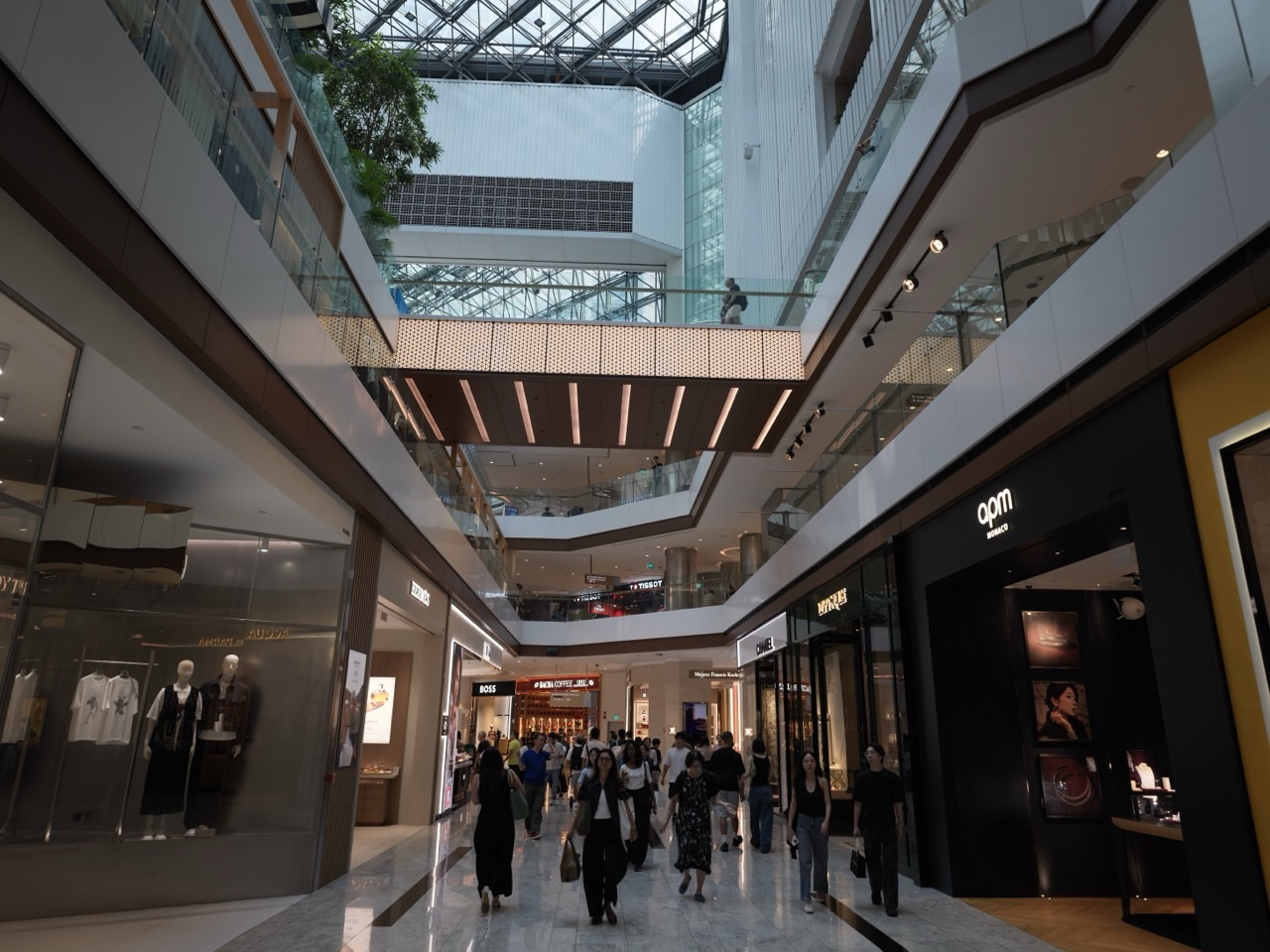
Are Singapore shopping malls safer places to spend time when haze is Unhealthy? A suitable enclosed, well-managed mall or shop may reduce exposure compared with a long outdoor errand, but an air-conditioned building is not a guarantee that all PM2.5 particles are filtered out. Before deciding on a trip, check NEA’s latest one-hour PM2.5 and MOH’s personal outdoor-activity guide for the people travelling, particularly children, pregnant women, older people and those with chronic heart or lung disease. Plan necessary purchases efficiently, consider a practical indoor or delivery option, and remember that a covered open-sided storefront is still connected to outdoor air.
This Singapore haze shopping and retail guide is for shoppers, parents, elderly residents, store employees, small-business owners, mall facilities managers, service contractors and delivery workers. It explains the difference between enclosed malls, heartland shop corridors and open-air markets, how mall ACMV systems and independent shop split units differ, why exposure during queues matters, when staff should receive job-specific controls, how families can shorten unnecessary travel, and how to avoid buying inappropriate “haze detox” merchandise in a panic. It uses actual Singapore shopping contexts from Orchard Road and Raffles City to Clementi, Jurong, Bedok and Punggol without inventing real-time opening hours or making unverified claims about individual mall filtration systems.
Singapore’s NEA indoor-air guidance updated April 2026 specifically addresses air-conditioned premises, including shopping malls and smaller rooms with different ventilation configurations. The MOM haze workplace guidance explains employers’ safety responsibilities and why prolonged outdoor work, susceptibility and task intensity matter. Together with MOH’s personal guide, these sources show why the same shopping destination can involve several distinct environments: a cool enclosed atrium, a frequently opened doorway, an outside queue and a delivery pickup zone.
A quick answer for shoppers
Ask whether the trip is necessary. Picking up prescribed medicine or essential groceries is different from spending four hours browsing for leisure. If a discretionary outing can wait and current conditions call for reducing outdoor exposure, postponing may be simplest.
If travel is necessary, consider the total route. A family might walk through an open HDB corridor, wait at a bus stop, board an MRT, cross an uncovered road and finally reach an enclosed mall. The mall’s indoor comfort does not erase outdoor portions of the journey.
Then check the person. A healthy adult making a brief errand and a child with asthma accompanying an older grandparent may need different activity decisions. MOH’s guide addresses individual vulnerability and outdoor exertion; it does not declare every indoor shopping venue medically safe.
Finally confirm the specific business operation if a journey would otherwise be wasted. Opening hours, queue conditions, escalator access and renovation works can change independently of haze.
The immediate PM2.5 guide and why it matters
NEA reports one-hour PM2.5 concentrations in micrograms per cubic metre. MOH’s immediate bands are Normal (0–55), Elevated (56–150), High (151–250) and Very High (251 or more). At Elevated, healthy people should reduce strenuous outdoor activity while vulnerable groups avoid strenuous outdoor activity; at High, healthy people should avoid strenuous outdoor activity and vulnerable groups avoid outdoor activity; and at Very High, healthy people should minimise all outdoor activity while vulnerable groups avoid it.
The 24-hour PSI forecast is a different indicator used for broader planning. It has Good, Moderate, Unhealthy, Very Unhealthy and Hazardous categories. A 24-hour forecast is useful for tomorrow’s family outing, while the one-hour PM2.5 helps decide what to do during the next hour.
A shopper waiting outside a store for ninety minutes is not in the same situation as a person passing through a lobby for one minute. Activity intensity may be low, but exposure duration can still matter. A person’s existing heart or lung disease can change the recommended response.
The correct approach is to use the latest official source and individual health guidance rather than counting masks on other shoppers as a proxy for risk.
Air conditioning versus actual fine-particle filtration
Air conditioning changes temperature, and may also dehumidify air, but it does not necessarily remove fine smoke particles effectively. A large mall may use central air-conditioning and mechanical ventilation (ACMV), while an independent boutique may rely on split air conditioners and frequently opened doors.
The NEA April 2026 ventilation guidance recommends properly maintaining fans, air-handling units, ducts and filters. It recognises that outdoor air quality can be poor during haze, so opening windows may not always be appropriate; professionally managed filtration and air exchange matter.
A cool mall therefore offers a different experience from a hot sidewalk but is not automatically a certified low-PM2.5 chamber. A visitor cannot reliably infer filter grade, air bypass or outdoor-air supply from the feel of air near an escalator.
Facilities managers and tenants can ask about the actual systems and maintenance records rather than rely on vague marketing phrases such as “ultra-clean indoor air”.
Common mall areas and individual shops are not identical
A shopping mall may control the ventilation of main corridors, atriums and common areas, while some tenants operate separate systems or have shop-specific sources and openings. A perfume counter, restaurant kitchen, clothing shop and basement loading bay have different indoor pollutant and occupancy patterns.
A tenant should not claim that every shop has exactly the same air conditions simply because the common corridor feels comfortable. Large open shopfronts allow more mixing between spaces; a frequently opened street-facing door can admit outdoor air.
The mall facilities team is the correct starting point for building-wide ACMV questions. The tenant should manage its own operations and report concerns through the applicable landlord or management channel. A temporary issue in one unit should not be exaggerated into a claim that the entire centre is unsafe.
Likewise, a visitor noticing haze smell near one entrance has made an observation, not identified a precise PM2.5 concentration or equipment fault. Good assessment separates observation from explanation.
Orchard Road: enclosed shops and exposed sidewalks
Orchard Road includes major enclosed malls, shopfronts facing busy streets, outdoor crossings and sheltered but open pedestrian routes. A shopper can move from an air-conditioned retail floor to an exposed bus stop in minutes. The overall journey is not one uniform indoor environment.
Some storefronts invite visitors to linger at an outdoor display or queue. During poor haze, a long discretionary queue may be easy to postpone. A family with a small child and an older relative might preserve a necessary purchase while removing unnecessary extra stops.
The traffic environment introduces additional local considerations such as vehicle exhaust, but a regional NEA haze reading is not a direct measurement of each busy roadside or exact shop entrance. Avoid making false claims that a specific Orchard mall is permanently cleaner than all alternatives.
Choose a route according to practical access, time, health and actual operations rather than a fixed list of supposedly haze-proof shopping destinations.
Raffles City, Marina Bay and civic-district retail
Central Singapore offers large enclosed retail areas where shopping may be combined with food, transport and cultural experiences. A family could choose to consolidate a necessary errand in one location rather than travel among several outdoor stops. That can reduce some exposed walking when appropriate.
But indoor shopping can still involve crowding, open doors, queues and restaurant emissions. A cool lobby, beautiful roof or glass façade is not evidence that the whole building has a measured PM2.5 concentration below an exact threshold.
For someone who simply wants a weekend activity, a library or suitable home project may be more useful than crossing the island for shopping. For an essential errand, the best destination may be the nearest appropriate business, not the most famous mall.
Our Singapore Haze Tourist Guide discusses attractions; this article concentrates on retail spaces, customer journeys and employee operations.
Heartland shopping corridors and neighbourhood stores
A shop under an HDB block may have a roof but remain open to the outdoors. Some supermarkets are enclosed and air-conditioned; other provision shops and wet-market stalls have different ventilation. The word “indoors” can be misleading when a shop’s entire front is open to a corridor.
For a person in Clementi, Punggol, Bedok, Jurong or Woodlands, a nearby shop may require much less travel than a distant mall. The shorter journey can be a practical advantage, but an open-sided queue can still involve exposure. The choice depends on the actual goods needed and the person.
Small-business owners should not assume that installing a fan at the doorway removes smoke particles. A normal fan moves air; it is not high-efficiency particle filtration. Similarly, the air conditioner inside a small shop may not provide a dedicated filtered outside-air supply.
Keeping necessary retail services accessible can be compatible with reducing optional outdoor browsing. The decision is not simply “all malls” versus “all heartland shops”.
Supermarkets and necessary groceries
Food-shopping decisions have two different sides. One is how much outdoor air the shopper breathes during the journey; the other is whether the food is handled hygienically and stored safely. A haze episode does not by itself make Singapore’s PUB tap water unsafe or all produce at wet markets contaminated.
A household may consolidate essential grocery trips or use a suitable delivery option where practical. Do not panic-buy large quantities of chilled products that cannot be stored or consumed properly. SFA’s ordinary food hygiene guidance remains relevant to food preparation.
A supermarket may be comfortable inside, but refrigerated food still needs proper handling during travel home. A hot parked car or a long exposed queue can create issues separate from airborne smoke.
Our Singapore Haze Food, Water and Kitchen Guide explains PUB, SFA, produce washing and kitchen smoke.
Pharmacies and haze-related products
Pharmacies can be useful for necessary prescribed medication, advice on over-the-counter medicines and legitimate N95-equivalent respirators where appropriate. MOH generally does not recommend N95s for ordinary short commutes or indoor conditions, so a hazy headline should not automatically make every resident buy and wear one.
If somebody has asthma or chronic cardiac disease, keeping existing prescribed medicines available can be more important than purchasing unverified “lung detox” supplements. A pharmacist can help with product instructions and possible overlapping medicine ingredients, while serious symptoms require healthcare.
An N95’s tested filter performance and actual face seal matter, and it may not suit some vulnerable people. A mask cannot make a long optional outdoor workout medically appropriate when MOH guidance advises against it.
For the details read Singapore Haze N95, KN95 and KF94 Masks and Clinics and Subsidies.
Retail queues: the time people forget to count
A person may spend only twelve minutes inside a shop but wait outside for forty minutes because of a promotion, collection slot or limited-capacity opening. The official outdoor activity guide applies to the time outside, not simply the activity name on the calendar.
A family can sometimes avoid unnecessary waiting by checking an appointment or pickup message before departing. If the errand is optional, postponement may be simpler than standing through a long exposed queue with a child or an older relative.
A store manager can improve communication by giving realistic pickup windows and safe queuing arrangements where operationally possible. This also reduces frustration and crowding. Do not promise medical protection from the presence of a canopy, as open air can reach the line.
Reducing avoidable waiting is a practical action that usually costs less than buying another gadget.
A worked example: the real shopping exposure
A parent plans an errand with a child. It includes 10 minutes walking to the station, 12 minutes waiting outside a shop, 25 minutes inside the air-conditioned store and 8 minutes walking back. The total trip lasts 55 minutes, but the identified outdoor portions add up to 10 + 12 + 8 = 30 minutes.
The calculation is not a dose estimate. Actual inhaled pollution depends on concentration, effort, indoor air and many personal factors. It simply teaches the family to distinguish the trip’s total duration from the outdoor segments.
If the shop offers a confirmed pickup slot that reduces outside waiting from 12 minutes to 2, the planned outdoor portion becomes 20 minutes. That is a ten-minute reduction in exposure opportunity, but the family should still follow current MOH guidance, especially for children at High readings.
This is an original eduKate-style worked example: identify the hidden assumption, calculate with consistent units and explain what the result does not prove.
Retail employees: a whole shift is not a short commute
A retail employee may stand outside a shopfront greeting customers, arrange displays under an open awning or unload stock from a vehicle for several hours. The exposure differs from a shopper walking past for a few minutes. The employer should assess the actual role under MOM’s haze workplace guidelines.
Under Singapore’s Workplace Safety and Health framework, employers have responsibilities to manage relevant workplace risk. MOM’s guidelines describe identifying susceptible workers, deciding which outdoor duties should be reduced, providing appropriate controls and communicating changes.
Possible measures include modifying non-essential exposed work, adjusting schedules, using mechanical aids for strenuous loading and offering appropriate indoor breaks, according to the employer’s assessment. A mask is not the entire response and may add breathing resistance during exertion.
Employees should have a clear way to report symptoms without pressure to disclose private diagnoses publicly in front of customers.
Security, delivery and loading-bay workers
Mall retail depends on staff whose work may be outside the main shopping floor: cleaners, security personnel, couriers, delivery riders, goods-receiving workers and maintenance teams. A customer may feel comfortable in an enclosed atrium while a worker spends much of the shift near the loading entrance.
That difference matters to occupational haze planning. The employer and relevant building operator should coordinate based on actual responsibility and contracts. A generic mall announcement about customer opening hours does not automatically address all external work tasks.
A delivery rider waiting in an open-air pickup queue may face prolonged exposure even though the food or merchandise is stored indoors. Clear directions and realistic handover points can reduce unnecessary delay.
For an extended occupational analysis, use Singapore Haze Outdoor Workers.
What retailers should ask their building manager
The store operator should know whether its premises rely on central ACMV, independent split units or mostly natural ventilation. Ask the responsible facilities team about filter maintenance, outdoor-air handling, door openings and reported air-quality issues. Do not turn off essential ventilation equipment simply because a viral video recommends sealing all openings.
NEA’s April 2026 building guidance emphasises actual fan, duct, filter and damper operation. Proper maintenance matters because filter bypass and system faults can reduce performance.
A tenant may also have its own indoor sources such as fragrances, cleaning sprays, dust from renovation or high-temperature food preparation. Eliminating one source while ignoring all others does not automatically produce healthy indoor air.
A useful facilities request gives the affected location, observed symptom or odour, date and operations involved. It should not begin with a confident diagnosis of the building’s filter based on one photo.
CO2 monitors, particle sensors and customer assumptions
A store may display a CO2 reading or a consumer PM2.5 sensor. These devices measure different quantities. CO2 can be relevant to assessing ventilation under some occupied conditions, but a low CO2 value does not certify that outside haze particles have all been removed.
Consumer PM2.5 monitors may have limitations involving calibration, humidity, location and method. A screen showing a green number is not necessarily an official NEA measurement of the entire shopping centre. If a business needs representative indoor-air testing, use an appropriate qualified approach.
Do not add PSI, CO2 and PM2.5 values in a spreadsheet and derive a supposed “haze safety score” without a scientifically justified model. The units and meanings differ.
Our Singapore Haze Home PM2.5 Sensor Guide explains what such devices can and cannot establish.
Storefront smoking and sources unrelated to regional haze
A shop entrance may be affected by local cigarette smoke as well as regional haze. NEA’s smoking-prohibition guidance applies to specified indoor public places, including non-air-conditioned shops, and to certain entrances and other public facilities.
A manager should follow applicable smoke-free rules and any relevant property instructions. It is not reasonable to tell customers that all odour must be transboundary haze when nearby smoking, renovation or vehicle exhaust could also be present.
Separating indoor and local sources can make the response more effective: report a broken door seal to facilities, a specific smoking issue through the appropriate channel or a filtration concern to qualified maintenance personnel.
This is another example of environmental literacy. A smell is an observation; identifying its source requires more information.
Renovation, new displays and shop fit-outs
Retail stores regularly renovate their interiors, install display fittings or change signage. Paints, adhesives, boards and cleaning products may release chemicals or dust unrelated to the current regional PM2.5 episode. A shop that is enclosed against smoky outdoor air may still require proper ventilation for its indoor activities.
NEA’s April 2026 guidance on formaldehyde in interior building products discusses emissions and relevant indoor-air considerations. It is not the same as an outdoor PSI notice. A business should not describe a chemical odour as automatically harmless because regional air has improved.
Schedule works responsibly, protect staff and customers from unnecessary exposure and have qualified personnel assess ventilation where needed. Do not install an unsuitable filter, block a fresh-air duct or bring combustion equipment indoors as an improvised “air-cleaning” intervention.
The Singapore Haze Home Renovation Guide explores the pollutant distinctions for smaller premises and households.
Family shopping with a baby or older person
A family outing may involve a stroller, a grandparent using a walking aid and schoolchildren with their own needs. When outdoor air is poor, a shorter necessary shopping trip or suitable home plan may be easier than several hours travelling among multiple stores.
Check actual wheelchair and stroller access, lift availability and pickup arrangements. A person with heart or lung disease may require more caution than the healthy adult managing the trolley. A child who is unwell needs care rather than a distraction shopping trip.
An air-conditioned mall may be convenient but is not automatically a medically certified clean-air refuge. A designated People’s Association haze shelter is a separate programme with its own location and operation rules.
For a caregiver-specific plan, read Singapore Haze Babies, Seniors and Community Haze Shelters.
Food courts and mall restaurants
Eating in an enclosed food court differs from dining in an open-sided hawker centre, but both require attention to actual ventilation, cooking emissions and food hygiene. A food court may have a shared dining area and separate cooking exhaust systems; one cannot infer the quality of the other from the room temperature.
SFA’s ordinary food handling rules remain important. Haze does not mean every dish is contaminated; nor does an indoor food court eliminate foodborne risks. Preserve sensible refrigeration and hand hygiene during any changed routine.
For people with significant respiratory conditions, consider the full route, wait and meal duration rather than simply choosing the most famous enclosed dining spot. If a meal is optional and the journey is burdensome, a suitable home alternative can be worthwhile.
See Singapore Haze Hawker Centres and Food Delivery for the dining-specific guide.
Shop notices that preserve trust
A retail shop should avoid issuing a dramatic announcement that every mall in Singapore is unsafe without evidence. It should also avoid unfounded guarantees such as “100% haze-proof air”. A useful notice states its actual opening status, any affected outdoor collection queue, changes to delivery or pickup and how customers will receive updates.
For employees, internal communication should cover specific role adjustments and who can report symptoms or seek help. A shop may remain open for business while it modifies exposed merchandising or loading tasks. Those details are more actionable than a vague instruction to “wear a mask”.
Use timestamps when citing a current air reading. A screenshot from last week should not be passed around as today’s exposure data. Customers need simple factual information, not continual alarm.
The goal is a business that remains serviceable without requiring people to take unnecessary risks.
A worked example for a small retail operator
Imagine a neighbourhood shop with one enclosed sales room, an open-front promotional table and a storeroom. On a day when one-hour PM2.5 is High, a healthy employee is scheduled for a long outdoor promotion while another staff member with a chronic respiratory condition handles stock.
The operator checks MOM’s occupational risk guidance, considers which outdoor work is non-essential and whether any roles can be reorganised, and asks facilities professionals about indoor-air arrangements as appropriate. It does not assume that providing both workers the same mask and preserving every original duty resolves the risks.
A short factual notice tells customers where pickup now occurs. The storeroom’s ventilation and any indoor sources are assessed separately from the promotion table. The business preserves necessary service by adjusting the exposed part of its operation.
This is an illustrative risk-management example, not a universal legal prescription or a claim about a particular named Singapore retailer.
A second example: a family’s Saturday shopping plan
A family in Clementi plans a short supermarket trip, a long visit to a mall on Orchard Road and a waterfront dinner. The latest one-hour PM2.5 is High and a child has asthma. The family need not treat the three parts as inseparable.
It can prioritise necessary groceries, choose a practical low-exposure transport arrangement, follow the child’s prescribed plan and postpone the long optional browsing and outdoor dinner. The family does not need to buy a new purifier or N95 for everyone solely to preserve the original Saturday timetable.
If the child has persistent symptoms, seek appropriate medical advice. If the family wants meaningful indoor time, a suitable home activity may serve them better than travelling to a distant destination.
The principle is preserving purpose while reducing avoidable outdoor activity—not insisting that every planned stop be completed.
Retail and haze decision table
| Setting or question | What matters | First check | Wrong shortcut |
|---|---|---|---|
| Enclosed mall corridor | Actual ACMV and indoor sources | Facilities and NEA indoor guidance | Cool air proves zero PM2.5 |
| Open-front heartland shop | Outdoor entry and shopper duration | NEA PM2.5 and MOH | Roof equals particle filtration |
| Outdoor queue | Time, health and necessity | Current PM2.5 and store pickup info | Waiting doesn’t count as exposure |
| Pharmacy visit | Prescriptions and symptoms | Pharmacist, GP and official care | Buy any “haze detox” product |
| Retail outdoor shift | Work intensity and susceptibility | Employer’s MOM risk assessment | All workers simply wear any N95 |
| Loading bay | Exhaust, outdoor smoke, ventilation | Job and site risk assessment | Indoor-looking bay is automatically clean |
| Store renovation | Local dust and chemical emissions | Contractor and building ventilation | All odour is transboundary haze |
| Family with children or seniors | Health and total door-to-door time | Personal MOH guide | A mall is a medical shelter |
| Customer collection notice | Verified operations and time | Actual store message | Yesterday’s screenshot is current |
Frequently asked questions about shopping during Singapore haze
Are all shopping malls safe when PSI is Unhealthy?
No universal guarantee is supported. An enclosed, appropriately managed building may offer a different environment from outside, but actual fine-particle concentrations depend on ventilation, filtration, doors and indoor pollution sources.
Does mall air-conditioning remove PM2.5?
Air conditioning primarily controls temperature. Some central systems have effective filtration, while others have different configurations. Maintenance and system design matter. Cooling alone does not certify particle removal.
Is an open HDB shop corridor considered indoor air?
A roofed corridor can remain open to outside air, so it should not automatically be described as filtered. Use current personal outdoor-exposure guidance for time spent there.
Can I shop at Orchard Road during haze?
Consider current PM2.5, the actual journey, shopping purpose, time outdoors and personal health. A necessary errand and a lengthy optional leisure trip are different decisions.
Is a shopping mall the same as an official haze shelter?
No. People’s Association haze shelters are designated community facilities under their own programme. A normal mall does not automatically offer identical services, hours or respite arrangements.
Are retail employees required to work outside during Unhealthy haze?
Employers should follow applicable MOM workplace risk guidance and consider task intensity, duration, susceptibility and controls. This article cannot determine any individual worker’s duties or employment arrangements.
Must every retail worker wear N95 all day?
MOH generally does not recommend N95-equivalent masks for ordinary indoor settings, while occupational requirements can differ for prolonged outdoor work. Fit, medical suitability and job risk assessments matter.
Can a store close every door to prevent haze?
Outdoor smoke entry may need management, but adequate ventilation and building safety are still required. Do not disable essential ACMV or safety systems without professional advice.
Does a CO2 meter show whether a mall is free of haze?
No. CO2 and PM2.5 are different measurements. A CO2 indicator may inform ventilation under certain conditions but does not directly establish particle concentration.
What if shoppers smell smoke in one boutique?
Describe the time and location and notify staff. The cause might involve outdoor haze, smoking, renovation or another source. Odour alone is not a precise pollutant measurement or diagnosis of an HVAC fault.
Is it sensible to queue for a product launch outdoors?
Consider whether the queue is necessary, how long it lasts, who is attending and what MOH currently advises. A discretionary queue can often be postponed or replaced with an appropriate collection arrangement.
Can supermarkets still sell vegetables during haze?
A hazy sky does not establish that all produce is unsafe. Use SFA’s food hygiene and preparation guidance and follow any actual product-specific food safety alerts.
Should I buy bottled water because the air is smoky?
PUB’s treated Singapore tap water remains safe to drink under its published monitoring standards. An air-quality event does not automatically imply contamination of drinking water.
Is an N95 necessary for walking from MRT to a mall?
MOH generally states N95 masks are unnecessary for ordinary short home-to-work or school commutes and indoors. Individual prolonged necessary exposure and health conditions may change the advice.
Can a senior with heart disease spend several hours browsing shops?
Apply the person-specific MOH advisory, actual journey and clinical advice. A person who is unwell should seek appropriate medical care rather than assume an enclosed mall is medical protection.
Should retailers stop renovation because of haze?
Work decisions depend on actual conditions, hazards, contracts and relevant safety obligations. Local dust and chemical emissions need independent management; a haze episode does not automatically specify one universal renovation rule.
What if the shop advertised as open is actually closed?
Check current store communications before travelling. Opening status, renovations, staffing and hours can change for reasons unrelated to haze. Do not treat a static blog as live store availability.
Is online shopping always the better option?
It can reduce a shopper’s journey but may create work for delivery staff, with different exposures and arrangements. Compare necessity, practicality, cost and individual needs rather than applying a universal rule.
Can a family still have a pleasant weekend without mall shopping?
Yes. Reading, safe indoor family activities, appropriate movement and a later outing can preserve social time when outdoor conditions make unnecessary travel unsuitable. A change of plan need not become a costly alternative.
Connected eduKate Singapore haze and daily-life guides
For regional causes, begin with How Haze Works | SEA 2026. For day-to-day routines, see Singapore Haze Lifestyle and Family Preparedness.
For working conditions and indoor buildings, read Singapore Haze Offices, Outdoor Workers and MOM, Condominium and MCST Facilities and HDB Air Purifiers and Windows.
For family needs use Singapore Haze MRT and Commuting, Hawker Centres and Food Delivery, Food and Water Safety and Weekend Family Activities.
The educational companion is MOE Reference 86: Environmental Monitoring Literacy, which explains why an air measurement, a forecast, a ventilation indicator and a practical decision must be kept distinct.
Official references and editorial scope
Primary sources: MOH Haze Advisory, NEA Haze Portal, NEA Updated Indoor Air Quality Guidance, April 2026, MOM Guidelines for Employers During Haze, NEA Smoking Prohibition Guidance, NEA Formaldehyde in Interior Building Products and NEA Air Cleaning Devices.
Prepared in October 2026 as an informational guide, not a live shopping-directory service, individual medical clearance, occupational risk assessment or certified indoor-air report. Store layouts, ventilation systems and operating hours differ. Choose current official data, the actual person’s needs and clear site communication over claims that every air-conditioned store is necessarily smoke-free.