
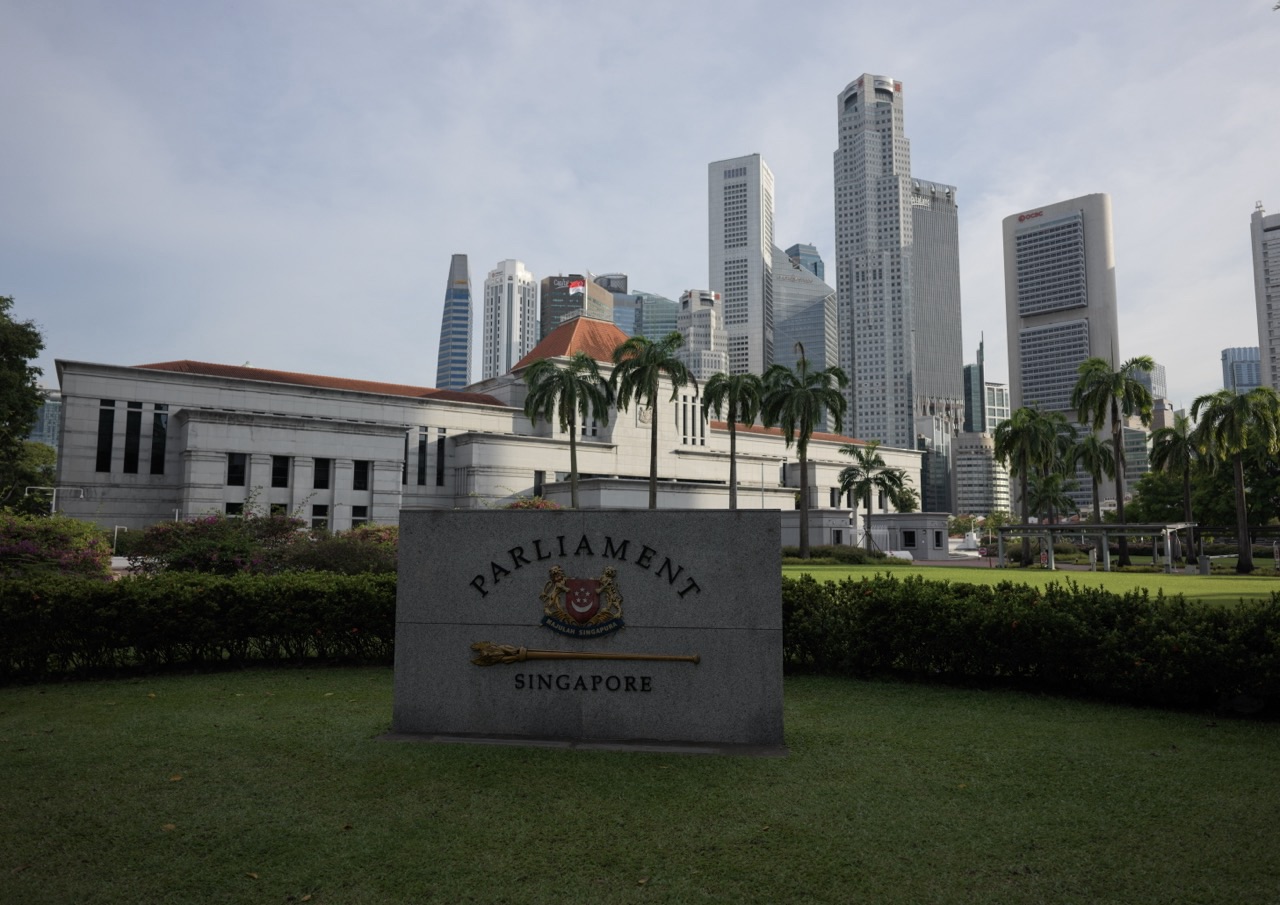
How does Singapore’s government work in everyday life? You do not need to understand every ministry before using a public service. The practical starting point is the life event or problem: having a baby, registering for school, buying a home, paying tax, getting medical care, running a business or reporting a broken footpath. Different organisations handle different parts, while shared digital systems help people reach them.
The short answer is that Singapore runs through institutions with different responsibilities, common rules, public infrastructure and service interfaces. A ministry develops policy for its area; agencies and statutory boards perform particular functions; service providers and Town Councils may handle other day-to-day work. Singpass helps establish a digital identity, but it is not itself the authority deciding every application.
This guide follows the everyday route rather than starting with an organisational chart. It connects government departments, Singpass and Myinfo, LifeSG, CPF, healthcare, HDB, schools, taxes, licences, OneService, courts and public trust. Each section points to the corresponding detailed How Singapore Works and How Singapore Connects articles.
Quick guide: who does what in Singapore’s public-service system?
- Government and Parliament: national lawmaking, public decisions, policy and accountability operate through distinct constitutional roles.
- Ministries: steer policy and administration for their assigned portfolios.
- Statutory boards and public agencies: undertake specialist functions such as public housing, transport regulation, tax administration or service delivery.
- Town Councils and other local operators: carry out important estate-management and municipal responsibilities, depending on the asset.
- Singpass and Myinfo: authentication and consent-based reuse of participating personal data, not automatic permission for every service.
- LifeSG and agency portals: organise tasks around real life events and enable applications or information retrieval.
- OneService: helps route municipal feedback to relevant agencies and Town Councils.
- Courts and dispute-resolution channels: provide legal pathways when rules or private relationships are contested.
- Human support: counters, hotlines, community partners and professional help remain important where digital access is insufficient.
Use the Singapore Government Directory for the current organisational map, LifeSG for life-event services, and GovTech’s Singpass guide for digital identity. This article explains how those front doors fit together.
1. Start with the problem, then find the responsible organisation
Suppose a streetlight near home stops working. The resident sees one lamp. The service system sees an asset, an address, a maintenance responsibility, a reporting route and a work order. The fix depends on getting that information to the right organisation rather than asking the resident to memorise every agency abbreviation.
The same principle applies to applying for a passport, registering a business or arranging a school placement. These actions may all take place online, but they have different underlying laws, eligibility criteria, records and responsible institutions.
A useful way to read government is to separate four things: rule, decision, service and appeal or review. The rule explains what can be done; the decision applies it to a case; the service lets the public act; a review route addresses disagreement or mistakes where available.
To see the wider framework, read How Singapore Works | The Governance Engine and Digital Government. Their scale is national; this guide follows the individual’s next step.
2. How ministries, agencies and statutory boards fit together
Singapore’s public administration has several organisational layers. Ministries set and administer policy within assigned areas. Agencies, departments and statutory boards take on distinct regulatory, operational or service responsibilities, under the applicable legal framework.
Why not run every service from one huge office? Specialisation matters. Housing allocation and tax administration need different rules and professional expertise. Water engineering is not the same as running schools. Port safety does not require the same work process as a family benefit application.
But specialisation creates a second problem: residents must cross organisational boundaries. People do not arrange their lives by ministry portfolio. A parent may need preschool information, a birth certificate, medical appointments and financial support together.
The system therefore needs common interfaces and coordination. A good service should preserve clear accountability while reducing the effort required to travel between agencies. The Government Directory is the authoritative place to check who currently owns a government function.
3. Singpass is the digital key, not the entire government
Singpass lets an eligible user authenticate securely for participating government and business services. It answers an essential question at the start of a digital transaction: who is asking to enter?
That is a different question from whether the user qualifies for a flat, benefit, licence or school place. Authentication verifies access; the destination service applies its own rules. This distinction is useful when explaining online government to children and older relatives.
The Singpass app can support login and identity verification, while Myinfo can, with consent, pre-fill available personal details in participating services. That can reduce repeated entry and mistakes, but the user should still read and confirm important information.
Read Singpass Singapore and Singpass, Myinfo and Digital Identity. For current official guidance, see GovTech’s Singpass page and What is Myinfo?.
4. Why LifeSG organises services around milestones
The public usually experiences government through life events. A child is born; a family changes address; someone starts work; a parent needs care; a loved one dies. Each event can trigger several separate administrative responsibilities.
LifeSG provides a common route to information and services organised around those experiences. For example, its birth-related service can connect registration with other eligible support tasks, while its wider portal groups content on education, caregiving, housing, work and health.
That sounds like a website feature, but its deeper value is reducing the amount of organisational knowledge required from the resident. A person can start with a real-world question and find the right service rather than first learning how the state has divided its departments.
Use LifeSG’s official service home and the LifeSG app overview to confirm currently supported functions. The birth and death connection layers are in Birth Registration, Hospitals and LifeSG and Death Registration and After-Death Administration.
5. One family: the journey from a baby’s birth to a school place
Imagine a new parent looking at a newborn child. The family needs care and paperwork, but the public-service system sees several distinct processes: birth registration, identity records, healthcare arrangements, possible family support and later childcare or preschool choices.
The child’s birth record does not automatically decide the future primary school. School admission becomes another service with its own criteria and timetable. In Singapore, registration rules and priority arrangements need to be checked against the child’s particular entry year.
This is why a system overview should avoid saying ‘just log in and everything happens’. A digital front door can simplify submission, yet eligibility, evidence and sometimes competition for limited places still have to be resolved.
Follow Birth Registration and LifeSG, Baby Bonus, Child Development Accounts and Family Support, Primary 1 Registration, and PSLE and Secondary 1 Posting.
6. School is an institution, but school services also run through digital rails
A primary or secondary school has its own classroom, teachers, timetable and duties to students. The wider education system also needs pupil records, communication with parents, assessment arrangements, placement processes and support pathways.
Digital tools can carry notices, learning materials and communication. They do not replace teaching, parental judgment or a student’s understanding. A learning platform is an interface through which work passes, not the whole educational experience.
School choice and examination matters remain governed by their relevant procedures. A parent should check the current MOE or SEAB page before using a historical example to decide an application or assessment issue.
See How Singapore Works | Schools, Student Learning Space and Parents Gateway, SEAB and National Examination Centres, and JAE, JC, Polytechnic and ITE Admissions.
7. Buying an HDB flat illustrates a multi-agency journey
A household wanting to buy a home must think about eligibility, the property, financing, CPF arrangements, mortgage obligations and the eventual transaction. The home-buying experience is one project for the family, but several organised tasks for the system.
A single government login may open access to information, yet the application rules are still specific. A home financing decision should not be made from the fact that a website looks simple. Price, affordability, legal responsibilities and future household needs matter.
The physical home itself connects to urban planning, roads, schools, utilities and municipal responsibilities. In other words, the service transaction delivers access to a much wider built environment.
Read HDB BTO, HFE and the Home-Buying Journey, CPF Housing and Mortgage Protection, HDB Resale and our companion How Are HDB Towns Planned?.
8. CPF, retirement and healthcare connect today’s work to tomorrow’s needs
Some important public services cannot be understood as a one-day transaction. Retirement income, housing finance and healthcare arrangements unfold over many years. A person may receive benefits from decisions made long before the present need arises.
CPF is a long-term savings and financing institution with distinct accounts and rules. CPF LIFE is related to retirement payouts under the applicable framework. MediSave and MediShield Life have different healthcare-related functions. Similar-sounding names do not mean they perform the same job.
The system must translate complex rules into statements and decisions people can understand: what the balance means, which payment is allowed, what obligation follows and whom to contact when something does not look right.
Start with How Singapore Works | CPF, CPF LIFE Singapore, MediSave Singapore, MediShield Life Singapore, and Retirement Accounts and Monthly Payouts.
9. Healthcare records and appointments are another public-service connection
A patient may visit a polyclinic or hospital, receive instructions, collect medicine and later review available information in an app. The journey passes through people, facilities, clinical records, payment and follow-up systems.
A digital health interface can help access information or services, but it is not a substitute for professional evaluation. The clinical decision and the record-access interface are separate responsibilities; safety depends on both working appropriately.
Medical care also exposes the last-mile problem: a senior may have a booking on a phone but still need an accessible route, caregiver support or assistance understanding the instructions. A service is not complete simply because a form was accepted.
Read Healthcare, HealthHub, Telemedicine and Digital Care, Vaccinations and Immunisation Records and Active Ageing and Home Care.
10. Paying tax is not the same operation as receiving a benefit
Government finance reaches households through different channels: taxes, fees, savings arrangements and eligible support schemes. Each has its own legal basis and administration. A service can feel unified on the phone while the underlying decisions remain distinct.
For example, a person may file an income tax return through IRAS services, manage CPF matters through CPF channels and check certain benefits through LifeSG or other designated portals. Logging in through Singpass can support access, but does not make those functions interchangeable.
The useful citizen habit is to check the official purpose of a message, the agency responsible, the tax or benefit year and the action that has actually been requested. Avoid assuming that a familiar logo or payment link proves authenticity.
Follow IRAS, Tax Filing and Digital Payments, GST Singapore, CDC Vouchers and The Fiscal Engine.
11. Starting a business involves registration and then other permissions
Imagine a resident opening a small commercial business. Registering an entity or business name is one step. Getting relevant licences or permits, meeting tax obligations, engaging employees and operating safely are other steps. Doing the first does not automatically authorise every activity.
ACRA manages key business-registration functions, while GoBusiness helps people navigate applicable licences and regulatory requirements. Businesses can use designated government-to-business authentication and transaction services, depending on the task.
Why does the sequence matter? A restaurant, retail shop, transport operator and professional firm may face different conditions even when they all possess a business registration. Regulation is meant to fit the risk and activity.
For transaction details, read ACRA, UEN and Business Registration, GoBusiness, Licences and Regulatory Approvals and Work Passes and MOM. ACRA’s official registration guide is the right current starting point.
12. Not every workplace problem is a police or court case
An employee and employer may disagree over wages, a contract or another employment matter. The appropriate first route depends on the nature of the dispute, the applicable rights, evidence and any prescribed process.
Singapore has different channels for employment claims and dispute resolution. Those pathways exist so not every disagreement needs to begin as general litigation. They still require people to identify the correct issue and follow the relevant procedure.
The same principle applies to neighbour disputes, tenancy problems and business conflicts. Different facts invoke different institutions. Good public information tells readers what the route is for, what it cannot decide and where authoritative advice is available.
Read Employment Claims, TADM and Workplace Disputes, Community Disputes, Mediation and the CDRT and Courts, eLitigation and Access to Justice.
13. OneService is useful when residents do not know whose asset is broken
Many everyday complaints begin without a clear agency name. A broken footpath, overflowing bin, malfunctioning car-park component or overgrown patch of greenery is a problem the resident can see, not necessarily an institution the resident can identify.
Singapore’s OneService channels help route municipal feedback to relevant agencies and Town Councils. The Municipal Services Office coordinates improvements to such cross-agency processes. This does not mean every case can be fixed immediately; complex issues may require investigation, approvals or works by multiple parties.
Providing a precise location, description and useful evidence helps turn a vague report into a workable case. The aim is to move from observation to an accountable response without making residents solve the entire government organisation chart.
See OneService’s official channels and the behind-the-scenes routing explanation. For estate context, read HDB Estate Cleaning and Common Property.
14. A transaction depends on records, not just forms
Behind a digital application is a record system. A person’s identity, address, licence status, registered entity or property information can affect which service is available and how the case is processed. Records must be accurate, appropriately protected and corrected when wrong.
The public often sees the front screen, not the handoffs between authorised systems. When Myinfo pre-fills a form, that can reduce repeated manual typing. When a property record is accessed, the institution may have to distinguish between ownership, occupation, tenancy and other legal relationships.
This is also why not every field should be freely shared between every agency or private party. Convenience needs boundaries, lawful purposes, security and routes to correct errors. The data is useful because it means something about a real person or object, not because it is easy to copy.
Explore NRIC, Address Changes and Identity Records, Land Titles and Property Transactions, Property Tax and Digital Property Records and Data.gov.sg and Open Government Data.
15. Digital government needs trust and a safe alternative route
A convenient online service can fail a person if it is unusable because of disability, weak digital skills, loss of access to an account or confusing instructions. A responsive public service must design for those situations, not only for the fastest smartphone user.
Security adds necessary friction. Authentication, approvals and access controls may take extra effort but help protect records and transactions. Removing all checks in the name of speed would be a poor version of convenience.
Scam risk also changes the citizen’s job. A message claiming to be from an official body is not an invitation to disclose passwords, one-time passcodes or personal details. People should navigate through known official channels, use in-app security guidance and verify unexpected requests independently.
Follow Cybersecurity, Scam Alerts and Digital Trust, Trust and Anti-Corruption Engine and GovTech’s digital-service overview.
16. What happens when a decision is wrong or the service does not work?
Two problems can look similar but require different fixes. A portal error may prevent an application from being submitted; an eligibility decision may deny it after a valid submission. The first is a service or technical problem. The second may involve policy, evidence and any available review process.
A useful response begins by keeping the reference number, written reason, correspondence and relevant dates. Then identify the formal assistance, correction or appeal route that belongs to the particular service. Do not assume every decision has the same appeal path or deadline.
Public-service accountability also involves clear legislation, published procedures, internal review, oversight and, where relevant, legal remedies. Those mechanisms are not interchangeable, and a general educational guide should not pretend to decide a specific case.
The central insight is that trust grows when people can understand not only how to enter a system, but also how a problem can be corrected.
17. A worked example: the same resident uses five systems in one week
On Monday a parent checks a school notice. On Tuesday the household reviews utilities. On Wednesday a tax message arrives. On Thursday the family books a healthcare appointment. On Friday someone reports a broken pavement outside the block.
Five actions, five different reasons, and several institutional owners. Singpass may provide authentication for some of them, but not all journeys have identical interfaces or rules. LifeSG might help locate services. OneService may help with the pavement. A school or healthcare provider handles its own professional and operational parts.
From the family’s perspective, this is one week of life. From the government’s perspective, it is a network of transactions and duties. The quality of the system depends on making the transitions understandable while keeping responsibilities clear.
To study any service, ask: Who owns the rule? Who keeps the record? Where does the resident act? Who can explain a decision? What happens when something goes wrong? Those five questions turn a complex organisation into a readable public-service map.
18. Why an efficient digital front door is only the beginning
Singapore’s digital services can reduce repetitive paperwork and travel, but a digital transaction is only one layer of good government. Water must still be delivered, town estates maintained, children taught, patients cared for and businesses regulated.
An online report of a broken lift is a useful beginning. The service becomes valuable when a competent operator assesses the lift, repairs the problem and communicates the outcome. The same principle applies to a housing application, examination record or dispute claim.
That is the broader question behind How Singapore Works: can people translate an institutional promise into something usable in the world? The answer depends on coordination, skill, clear rules, infrastructure, accountability and a willingness to correct mistakes.
Read The Whole Machine, Lowering Friction and The People to see why the individual’s experience is the final measure of an otherwise invisible state machine.
Guide map: the public services behind everyday life in Singapore
Each existing specialist article below owns a narrower mechanism. Choose the exact life event or institution you need, and use the relevant official agency site for a current transaction.
Identity, life events and household services
- Digital Government — the big public-service transformation
- Singpass — everyday digital identity
- Singpass and Myinfo — authentication and form pre-filling
- Birth Registration and LifeSG — starting a family record
- Baby Bonus and Child Development Accounts — family assistance pathways
- Marriage Registration and ROM — civil marriage records
- NRIC and Address Changes — identity record management
- Death Registration and Digital Death Certificates — life-event records
- Wills, Probate and Estate Administration — managing estate matters
- CPF Nominations and Estate Distribution — a distinct nomination process
Education, housing, health and financial administration
- Primary 1 Registration — school places
- PSLE and Secondary 1 Posting — school transition
- JAE and Post-Secondary Admissions — later educational pathways
- Student Learning Space and Parents Gateway — school communication
- HDB BTO, HFE and Buying a Home — public housing transactions
- CPF LIFE — retirement payouts
- HealthHub and Digital Care — medical-service interface
- IRAS, Tax Filing and Digital Payments — tax transactions
- Household Utilities and Smart Meters — utilities account management
- Property Tax and Digital Property Records — property administration
Business, disputes, public safety and civic feedback
- ACRA, UEN and Business Registration — entity creation
- GoBusiness and Regulatory Approvals — business licensing
- Work Passes and MOM — workforce administration
- Employment Claims and TADM — employment redress
- Community Disputes and Mediation — neighbour disputes
- Courts and eLitigation — justice services
- Estate Cleaning and Conservancy — municipal upkeep
- Neighbourhood Police Centres and Community Safety — public safety
- Cybersecurity, Scam Alerts and Trust — safe digital participation
- Data.gov.sg and Open Data — public information interfaces
- The Governance Engine — coordination and institutions
- Trust and Anti-Corruption Engine — legitimacy and safeguards
Frequently asked questions about Singapore government services
How does the Singapore government work in simple terms?
Government institutions set policies, administer laws and coordinate services. Ministries, agencies, statutory boards, courts and other organisations perform different duties; common digital and physical channels help people use the services relevant to their needs.
Is Singpass the same as Myinfo?
No. Singpass supports secure authentication and digital identity. Myinfo can help pre-fill personal data, with consent, in participating transactions.
Do I need Singpass for every government service?
Many online services use Singpass, but requirements vary by service and user eligibility. Check the specific official instructions.
What is LifeSG used for?
LifeSG organises government information and services around life events and topics such as children, housing, work, benefits, health and caregiving.
What is the difference between a ministry and a statutory board?
Ministries are central government bodies responsible for assigned policy portfolios, while statutory boards are established under legislation to perform designated functions. Their precise powers depend on their legal mandate.
Who should I contact about a public area maintenance problem?
It depends on the location and asset. OneService can help route suitable municipal feedback to the responsible agencies or Town Councils.
Does Singpass automatically approve housing or benefits?
No. Logging in establishes identity for participating services; eligibility and approval follow the rules of each scheme or transaction.
How can I tell if a government message is genuine?
Use official websites or apps you navigate to yourself, review the relevant agency’s security guidance and verify unexpected payment or identity requests independently. Never disclose passwords or security codes in response to an unsolicited request.
Can a government decision be appealed?
Some services have formal review or appeal processes, but rights, grounds and deadlines differ. Use the notice and the relevant official agency’s instructions for your case.
Where do I find Singapore government offices and agencies?
Start with the Singapore Government Directory, the relevant ministry or agency’s official website, or LifeSG if you only know the life event or service topic.
Why does a digital service sometimes still require documents or checks?
Authentication, evidence, eligibility and legal requirements solve different problems. A secure login cannot replace all professional judgments or statutory safeguards.
Complete the four-guide Singapore systems route
This explainer is the public-services gateway in a four-part reader journey. It connects to the same How Singapore Works civilisation archive without replacing the original specialist article owners.
- How Does Singapore’s Transport System Work?
- How Are HDB Towns Planned in Singapore?
- Where Does Singapore Get Its Water, Electricity and Food?
- How Does Singapore’s Government Work in Everyday Life?
Official public-service references
- Singapore Government Directory — current ministries, organisations and contact points.
- GovTech — Singpass — authentication and identity features.
- Singpass — What is Myinfo? — consent-based pre-filling.
- LifeSG — life-event and public-service navigation.
- OneService — Work Behind the Scenes — municipal feedback routing.
- ACRA — Registering a Business — business-registration process.
- GovTech — Digital Tech Stacks — shared infrastructure behind services.
Reader note: This article is an educational map, not a binding interpretation of law or an application decision. Services, eligibility, procedures and contact channels change. Verify the latest details on the official responsible agency’s website before acting. Editorial review: October 2026.