
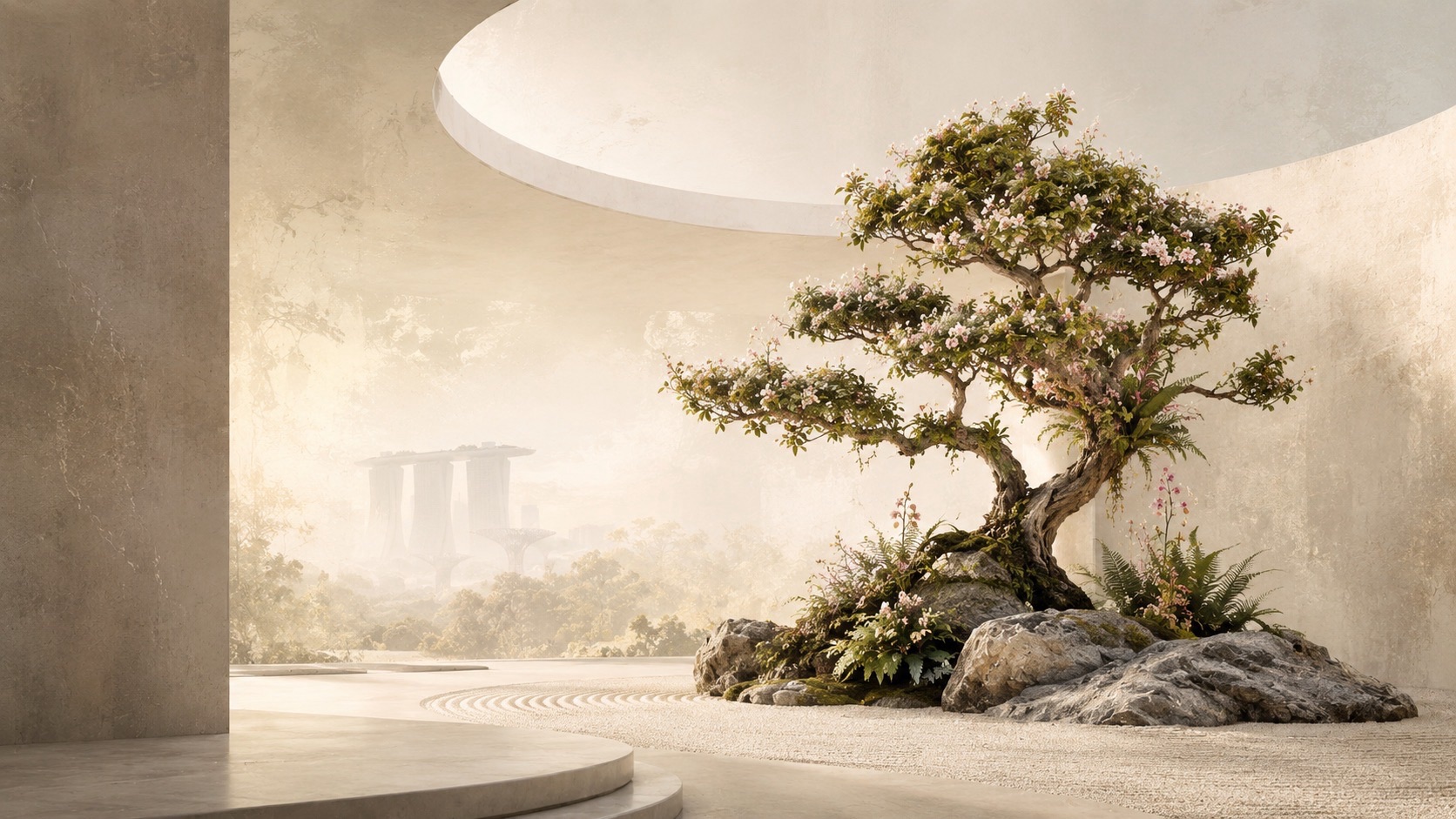
Luxury sound is the art of controlling what a space allows people to hear. People searching for luxury acoustics, soundproofing for luxury homes, home theatre acoustics, concert hall acoustics, quiet luxury interiors and high-end audio rooms are often asking the same deeper question: why can one room feel calm, intimate and beautifully clear while another feels tiring even when both look expensive?
Did you know? Sound may be one of the fastest ways to discover whether a luxury space was truly designed or merely decorated. Footsteps reveal hard surfaces. Air-conditioning reveals mechanical quality. Conversation reveals whether a room is too reflective. Doors reveal weight and sealing. Water reveals distance. Music reveals proportion. Luxury sound begins when architecture, materials and technology work together so that people hear what matters and are protected from what does not.
This is the sound chapter of The Art of Luxury | What Is Luxury?, following The Art of Luxury | Scent.
Scent gives invisible atmosphere a memory.
Sound gives invisible atmosphere a direction.
Did You Know? Silence and Good Sound Are Not the Same Thing
A silent room can still sound bad.
Conversation may echo.
Music may become harsh.
Low frequencies may boom.
Doors may slam loudly.
Ventilation may create tonal noise.
Luxury acoustics does not merely remove sound.
It shapes sound.
That is why The Art of Luxury | Silence Is Luxury and this chapter belong together but are not duplicates.
The Sound Equation
A useful way to think about luxury sound is:
Luxury Sound = Clarity + Control + Isolation + Texture + Proportion + Quiet Systems
Clarity allows speech and music to remain intelligible.
Control prevents unwanted reflections from overwhelming the room.
Isolation keeps outside noise outside and private sound inside.
Texture gives a room acoustic character rather than deadness.
Proportion influences how frequencies behave.
Quiet systems prevent mechanical infrastructure from becoming the dominant soundtrack.
Acoustics Begins with Reflection
Sound travels outward until it meets something.
A wall.
A ceiling.
A curtain.
A sofa.
A person.
Some energy is absorbed.
Some is reflected.
Some passes through.
Luxury acoustics begins by understanding these interactions rather than covering a finished room with decorative treatment after problems appear.
Hard Surfaces Create Energy — and Sometimes Fatigue
Stone, glass, metal and polished plaster can be visually luxurious.
Acoustically, they can be highly reflective.
A large room filled only with hard materials may look spectacular and sound exhausting.
Every conversation adds energy.
Every plate and glass adds energy.
Every footstep adds energy.
Luxury design therefore balances visual hardness with acoustic softness.
Textiles.
Upholstery.
Rugs.
Books.
Timber.
Perforated surfaces.
Layered ceilings.
Beauty and acoustic comfort have to be designed together.
Explore The Art of Luxury | Luxury Materials.
Reverberation Determines Whether a Room Feels Intimate or Grand
Some spaces benefit from lingering sound.
A concert hall may use reverberation to create richness.
A cathedral may use it to create scale.
A small dining room usually needs something else.
Speech should remain clear.
Guests should not have to raise their voices simply because the room is beautiful.
Luxury acoustics is contextual.
The right sound for one space can be completely wrong for another.
Room Proportion Changes Sound Before Furniture Arrives
Long before speakers, curtains or rugs are installed, the room already has acoustic behaviour.
Length matters.
Width matters.
Height matters.
Parallel surfaces matter.
Openings matter.
Volume matters.
Luxury sound begins in architecture, not electronics.
This connects naturally with The Art of Luxury | Space Is the New Luxury.
Soundproofing Is Really Privacy Engineering
Sound isolation has two directions.
Keep noise out.
Keep private sound in.
A bedroom needs protection from traffic and corridors.
A study needs protection from household noise.
A meeting room needs speech privacy.
A music room needs enough isolation that one person’s pleasure does not become everybody else’s disturbance.
Luxury acoustics is therefore deeply connected to The Art of Luxury | Privacy Is the New Luxury.
A Heavy Door Can Sound More Luxurious Than It Looks
Doors teach acoustics beautifully.
A lightweight hollow door may transmit voices and impact.
A heavier, well-sealed door can create a stronger sense of separation.
The luxury is not merely weight.
It is the transition.
Close the door.
The outside world recedes.
A good door creates psychological privacy through acoustic change.
Windows Are Acoustic Weak Points as Well as Visual Assets
Large glazing creates views and daylight.
It can also create acoustic challenges.
Traffic.
Aircraft.
Events.
Wind.
Rain.
Luxury architecture must negotiate view, light, thermal comfort and noise together.
A magnificent window that makes sleep impossible is not successful luxury.
Read The Art of Luxury | Light and The Art of Luxury | Comfort Is Engineered.
Mechanical Noise Is the Sound of Invisible Design Failure
Air-conditioning hum.
Pumps.
Lifts.
Plumbing.
Fans.
Generators.
Motorised blinds.
Luxury systems should do complicated work without becoming the soundtrack of the room.
Quiet engineering often costs more because vibration, mounting, airflow and equipment placement need to be resolved carefully.
That is The Art of Luxury | Effortlessness heard rather than seen.
Luxury Bedrooms Are Acoustic Sanctuaries
Sleep is one of the clearest tests of sound design.
A beautiful bedroom can fail because of:
- traffic noise;
- corridor conversation;
- plumbing noise;
- mechanical hum;
- doors closing nearby;
- sound transfer through floors or ceilings.
Luxury sleep depends on the room becoming acoustically uneventful.
Silence is not decorative.
It is restorative infrastructure.
Continue with The Art of Luxury | Silence Is Luxury.
Dining Rooms Need Conversation More Than Drama
Restaurants sometimes become louder as they become more visually dramatic.
Stone floors.
Glass walls.
Bare ceilings.
Hard tables.
Open kitchens.
Each can add reflections.
Luxury dining should preserve conversation.
Guests should not have to compete with the room.
Acoustic comfort is part of hospitality even though it never appears on the menu.
Read The Art of Luxury | Service Is the Invisible Luxury.
Libraries Are Acoustic Luxury Through Social Agreement
A library is not quiet only because of walls and carpets.
It is quiet because people cooperate.
Phones are silenced.
Voices are lowered.
Movement becomes more careful.
Acoustic luxury can therefore be cultural as well as architectural.
People collectively protect one another’s attention.
That is where sound meets The Art of Luxury | Attention Is the Rarest Luxury.
Music Rooms Need a Different Kind of Control
A music room should not be acoustically dead.
It needs enough life for music to breathe.
But reflections must arrive in useful ways.
Too much absorption can remove energy.
Too little can blur detail.
Luxury music rooms balance absorption, diffusion, room proportion and isolation according to purpose.
A solo instrument, chamber group and amplified cinema soundtrack do not ask the same thing from a room.
High-End Audio Starts with the Room, Not the Equipment
Expensive equipment cannot fully correct a poor acoustic environment.
The room interacts with every speaker.
Walls reflect energy.
Corners affect low frequencies.
Furniture absorbs and scatters sound.
Listening position matters.
Luxury audio is therefore systems thinking.
Equipment, room and listener must be considered together.
Home Cinemas Reveal Why Isolation Matters
A powerful cinema can produce deep low-frequency energy.
That energy does not stop politely at the room boundary.
Walls vibrate.
Floors transmit structure-borne sound.
Doors leak energy.
Luxury cinema design protects both sides.
The viewer gets immersion.
The rest of the house gets peace.
Freedom becomes luxurious only when it does not remove everybody else’s freedom.
Read The Art of Luxury | Freedom and Autonomy.
Concert Halls Turn Architecture into an Instrument
A concert hall is not merely a container for musicians.
The room participates.
Ceilings distribute reflections.
Balconies alter geometry.
Materials change absorption.
Audience members themselves change the acoustic condition.
The luxury lies in invisible collaboration between performer and architecture.
A great room helps music become more itself.
Explore Crazy Rich Monaco | Monte-Carlo Jazz Festival and the Live Music Economy.
Outdoor Sound Is Designed by Distance and Landscape
Outside, there are fewer walls to trap reflections.
But sound still interacts with:
- buildings;
- water;
- terrain;
- vegetation;
- wind;
- distance;
- background city noise.
An outdoor theatre can feel magical because music meets evening air, landscape and open sky.
Luxury experience can come from reducing architectural enclosure rather than increasing it.
Explore Crazy Rich Monaco | Fort Antoine, Open-Air Theatre and the Summer Culture Economy.
Water Changes a Soundscape
A fountain creates masking sound.
A still pond reflects differently from rough sea.
Waves create rhythm.
Rain changes every roof and surface.
Luxury gardens and spas use water not only visually but acoustically.
Moving water can make a place feel private by giving the ear a nearby sound to follow.
Read The Art of Luxury | Water.
Gardens Create Softer Soundscapes
Leaves rustle.
Birds call.
Water moves.
Footsteps change from stone to gravel to timber.
A garden can still contain sound while feeling quieter than a street.
The reason is partly qualitative.
Natural sounds may demand less attention than alarms, engines and amplified voices.
Explore The Art of Luxury | Gardens.
Timber Can Make Rooms Sound Warmer
Timber is visually warm, but it also participates acoustically.
Different assemblies absorb, reflect and resonate differently.
Timber slats can hide acoustic absorption behind them.
Wooden diffusers can scatter sound.
Instrument makers understand another dimension: timber can vibrate as part of sound production itself.
Material and acoustics are never entirely separate.
Read The Art of Luxury | Timber.
Stone Creates Grandeur — but Needs Balancing
Stone communicates permanence.
It also reflects sound strongly.
A grand stone hall may sound magnificent for ceremony and difficult for intimate conversation.
Luxury architecture therefore balances stone with:
- curtains;
- upholstery;
- carpets;
- timber;
- people;
- hidden acoustic treatment.
Read The Art of Luxury | Marble.
Sound Is Part of Memory
A place can return through sound.
A train announcement.
A temple bell.
A market call.
A fountain.
A particular song.
Rain on one kind of roof.
Luxury travel becomes richer when we collect sound memories as carefully as photographs.
That connects naturally to The Art of Luxury | Memory and Meaning.
The Most Luxurious Sound Can Be One Chosen by You
Unwanted noise removes autonomy.
Chosen sound restores it.
Open the window for rain.
Close it for sleep.
Play music when desired.
Silence the room when concentration matters.
Luxury acoustics is partly control over what enters attention.
That makes sound another form of The Art of Luxury | Freedom and Autonomy.
Singapore: Acoustic Luxury in a Dense City
Singapore offers a useful study because dense urban life creates competing sounds.
Roads.
Rail.
Construction.
Aircraft in some districts.
Neighbouring homes.
Food centres.
Schools.
Parks.
Luxury here may mean selective acoustic separation rather than total isolation.
You still want the city when you choose it.
You simply do not want the city entering every room at every hour.
The best urban home gives the resident acoustic choice.
Monaco: Luxury Acoustics Inside Extreme Density
Monaco intensifies the same challenge.
Roads, marinas, events, construction, terraces and dense residential buildings exist within a very compact territory.
High-value property therefore depends not only on views and finishes but also on acoustic privacy.
Windows.
Façades.
Doors.
Mechanical systems.
Floor assemblies.
All become part of the luxury proposition because quiet must be engineered inside density.
Explore Crazy Rich Monaco | Monaco Real Estate, Property Prices and the Scarcity Economy.
China: Sound, 声音 and 声学
For bilingual English–Chinese readers, several words help describe acoustic luxury precisely.
声音 means sound.
声学 means acoustics.
隔音 means sound insulation or soundproofing.
吸音 means sound absorption.
回声 means echo.
混响 means reverberation.
噪音 means noise.
安静 means quiet.
The vocabulary shows an important distinction: luxury acoustics is not simply 安静. It is the intelligent control of 声音.
English–Chinese Sound Vocabulary | 声音与声学词汇
- sound — 声音
- acoustics — 声学
- noise — 噪音
- quiet — 安静
- sound insulation — 隔音
- sound absorption — 吸音
- echo — 回声
- reverberation — 混响
- vibration — 振动
- soundproof room — 隔音房间
- background noise — 背景噪音
- speech clarity — 语音清晰度
- music room — 音乐室
- concert hall — 音乐厅
- soundscape — 声景
Visit and Touring Vocabulary | Concerts, Hotels and Quiet Rooms · 音乐会、酒店与安静房间
1. Is this room quiet at night? · 这个房间晚上安静吗?
Useful when choosing accommodation. 中文:这个房间晚上安静吗?
2. Is the room soundproof? · 这个房间隔音好吗?
A practical hotel question. 中文:这个房间隔音好吗?
3. Can we have a room away from the lift? · 可以安排一个离电梯远一点的房间吗?
Useful for light sleepers. 中文:可以安排一个离电梯远一点的房间吗?
4. Is there traffic noise? · 有交通噪音吗?
Useful in dense cities. 中文:有交通噪音吗?
5. Where is the best place to hear the music? · 在哪里听音乐效果最好?
Useful in concert halls and venues. 中文:在哪里听音乐效果最好?
6. Why does this hall sound different? · 为什么这个厅的声音不一样?
A useful acoustics question. 中文:为什么这个厅的声音不一样?
7. Is the ventilation system quiet? · 通风系统安静吗?
Useful in luxury accommodation and performance spaces. 中文:通风系统安静吗?
8. Can we hear the sea from the room? · 房间里能听到海浪声吗?
Useful in coastal stays. 中文:房间里能听到海浪声吗?
9. Is there a quiet area nearby? · 附近有安静一点的地方吗?
Useful for travel and rest. 中文:附近有安静一点的地方吗?
10. The acoustics are excellent. · 这里的声学效果很好。
A natural compliment in performance venues. 中文:这里的声学效果很好。
11. The room has too much echo. · 这个房间回声太大。
Useful when describing an acoustic problem. 中文:这个房间回声太大。
12. I like the sound of the water here. · 我喜欢这里的流水声。
A useful phrase in gardens and spas. 中文:我喜欢这里的流水声。
Continue with the Top 100 Vocabulary for Visiting and Touring | World City Directory.
How to Notice Luxury Sound Without Spending More
- Notice how the same room sounds empty and furnished.
- Listen for mechanical noise when entering hotels and buildings.
- Compare conversation in a carpeted room and a stone room.
- Notice how doors change the soundscape when they close.
- Visit a concert hall and listen to the room as well as the performers.
- Notice how gardens, water and trees alter nearby city noise.
- Protect quiet times by silencing unnecessary notifications and devices.
- Ask whether a space needs less sound, or simply better-controlled sound.
Luxury sound begins with listening before it begins with equipment.
What Students Can Learn from Luxury Sound
Physics
Sound involves vibration, frequency, wavelength, reflection, absorption, resonance and transmission.
Architecture
Room shape, surfaces, openings and materials determine how sound behaves before technology is added.
Engineering
Sound isolation, vibration control and quiet mechanical systems require careful structural and services coordination.
Music
Performance spaces reveal how acoustics can support clarity, richness, intimacy and scale.
Psychology
Unwanted sound can capture attention while chosen sound can create pleasure, memory and focus.
Character
Sound teaches consideration because acoustic freedom works best when people protect one another from unnecessary disturbance.
Frequently Asked Questions
Why are acoustics a luxury?
Because good acoustics require enough design attention to control noise, preserve privacy, improve speech clarity and make music or quiet feel intentional rather than accidental.
What is the difference between soundproofing and acoustic treatment?
Soundproofing reduces sound transmission between spaces. Acoustic treatment manages reflections and reverberation inside a room.
Why do stone and glass rooms sound loud?
Hard surfaces tend to reflect more sound energy, which can increase reverberation and make speech feel louder or less clear.
Why are bedrooms sensitive to noise?
Sleep depends on an environment with low disturbance, so traffic, plumbing, corridors and mechanical systems can strongly affect perceived comfort.
What is reverberation?
Reverberation is the persistence of sound in a space after the original sound is produced because reflections continue arriving at the listener.
Why does a concert hall need reverberation?
Appropriate reverberation can add richness and support musical blending, but the ideal amount depends on the type of performance and the hall.
Can furniture improve acoustics?
Yes. Upholstery, rugs, curtains, books and irregular surfaces can absorb or scatter sound and change how a room behaves.
Why do high-end audio systems need good rooms?
Because the room reflects and reinforces sound, influencing tonal balance, clarity, imaging and bass response regardless of equipment price.
How does water affect sound?
Moving water can create masking sound and rhythm, while rain, waves and fountains contribute distinctive natural soundscapes.
What is the simplest rule of luxury acoustics?
Protect people from unwanted noise, preserve the sounds they choose and design the room so speech, music and quiet can each work properly.
Helpful Reading Across the eduKate Knowledge Graph
- The Art of Luxury | What Is Luxury?
- The Art of Luxury | Silence Is Luxury
- The Art of Luxury | Space Is the New Luxury
- The Art of Luxury | Privacy Is the New Luxury
- The Art of Luxury | Comfort Is Engineered
- The Art of Luxury | Water
- The Art of Luxury | Gardens
- The Art of Luxury | Timber
- Crazy Rich Monaco | Monte-Carlo Jazz Festival and the Live Music Economy
- Top 100 Vocabulary for Visiting and Touring | World City Directory
The Art of Luxury Is Hearing Only What Deserves Your Attention
A clear voice.
A piano in a balanced room.
Rain beyond glass.
Water in a garden.
A door closing on the city.
Quiet mechanical systems doing their work unnoticed.
Did you know? Luxury sound is not the absence of noise and it is not the presence of expensive equipment. It is control over acoustic attention — making the wanted sound clearer, the unwanted sound weaker and the room itself an intelligent participant in what you hear.
Return to The Art of Luxury | What Is Luxury?
Series navigation: The Art of Luxury | Complete Series Directory · Luxury | World Directory · Crazy Rich World